A De Palma Double: Femme Fatale & Passion

Screen Shot 2016-01-15 at 13.14.28

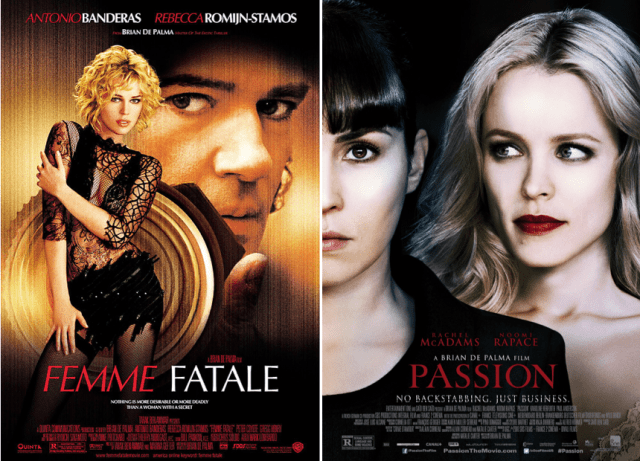
If you’re going to pair up two Brian De Palma erotic thrillers nine times out of ten you’d go for Dressed to Kill and Body Double. Upon recently revisiting De Palma’s canon for the umpteenth time, however, I found a better pairing: Femme Fatale and Passion. Made ten years apart these two films showcase a late-career De Palma returning to the genre he helped define with a newfound enthusiasm and experimentation.

Femme Fatale follows a jewel thief (Rebecca Romijn-Stamos) who double crosses her partners and adopts a new identity in Paris while Passion is set in the cut-throat world of advertising where two colleagues (Noomi Rapace, Rachel McAdams) develop an infatuation with one other that eventually mutates into a deadly rivalry. Both films were scripted by De Palma (though Passion is an adaptation of a previous French film) with Femme Fatale being his first original screenplay in ten years, since 1992’s Raising Cain. It should come as no surprise then that the two movies are deeply De Palma-esque. Lust, betrayal, sex, duality, dream logic and a heavy European tinge run throughout both pictures as does De Palma’s brazen craftsmanship behind the camera.

Femme Fatale kicks off with a showstopping 30 minute heist at the Cannes film festival in which Laure (Stamos), under the guise of a paparazzi photographer, must seduce a supermodel in order to switch and steal the priceless diamonds on her dress. It’s a ridiculous concept for a heist that somehow seems absolutely plausible in De Palma land. The finished sequence is up there with the best things the filmmaker has ever done. Strangely enough De Palma doesn’t mine the scene for tension. As it’s the beginning of the film, we don’t know enough about these characters to root for them, so the heist going awry isn’t really our concern. De Palma is more interested in the minutia of process rather than the threat of it going wrong. The whole thing is scored with classical music and is stretched to maximum length (it takes up a good quarter of the film’s running time) for full effect. Stamos’ extended seduction of the model also ensures the scene is more tuned to steaminess than suspense. De Palma is having fun here. Audiences love heists, audiences love playful eroticism so he gives them exactly what they want with a cheeky wink.

As the film moves into it’s second act and introduces Antonio Banderas’ Nicolas Bardo, another photographer who becomes entwined with Laure years after the opening heist and threatens to expose her true identity,  we see the return of De Palma’s trademark split-screen technique. It’s appropriate as the mid-section of Femme Fatale is a lot more complex than it initially appears, basically working on two levels. Without spoiling the details, De Palma utilizes dream imagery and subconscious logic heavily in both Femme Fatale and Passion. While the divide between reality and dream is clear by the end of Femme Fatale in Passion it is left much more obscure, maybe to a fault.

Dreams have been a big part of De Palma’s work from the beginning. Some of the most memorable scenes from Sisters, Carrie, The Fury and Dressed to Kill are nightmares occurring in the characters’ heads but it’s Raising Cain which best foreshadows what De Palma would explore with Passion and Femme Fatale. In that film John Lithgow plays Cain, a psychologist suffering from multiple personality disorder and De Palma constantly shows us the world from Cain’s POV in each of his different guises making reality increasingly difficult to pin down. The same can be said for the final act of Passion. After being accused of murder, Isabelle (Rapace) appears to regress into her own consciousness. De Palma teases the audience with multiple fake outs and double-fake outs, sometimes never clarifying what is real and what isn’t.

Passion’s centerpiece, at least from a De Palma obsessive’s point of view, is an extended split screen sequence that intercuts a ballet performance with a stealthy murder in the giallo tradition and culminates with Isabelle jolting awake in her bed just as Christine (McAdams) has her throat slashed open. For a time, it isn’t clear if the previous scene really occurred or was just a variation of what actually transpired. From then on the film becomes hyper-real,  bathed in expressionistic shadows and dutch camera angles that are at odds stylistically with the film’s rather composed first hour. Even the story becomes excessively nonsensical with twist piling on after twist to the point of absurdity. The “it was all a dream” trope has become one of the most groan-worthy in cinema so De Palma’s commitment to it in both Passion and Femme Fatale is all the more daring and admirable. It’s as if he saw utilizing that twist as a challenge in itself and wanted to explore the possibilities. Perhaps if he was subtler about it audiences would have been more receptive (see Mulholland Dr.) but De Palma has never been about subtlety, which is actually one of things I respond to most in his work.

Both these films received a somewhat negative critical response upon release. Femme Fatale has undergone a bit of a reappraisal in the intervening years but with Passion that is yet to be seen. It’s ironic as the latter film stars two of the best actresses De Palma has ever worked with. No disrespect intended to Stamos and Banderas but the performances in Femme Fatale never outshine that of it’s director. McAdams and Rapace’s work in Passion are two of it’s strongest components and the two share an enjoyably steamy chemistry. It’s a testament to De Palma’s pull as a filmmaker that both actresses agreed to appear in such a lurid and sexually charged thriller. That isn’t to suggest it’s beneath them but consider that Passion is a remake of a little-seen french movie directed by a filmmaker many consider way past his prime and it’s status as a B-picture is hard to dispute. Passion didn’t receive a huge release and seems to have evaded most cinema-goers due to a practically non-existent marketing campaign, which is even more surprising considering the two headlining stars. Passion should have been De Palma’s comeback movie but with no directorial effort from him since, the comeback didn’t quite materialise. I think Passion is destined to be a film enjoyed most by De Palma completists as it certainly delivers everything you want from his work. As far as late-career throwbacks go, it’s strong and very characteristic of the same filmmaker who once gave us Body Double. Paired up with Femme Fatale, the two films paint a vivid picture of De Palma’s current obsessions as a storyteller. His use of structure is as adventurous as it’s ever been with greater emphasis on dreams instead of reality. The two films even rhyme with one another in their depiction of same-sex power couples, dreamy diversions and French architecture. De Palma has always been a divisive filmmaker – too arty to be mainstream, too mainstream to be arthouse – and here are two leftfield picks from his filmography that showcase that division perfectly.
Posted in Double Features, The Film Society | Tagged , , , , , , | Leave a comment

Lifeboat (1944)

5116

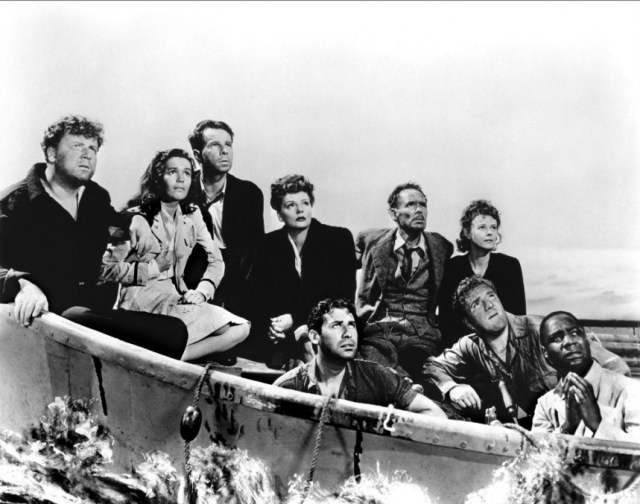
Damn it’s been a long time since I scratched a new Hitchcock off of the watchlist! One of the things I love about Hitch is his desire to constantly challenge himself. You get the feeling he thrived off of giving himself as many restrictions as possible and seeing if he could still rise to the occasion creatively. Well, you don’t get any more restricted than setting your movie on a damn lifeboat!

Based on a scenario by the great John Steinbeck, Lifeboat manages to tackle a lot of complex topics which were pretty controversial at the time of release. Released at the pinnacle of WWII, the film looks at the relationship between America and Germany at the time and rather boldly paints the American and British characters as the blood thirsty brutes. Critics accused Hitchcock of being a traitor and supporting the enemy but, of-course, the film is not that at all. It’s quite brilliant in the way it handles it’s themes but still a touch heavy handed like many of these older films tend to be.

Hitchcock’s technique is blazing and he treats the lifeboat like a stage, shooting it from every angle. No two set-ups are the same and the movie never becomes repetitive visually which is no mean feat. Like all great filmmakers of this period, Hitchcock knew how to tell us everything about a character with a single detail or composition. The film opens on the wreckage of a sunken ship floating in the sea before panning to the lifeboat where we find Tallulah Bankhead looking immaculate. What does she do? Look at a ladder in her tights and let out an irritated sigh. That’s how you introduce a character!

Not necessarily top-tier Hitchcock but a sterling showcase of his talents which, by this point in his career, were firing on all cylinders.

Posted in Reviews | Tagged , | Leave a comment

The Living Dead at Manchester Morgue (1974)

screenshot-lrg-27

This is a weird one: an Italian zombie movie set in the British Moors aka my back garden! Out of all the harebrained explanations for a zombie infection, the one in Living Dead at Manchester Morgue must be one of the most inventive: scientist farmers create a machine that is designed to fry the brains of insects with radiation to stop them eating their crops but (surprise, surprise) the machine ends up reanimating corpses! I love it. The more I think about this movie the more I realise how much is actually crammed into this thing. There’s all sorts going on: a girl trying to go cold turkey with her abusive husband in a little cottage, a hippie befriending a woman who has busted up his car. There’s even a nutty subplot with the local Police Sergeant being an uptight bigot who is prejudiced against any men with long-hair. The subplot lends the film an A+ pay-off too. Lots of splat. Lots of momentum. Also includes a throbbing electronic score! A real gem of the 70s schlock era that has a real USP: all the carnage unfolds on a quaint British village (not Manchester though).

Posted in Reviews | Tagged | Leave a comment

Cooties (2014)

CTS_007685.CR2

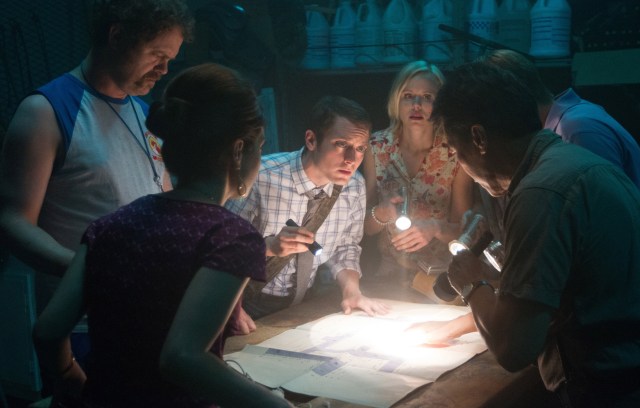
A fun and screwy horror-comedy that isn’t afraid to get squishy. Making a bunch of children the enemy is hilarious as it leads to endless scenes of kiddies getting their brains bashed in. You don’t see that every day. I love that Elijah Wood has suddenly become the new face of VOD horror movies too. He’s a perfect fit and seems really at home in them. Cooties has a Joe Dante/early Peter Jackson vibe and for the most part proves to be an entertaining 80 minutes. Unfortunately the film never strays far away enough from formula to become truly great. I dug it. Plus I’m forever in the Leigh Whannell appreciation group so I was into Cooties from the start.

Posted in Reviews | Tagged , , , , | Leave a comment

Chi-Raq (2015)

ct-chiraq-miami-tail-ent-1107-20151106.jpg

Full of life and stylisitc vigour, Chi-Raq is the most eye-popping display of Spike Lee’s passions in years. That being said, it still suffers from the same problems that weigh down most films in his filmography. It feels over-stuffed and poorly paced. By the end it is reminiscent of a big technicolor blur that is tricky to recall. Either way, I’m a huge fan of Lee and his ambitions. His reach almost always exceeds his grasp but damn, at least somebody is still reaching. To make a movie this politically charged and urgent with rhyming dialogue and the scope of a big-band musical is pretty amazing!

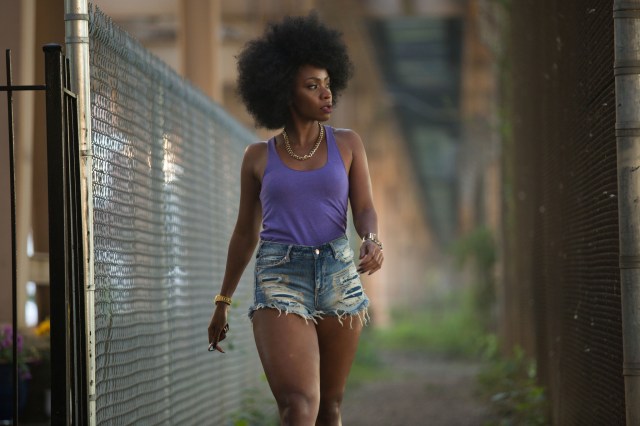
Teyonah Parris turns in a gob-smacking, star-making role as Lysistrata. Not only is she the sexiest damn woman you’ve seen on any screen in 2015 but she steals the movie from everybody who shares it with her. This is her movie as much as it’s Spike’s and I just wish her name was being tossed around more this Awards season. To make a movie that paints in such bold strokes and takes such stylistic gambles, you need a truly great actress to anchor it on and Parris keeps the whole thing ablaze.

I couldn’t be happier that this movie is connecting with so many people and getting a level of praise which has evaded Lee for over a decade. Just when we wondered if Spike Lee was still relevant, he shut all our asses down with a big stick of TNT. I wonder how well the film will hold up in a few years time as it’s power comes with how timely the message is. It’s messy, often frustrating and sometimes plain bemusing, but there are so many great individual sequences, faces and performances that you can’t ignore it. Say what you will about Chi-Raq but it doesn’t look or sound like any other movie made in the last 12 months. Unmistakably A SPIKE LEE JOINT!

Posted in Reviews | Tagged , , , , , | Leave a comment

Der Fan (1982)

tumblr_lyhcant54i1qm125zo1_1280

The praise surrounding the recent blu-ray release of this movie is what led me to finally seeing it. What a beautiful little oddity. Concerning the exploits of a young girl obsessed with a pop idol in 80s Germany, the film is a constant surprise. Clearly categorised as horror, that in itself is something of a spoiler as the film doesn’t really fall under that banner until the last twenty minutes. I suspect the final act would have had way more impact were I not expecting some kind of shocking act to eventually occur. That being said, when it finally happens it’s still got some serious kick.

Der Fan is refreshing in that it commits to getting us acquainted with the teenage girl at it’s centre. We hear the intimate details of her diary entries throughout the film and she becomes so much more than a mere horror heroine or obsessed music groupie. In the same way that Carrie makes you side with Carrie White before using that sympathy as a weapon, Der Fan‘s Simone becomes someone you truly care about an empathise with. In fact, you come to like her so much, when she does what she does in the film’s finale you actually root for her! It’s been a few weeks since I first saw the movie yet I can still recall so many details about Simone; her voice, the layout of her room, the posters on the wall, the looks she gives to those who come up against her. She’s a protagonist who really sticks in your head and in a perfect-world should become the poster-child for horror chicks-done-right!

Posted in Reviews | Tagged | Leave a comment

Clouds of Sils Maria (2014)

clouds-of-sils-maria-still-3

My first Assayas! Clouds of Sils Maria is a curious little movie. The mix of international stars with an unmistakable art-film sensibility is fun and actually lends the film more texture as opposed to weakening it. The film plays like a polite version of Maps to the Stars in it’s take-down of celebrity culture and Hollywood politics. It’s pretty savage when it wants to be yet never goes far enough to be considered rude or controversial.

The movie plays a lot with reality and dreamspace with many subplots left open-ended and strange flourishes peppered throughout. I haven’t seen enough of his work to know whether or not this is in keeping with Assayas’ previous films but it certainly feels like it. It’s got a lot of beautiful shots to gawp at and playful musical cues but the pace can be a big sluggish at times.

Pairing Binoche up with Kristen Stewart is a mini-masterstroke and the two are a fantastic double-act. I’m assuming the majority of the world are still dumb-as-fuck and see Stewart as “that chick from Twilight” but hopefully this (and her upcoming projects) will finally free her of any baggage. Chloe Grace Moretz too is clearly loving this opportunity and chews up the scenery whenever she gets the chance. It’s a tad grating at times but as the character is supposed to be that way I have a hard time blaming her performance completely even though it never feels like anything more than a fun bit of stunt casting. This is undoubtedly Binoche’s show though and the part really lets her dig into her own past as an actress and her image as international cinema icon before scratching it away to reveal the human being beneath.

The film didn’t really leave a huge impact on me (I’m more of a Cronenberg guy) but I’m sure it won’t be the last Assayas movie I experience. Can definitely see why many of my fellow cinephiles flocked to this with such enthusiasm.

Posted in Reviews | Tagged , , , , | Leave a comment

Room (2015)

room-film-sept15

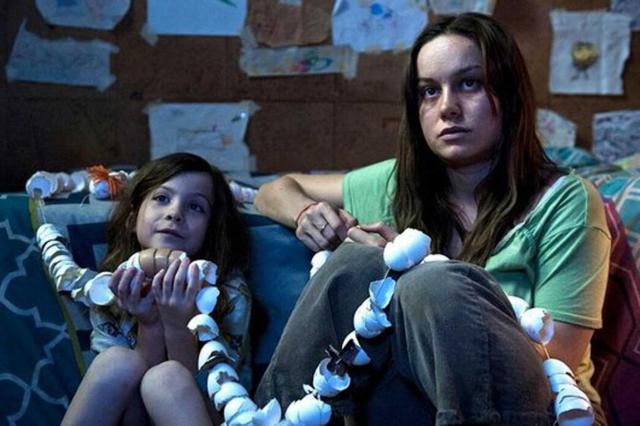
Room takes hold of you in it’s opening seconds and keeps a firm grip for the first hour. Director Lenny Abrahamson and writer Emma Donaghue (adapting her own novel) wisely confine the audience in the same room that has oppressed Joy (Brie Larson) for seven years and Jack (Jacob Tremblay) for his entire life. While successfully conveying the claustrophobia of this make-shift prison with tight compositions and cramped mise-en-scene, Abrahamson doesn’t miss the opportunity to inject some Grimm’s Fairy Tale flavouring. Room is told almost exclusively from Jack’s point-of-view and thus the room itself takes on the quality of a magical cave; fantastic yet not devoid of shadow and danger. This room is Jack’s entire universe, and we too come to look at it with equal importance. Their captor, Uncle Nick, is revealed slowly through slats in a cupboard or obtuse blocking and his presence in the film is always one of great discomfort. We never find out much about him, yet he also feels real and fully-rounded. Every grimm fairy tale needs a big bad wolf and he suitably fits the bill.

The performances from both Larson and Tremblay in Room are totally captivating and with little-else to distract from their work, location and plot-wise, in the film’s first half they make the limited space even more alive and threatening. Of-course, when the canvas widens and the real-world comes into play, a lot of Room‘s power is extinguished. The film doesn’t immediately suffer, you have come to care about these characters enough that you feel a need to know the rest of their story. However, upon hindsight I don’t feel it’s essential.

The performances never falter, Larson and Tremblay carry on their characters’ arcs with complete mastery, yet their situation just becomes less interesting. If you were to make a list of characters I cared most about in 2015, Joy and Jake would be high on it but the film itself doesn’t quite elicit as much passion from me. As I think back to the movie, I find myself returning to those early scenes where its just four walls and two characters surviving the greatest ordeal they will ever face. Their recovery is nowhere near as enlightening or unique. The film would have been much stronger, and bolder, were to it to remain confined and intimate and use the escape into freedom as a final note, rather than a midway checkpoint.

PS. As a big fan of Frank it’s great to see Abrahamson get some real mainstream attention from this movie without losing much of his sensibility, I just hope he doesn’t drift off into making awards bait from now on.

Posted in Reviews | Tagged , , , , , | Leave a comment

The Parallax View (1974)

zzvan2wdsf5kaheuoj8pygek7my

This is easily the least-essential of Pakula and Willis’ Paranoia trilogy, probably because the plot is the silliest and most pulpy of the three, but it’s still a great example of crackerjack thriller filmmaking.

I’ve been obsessing over Willis and Pakula’s collaborations on Klute and All the President’s Men throughout a lot of 2015 so felt the need to see the outstanding entry before the year is out. The two acheive a certain alchemy that is quite extraordinary, one of the great creative partnerships in 70s filmmaking as far as I’m concerned. Parallax View is sandwiched between those two movies and feels slight in comparison but still has a lot of fantastic moments. There’s a sublime cut early on that conveys the death of one character with real shock and the film stops around halfway through to show us a brainwashing film in full, perhaps in the hope that one of us in the audience might become brainwashed ourselves. I felt an influence from Frankenheimer’s Seconds and The Manchurian Candidate too which may be unintentional but the three would make a fun triple bill.

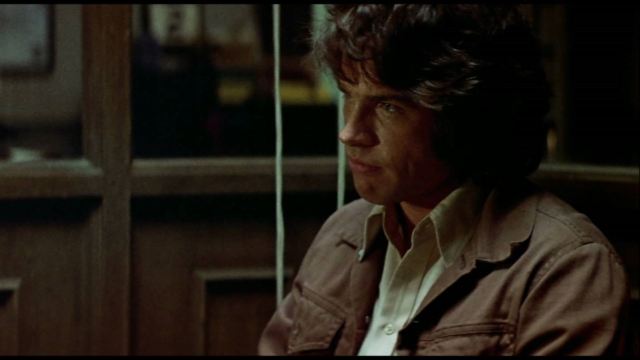
Not a film that got under my skin and psyche as much as I had hoped but Willis and Pakula’s filmmaking is so fucking on point. And hey, I’ve just seen another Warren Beatty movie!

Posted in Reviews | Tagged , , , | Leave a comment

Spotlight (2015)

spotlight01

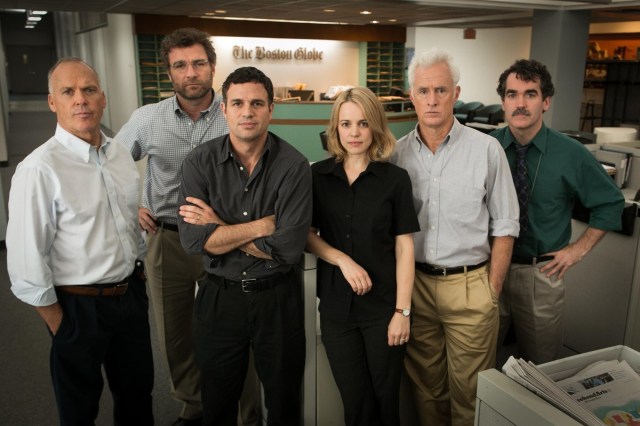
Much has already been written about how un-cinematic Spotlight‘s direction is and I agree 100%. Comparisons to All the President’s Men are appropriate as far as subject matter goes but in terms of execution the two really couldn’t be further apart. McCarthy lacks Pakula’s masterful handling of atmosphere and paranoia, and also Fincher’s obsession and precision that he applied to Zodiac; his dissection of professional journalism. Spotlight‘s only real fault is that it feels like mere drama as opposed to a piece of full-blooded cinema. That being said, with performances and a plot this engaging the film remains totally riveting.

Keaton, Ruffalo, Tucci, McAdams and Schrieber are all chameleons when the work demands it of them and they all disappear into their roles here. It’s a showstopping ensemble to say the least and rarely does a scene go by where you aren’t electrified by one of the actors of screen. I’m long overdue getting familiar with McCarthy’s work but this one really gave me the kick to seek out his other movies. Spotlight is one of the most engaging films I’ve seen recently and impressively avoids being heavy-handed for the most part, probably because McCarthy avoids letting the film feel “handled” in any way. It might mean the movie looks flat and void of any visual panache, but it ensures that the words and performances are front and centre.

Posted in Reviews | Tagged , , , , , | Leave a comment