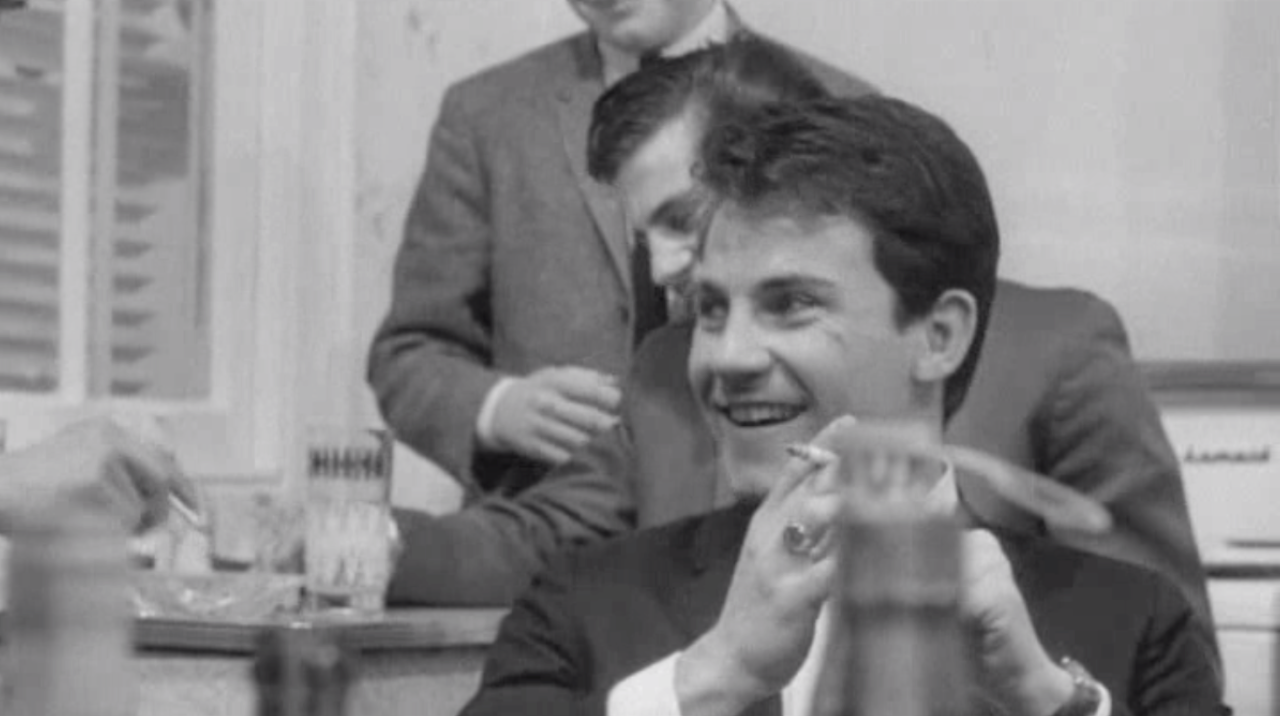
Rumble Fish (1983)

One of my favourite Coppola movies made during that sweet-spot period in his career (the 80s) where he just tried to see how weird and experimental he could get until the bankers shut him down.

Shot back to back with The Outsiders (both are based on novels by S.E. Hinton) and retaining the same crew and much of the cast, Rumble Fish is surreal and expressionistic where that movie is sprawling and operatic. Part Orson Welles, part German Expressionistic nightmare, the monochrome photography is phantasmagoric. It not only looks like nothing else Coppola had made up to this point but like no other American movie in 1983. The technical innovations are quietly revolutionary and the film’s atmosphere – a rippling pond of dream stupor – is constantly arresting. Like all Coppola’s movies it has a fascinating sound design too, which gleefully blurs the line between diegetic and non-diegetic without any consideration for logic. It’s all about feeling and suggestion. Even the score by Stewart Copeland – all metallic noises and ticking edges – feels way ahead of its time. 

A host of Coppola regulars fill out the cast. Matt Dillon and Diane Lane (heart eyes) return from The Outisders along with Apocalypse Now alums Dennis Hopper and Laurence Fishburne. I also love how Tom Waits became Coppola’s good luck charm as he appears in almost everything he made from the 80s onwards. This is also one of Mickey Rourke MKI’s greatest performances. The whole thing is so stylised and the performances are likewise tuned to a heightened state. Some are incredibly quiet and gentle, others are furiously hectic. Every part of this movie adds to its aesthetic and even when the actors feel like extensions of the art-direction, it works. 

Whenever anyone assumes Coppola simply retreated into making tosh after Apocalypse Now, I always point them towards Rumble Fish (and the equally ambitious One From the Heart) to show that he continued taking huge risks and pushing himself artistically long after 1979, they just failed to connect with people. It’s no surprise that Coppola considers this film (and The Conversation) his favourites as it heavily foreshadows similarly insular and avant garde late-period works such as Tetro and Twixt. Like most films Coppola made post-Apocalypse, this film is in desperate need of reappraisal. I know it recently got a Criterion release but the buzz around that seems a lot quieter than I expected. He may have made his masterpieces in the 1970s, but the 80s period is full of endless riches worth your time. Rumble Fish is the jewel in that crown.

Watched on Eureka Masters of Cinema blu-ray

Posted in Reviews, Rewatch | Leave a comment

Ferris Bueller’s Day Off (1986)

The older I get the more Ferris Bueller comes across like a massive cunt. 

Still, this is probably my favourite John Hughes movie and one that had an especially potent impact on teenage me. Looking at it through cinephile eyes I’m always struck by the visual aspects. Not just the comedy (though the visual gags are stellar) but the invention in the cutting and framing. Hughes’ confidence in just letting the film be its own thing, complete with musical interludes and extended asides that feel as close to experimental cinema that something this mainstream and light can get, demands to be celebrated. The entire museum sequence is practically the whole film distilled into two avant garde minutes. It’s still bracing in a “you can do that?” kind of way. It’s just a damn good time at the movies, man. Killer soundtrack too.

Watched on blu-ray

Posted in Reviews, Rewatch | Leave a comment

10 Rillington Place (1971)

What an unpleasant movie. Utterly relentless in its nastiness, the whole thing is grounded by a handful of exceptional performances. Richard Attenborough disappears into the role of mass-murderer John Christie to the point where just looking at him made me uneasy. It features a terrific and key early performance from John Hurt too as well as stellar work from both Judy Geeson and Pat Heywood. 

The film unfolds over decades but director Richard Fleischer really doesn’t draw attention to the passage of time by smearing his actors in increasingly complex make-up and story re-sets. Soderbergh and Scorsese are the same. It makes the whole thing far more coherent. The performances sell the time-jumps better than any wig could and as the years tick by, Christie becomes more pathetic but his evil becomes all the more suffocating. 

I love how horrible this vision of Britain is too. So bleak, so 70s. All this from an American filmmaker too. The cinematic eye is extremely immersive. I’m astonished at how versatile a filmmaker Fleischer was (just look at his filmography to see what I mean) but he was as adept as the best of them. The way he shoots the murder sequences here is sublime. It’s a very low-key film and, considering the extreme subject matter, impressively avoids hysteria and sensationalism. It hits you with blunt force, leaves you with mass trauma. A film I would describe as being genuinely upsetting. For feel bad vibes*: watch immediately. 

*Real talk: was 1971 the ultimate year in bummer cinema? A Clockwork OrangeStraw DogsThe DevilsDirty HarryWake In FrightTwo Lane BlacktopGet Carter, Polanski’s Macbethand 10 Rillington Place. Bummer, man.

Watched on Indicator blu-ray

Posted in Reviews | Leave a comment

Alien: Resurrection (1997)

maxresdefault1

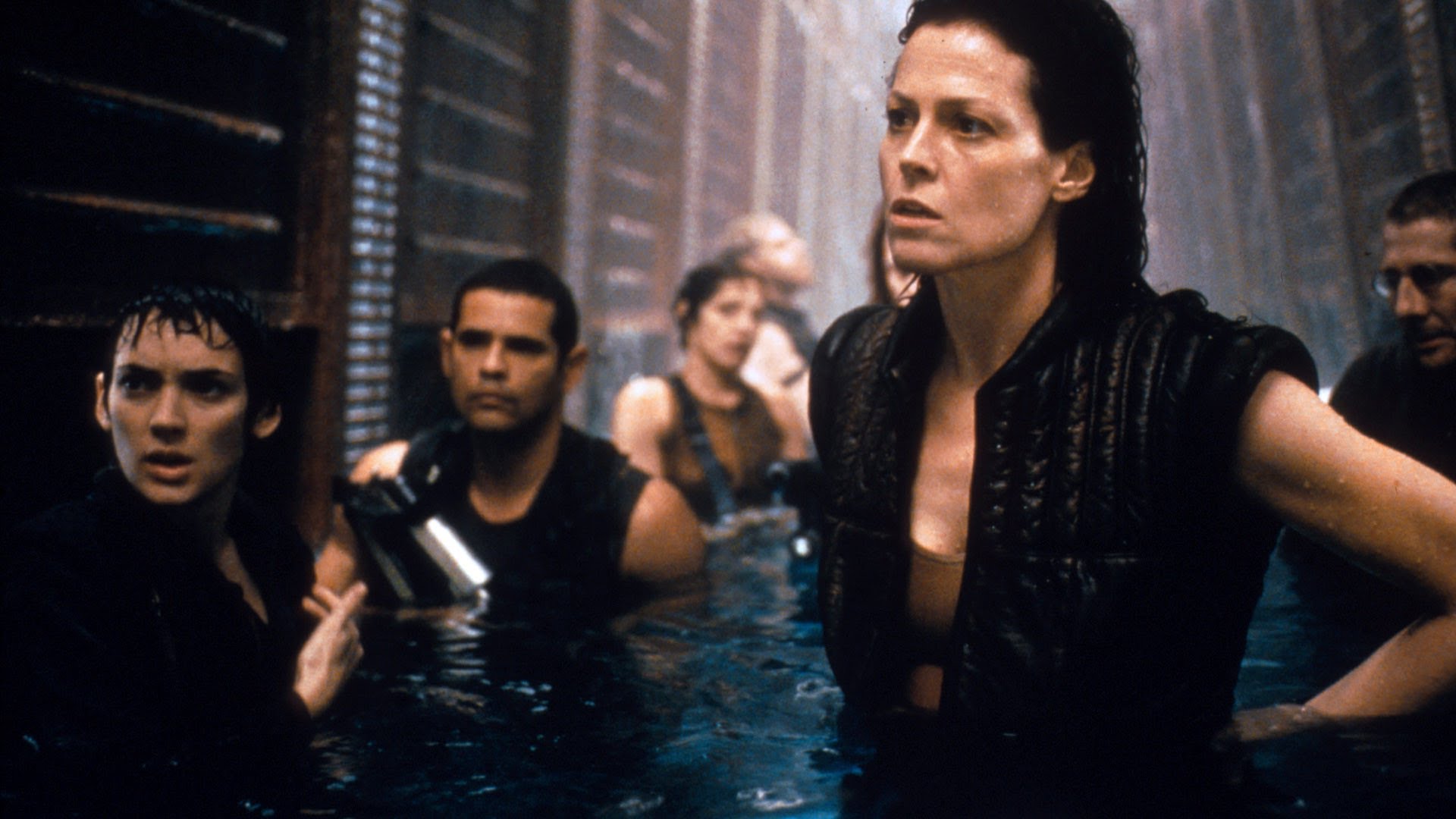
Much like Alien3, Alien: Resurrection is a far better movie than its reputation suggests. Joss Whedon’s script is as quippy and swashbuckling as you’d expect whilst doing a solid job of recovering the series from the ultimate downer of Alien3 (I’m a fan of Whedon but I know many aren’t) . I dig the “Jump into the future with a cloned Ripley” concept. I mean how else are you going to retcon Ripley’s suicide while also establishing a new dynamic? I think its a pretty smart solution that opens the movie up to its own unique concerns whilst retaining the obsessive Weyland/Yutani thread present in all the other flicks. Plus, it continues the trend of the franchise re-inventing itself with each sequel.

This movie always gets points from me because it’s got some conceptual stuff that is absolutely disgusting. It has the most body-horror of the original four films and that stuff is actually foregrounded as part of the cloning plot. The design of the Newborn especially is the stuff nightmares are made of. Take the whole sequence beginning with Ripley descending into an orgy (?) of Xenomorphs up to the birth of the Newborn and death of the Alien Queen and just consider it for a second. I can’t believe a massive production like this dedicated so much of its runtime to something so fucking icky and gross. Ugh. And just to be clear: I consider all that discomfort a big compliment to the movie. There’s honestly things in here I will never, ever forget.

Jeunet brings a whole new eye to the franchise too. Coming hot off of Delicatessen and The City of Lost Children (sans Marc Caro) this is easily the most bugged out the series ever got (so far). Utilising Gilliam-y wide lenses, a zippy camera and countless Raimi-esque crash-ins, master DOP Darius Khondji transforms Resurrection from austere sci-fi into frenzied comic strip. The casting of class-act weirdos like Dominique Pinon, Brad Dourif and Ron Perlman lend the film a load of flavour too. Even Leland Orser pops up, playing basically the same crying mess he played in Se7en. Weaver and Ryder fit right in and considering their paycheques, it’s a wonder neither of them seem to be merely phoning it in.

There’s no way you could have made this with classy wide shots, slow pacing and A-list character actors. It’s a goddamn 90s movie and Jeunet, in my opinion, was one of the best international sylists to emerge in that decade. The fact he got to make an Alien movie is so bizarre. Yes it has its fair share of problems. It certainly feels the most disposable of the original four movies. Weaver’s Ripley clone is inherently unable to muster the same emotional connection from the audience because at the end of the day, she’s not the same Ripley we spent the last three movies with and is little more than a curious cover version. Still, Weaver was clearly enjoying doing something different in this milieu and I would’ve liked to see that thread continued. The barrage of wham-bang set-pieces and revolving door of series iconography is cool on the surface (swimming Xenomorphs!) but, unlike Aliens, fails to appeal beyond mere popcorn spectacle. It gets worse as it goes along too and climaxes in a bit of a fart. But then again you also see that ghastly Newborn get its guts sucked into its throat and into space through a ruptured hole on a spaceship. Nasty, nasty, nasty. Can an Alien movie ever go too far? This one came closest to finding out.

Watched on blu-ray.

Posted in Reviews, Rewatch | Tagged , , , , | Leave a comment

Weird Science (1985)

1gnj5p

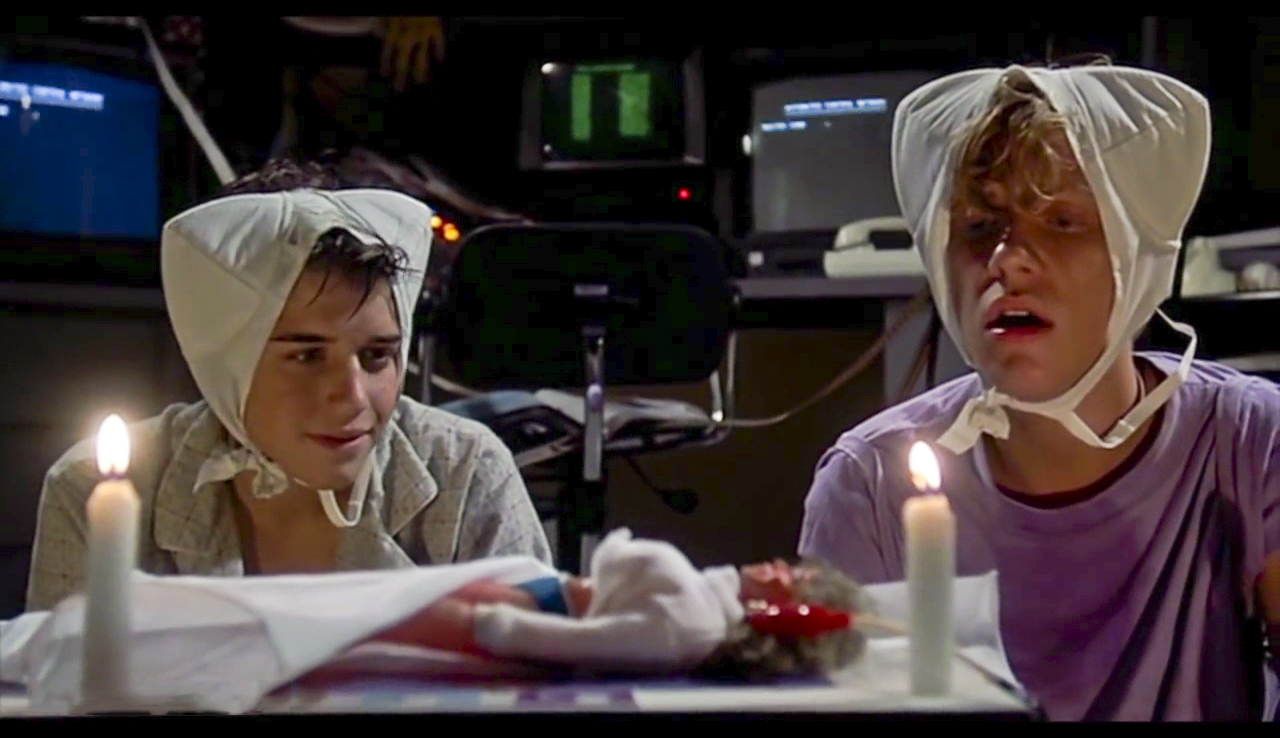
Well, it’s definitely Hughes’ weirdest movie. A few things:
– This is the last time Anthony Michael Hall looked anything like Anthony Michael Hall.
– I totally forgot about the explicit references to The Hills Have Eyes and The Road Warrior. Michael Berryman from Hills and some dude from Road Warrior practically reprise their roles here. Nutty.
– Is Kelly LeBrock Gillian Jacobs’ mother or something? Damn they look alike.
– Bill Paxton as Chet, man. RIP Bill 😦 😦 😦
– Let’s cherish this brief moment in time when Robert Downey Jr. could believably play second fiddle to Robert Rusler.
– I can see the artistic appeal of a movie like this to someone like John Hughes. After the angsty chamber piece The Breakfast Club (he apparently wrote this on evenings while shooting that movie) he clearly just wanted to let the fuck loose.
– It makes you wonder how varied John Hughes’ career would be if he made every single script he wrote. It’s probably for the best that he didn’t as he ultimately had a pretty strong batting average, but films as batty as this rarely come from a filmmaker as unexpected.
– While it often indulges in many of the worst tendencies of 80s teen cinema and sex comedies the whole thing is pretty tame and harmless.
– That being said, it’s still pretty dumb. Watching it with non-teenage eyes means a lot of the charm and innocence is lost.
– Title song is my jam. Oingo Boingo for life.

Watched on blu-ray.

Posted in Reviews, Rewatch | Tagged , , , , , | Leave a comment

The Breakfast Club (1985)

ct-the-breakfast-club-30th-anniversary-20150217

“A movie about a bunch of stereotypes who complain that other people see them as stereotypes.” – Pauline Kael on The Breakfast Club

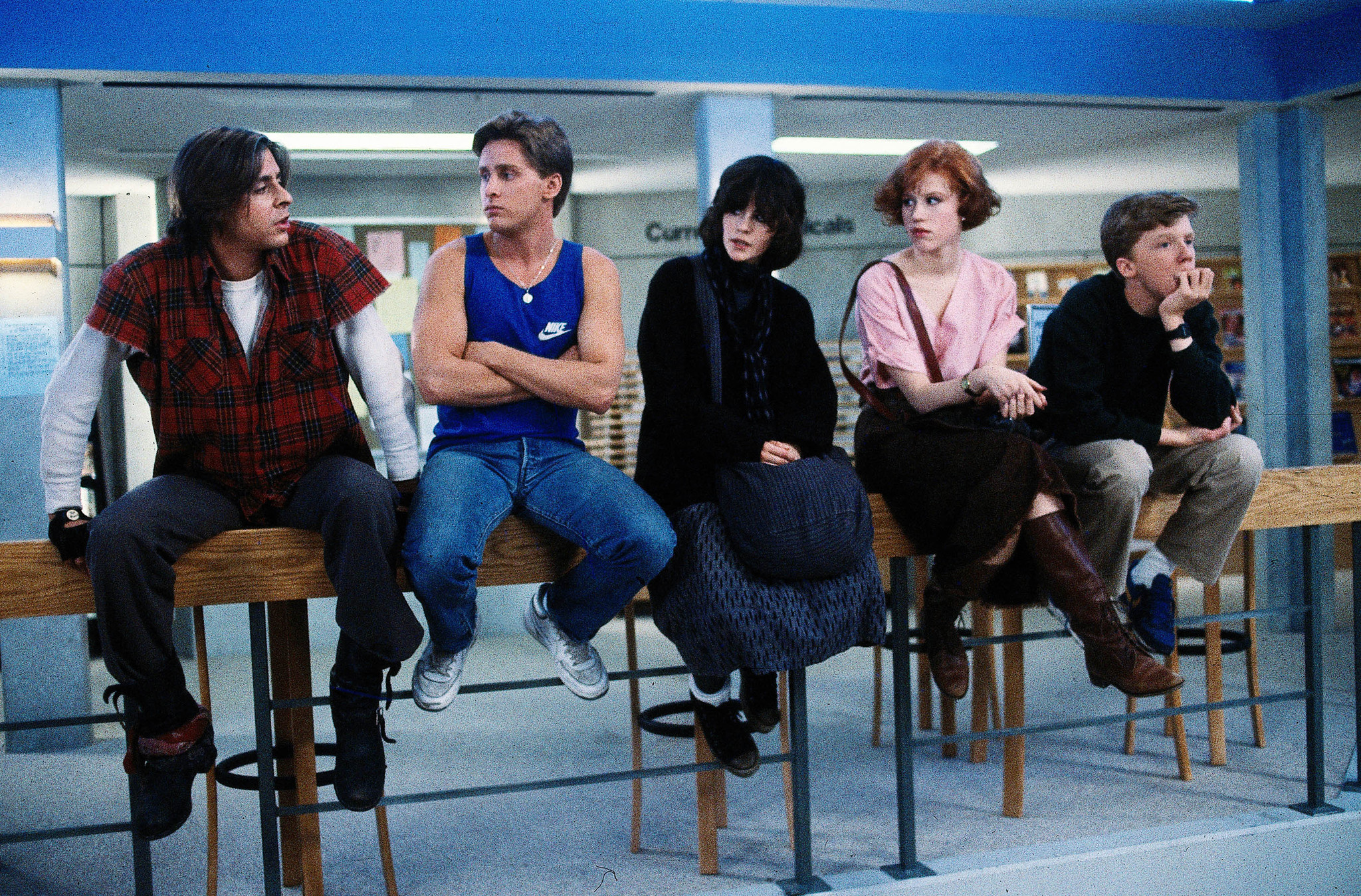
I think the thing a lot of people struggle with, but rarely talk about, is how a certain stretch of The Breakfast Club is kind of a bummer to sit through. The first two acts, which set up all the characters and have them gleefully spar off one another, is zippy and entertaining and part of why the movie is so re-watchable. There’s a lot of movement and variation early on. The film begins with more of an episodic beat as Hughes mines a boring, Saturday morning detention for all the verbal comedy and visual wit that its worth. Therefore, as soon the film grinds to a halt for an extended group therapy session, things become painfully static and serious. The movie suddenly stops being fun.

But it’s that sequence that secretly makes The Breakfast Clubso fucking great. The rawness in the performances always makes me very uncomfortable. You just want to get back to seeing these characters sassing each other, but Hughes never gives it you again. Despite his characters being rather thin with personal issues that are not particularly original (spoiler: it’s the parents fault!) he still manages to make you care about them enough that when they suddenly start bearing their heart, it’s painful. You want to look away. It’s always tempting to hit that fast-forward button and yet, I never do.

By working with such basic archetypes and keeping them relatively restricted to their own individual schticks, Hughes manages to do a lot with very little. This is such a simple concept for a movie and even in that dramatic stretch, which makes the 90 minute run time feel suddenly overlong, you realise only John Hughes could make this movie. He was the only filmmaker in 1985 who gave enough of a shit about this generation – embodied by and presented as cinematic stereotypes – to actually give them their own movie just to have them talk to one another. By the end you’ll think “hey, I guess stereotypes have feelings too!” It’s a weird fucking movie that could probably be improved upon in a number of ways (like, by not being the whitest movie ever) but the fact it speaks to so many people shouldn’t be ignored. It set a precedent for what “teen” movies were allowed to be and Hughes never made a movie like it ever again. No matter how many times I see it, I’m always thankful that The Breakfast Club exists. It still feels like an achievement.

Watched on blu-ray.

Posted in Reviews, Rewatch | Tagged , , , , , , | Leave a comment

Alien³ (1992)

alien-3-06-g

Everyone considers Alien³ a stain on both the Alien franchise and Fincher’s career (himself included) but his fingerprints are all over this thing. I mean, its surely one of the most nihilistic studio movies ever made. The cold-blooded way they off-handedly dispatch both Hicks and Newt (off-screen, between movies no less) is so ruthless. I know many fans (and Michael Biehn) regard it disrespectful but the cruelty is in keeping with the coldness established in Ridley’s original. Like, unless you’re Neil Blomkamp, do you really want to see Ripley, Newt and Hicks bumming around on a new adventure? This has always been Ripley’s story at its core. Those guys were just passengers. Plus, the ending of Aliens is perfect because of that very reason: it’s an ending.

Despite what most people say, this flick does occasionally conjure up some genuinely distressing imagery and emotions. The autopsy scene, for instance, is legit upsetting and disturbing. The overall dilemma Ripley faces is dramatic too, and completely different to anything in the previous two films. The overall tone is so serious and dour. All hope is lost in this fucking movie. Name me another tentpole flick that ends with the heroine tossing herself into molten lava while cradling the foetus of an alien creature which has just burst through her ribcage. This is some seriously bleak and apocalyptic shit, and shockingly so. Plus the design work is beautiful.

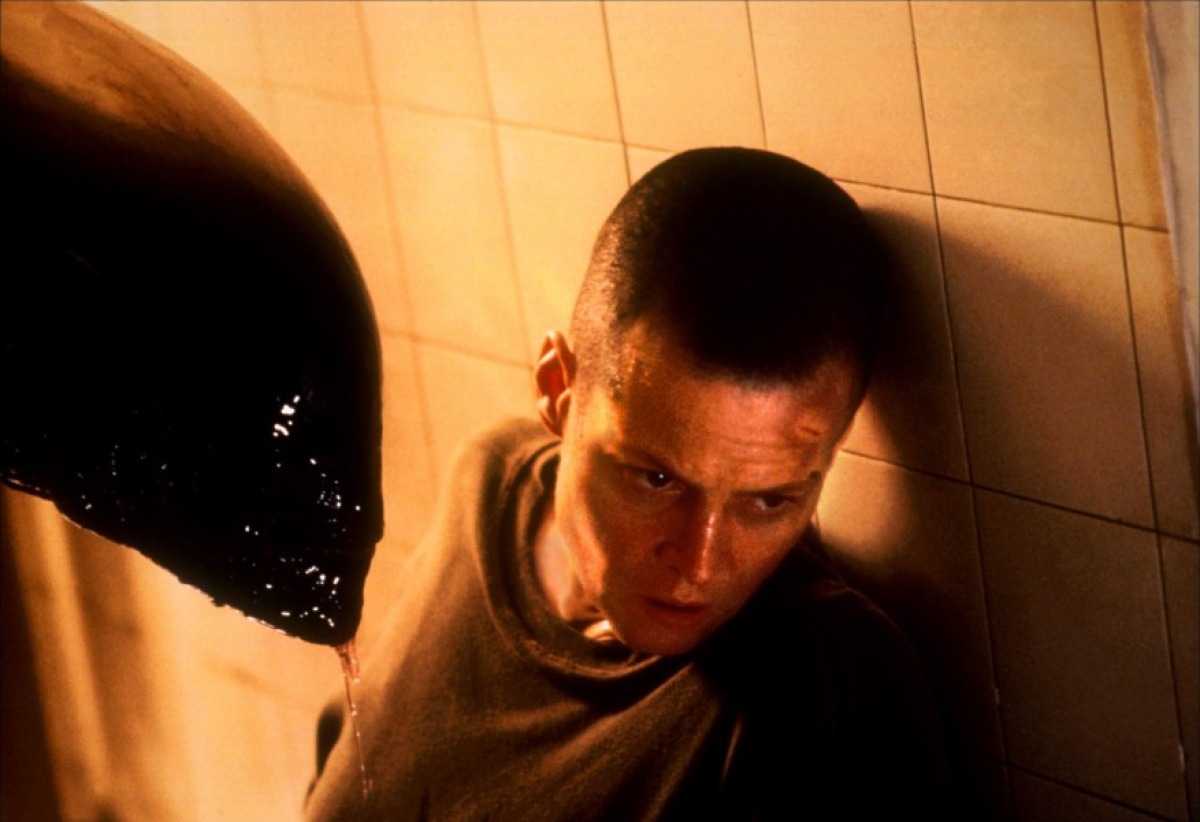
Like Scott, Fincher is great at painting grotesque pictures and even here, with his arms tied behind his back, he can’t help but create something gorgeously ugly. I’d even argue that the image of Ripley here, with the shaved head, is the look of the character which many will subconsciously consider definitive. The re-design of the Giger’s Xenomorph is cool too. I really dig the amber/golden finish from all the fire reflecting off of it and the fact it is mostly exclusively quadrupedal. It’s something different and, in keeping with the last two movies, evolves the mythology of the creature. Boxes ticked.

While it’s not Alien or Aliens, at the very least you should consider Alien³ a success because it doesn’t attempt to merely rehash what went before or soften any edges. This is easily the toughest movie of the entire series and is all the better for it. This is a horror movie after all. Flawed and stupid in a lot of areas, yes, but as a visual exercise in apocalyptic terror, it’s far better than most people give it credit for and incredibly memorable. The original workprint version is better still. I wish franchises today had the balls to be this gruelling.

Ridley, it’s over to you. (Again)

Watched on blu-ray.

Posted in Reviews, Rewatch | Tagged , , , , , | Leave a comment

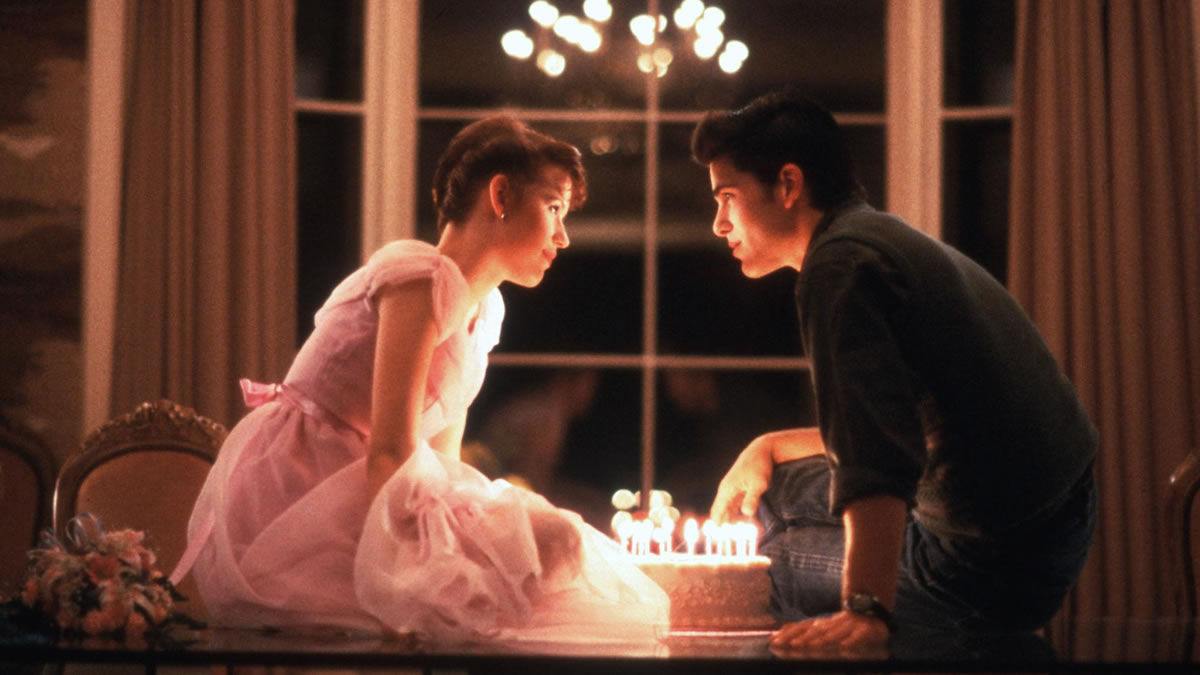
Sixteen Candles (1984)

sixteen-candles-1200-1200-675-675-crop-000000

John Hughes’ first film as writer and director has both aged really well and terribly. The good stuff: Hughes’ knack for 80s teenage vernacular is still wonderful. Obviously teens didn’t really talk like Hughes wrote them, but as a stylised appropriation you couldn’t ask for anything better. Sharp, insightful with just the right amount of snark. The moments of insular discussion still feel revolutionary (and would be promoted from shading to the foreground in the following year’s The Breakfast Club) and even though it paved the way for decades of more intelligent teen flicks, no-one has ever really come close to establishing a voice as distinct as Hughes’.

The fact Sixteen Candles looks and feels so 1984 also works in its favour. Look at that title sequence set against images of teens walking into school: the emphasis on their clothes, their shoes, the hairstyles. It feels like the kind of thing a teen movie set the 80s released today would do. Hughes was ahead of the curve. He wasn’t afraid of being contemporary and putting a pin in his own day and age instead of trying to look forwards or backwards. He was regarded as one of the quintessential 80s filmmakers for a reason: he made movies about the 80s.

It’s really well cast too. Molly Ringwald had a look and cadence all of her own. There’s still, to this day, never been a teen icon quite like her. This really is a lovely, star-making performance and it doesn’t surprise me to learn Sixteen Candles was essentially written by Hughes following a sudden burst of inspiration after seeing Ringwald’s headshot. Anthony Michael Hall is fucking great too. As the Geek (maybe the best version of that stereotype ever?) he is so strange and unique. The scene he shares with Ringwald in the shop class during the dance remains a highlight of Hughes’ career and really the primer for everything he would become known for. Teenagers rarely let their guard down and talked like that in movies before Sixteen Candles and the scene still feels like a rug being pulled out from under you.

And the bad stuff. Well, Long Duk Dong. What the fuck were they thinking? Didn’t Hollywood learn anything after Mickey Rooney in Breakfast at Tiffany’s? There’s also some implicit date rape humour that sits uneasily when watched today. You can definitely attribute both these things to the trends and attitudes of the day (and Hughes was always pretty useless when it came to depicting anything other than white American middle/upper class) but it doesn’t erase them. They’re quite the tarnish on an otherwise lovely film.

What else? Oh yeah. The male “hunk” Michael Schoeffling is about as dynamic as a fucking wet napkin. The fact so much of the film hinges on a potential romance between him and Ringwald (who is like a shooting star in comparison) makes it even harder to swallow. Imagine this movie with a young Matt Dillon or Rob Lowe instead and the movie immediately improves. There’s also some dumb lewd humour that was never Hughes’ strong point. The insert of a pair of tits feels like an obligatory holdover from his National Lampoon days and sticks out like a sore thumb in a movie that otherwise has more of an intelligent head on its shoulders. He’d exorcise most of this out of his system with Weird Science but here it lingers.

Overall I’m still really fond of Sixteen Candles. As a big Hughes fan I have a soft spot for this movie because it establishes so many things he would go on to be known for: the savvy teens, Chicago setting, the introspective shadings, the killer soundtrack as well as an eye for some excellent visual gags. The presence of Ringwald and Hall at their most fresh-faced is also gigantic. The last time I saw this was many, many years ago but I found myself eagerly anticipating many lines and sequences as if no time had passed at all. I also found myself dreading certain things (like a gong sound effect *sigh*) but even those are a vivid reminders that for everything great about the eighties (like John Hughes for one), some things also really sucked.

Watched on blu-ray.

Posted in Reviews, Rewatch | Tagged , , , , | Leave a comment

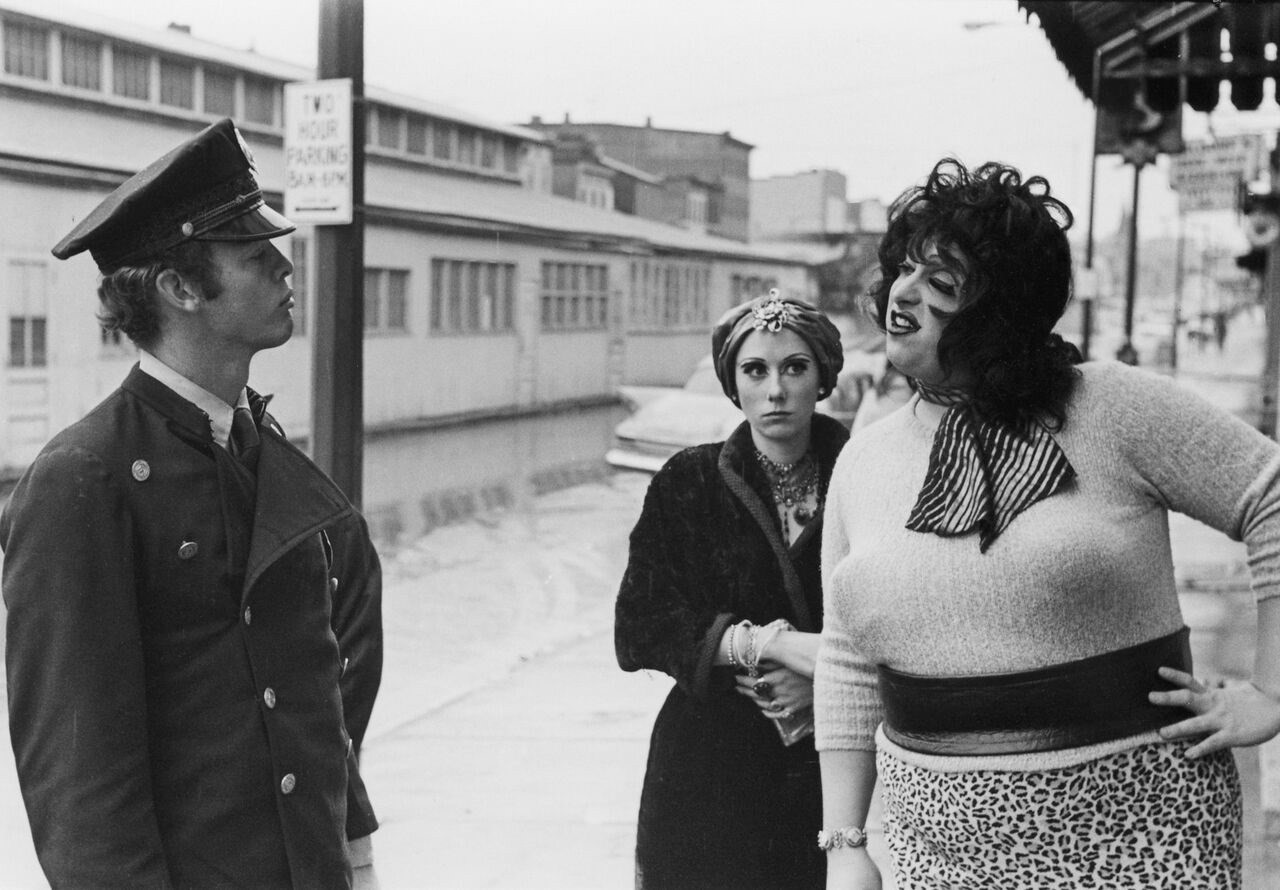
Multiple Maniacs (1970)

363032

Don’t worry, the irony of seeing Multiple Maniacs, my first John Waters movie, via a pristine new HD restoration courtesy of the Criterion Collection is not lost on me. There’s no doubt that seeing Waters’ movies, especially these early ones, on anything other than a beat-up 16mm print projected onto a dingy bathroom wall massively dilutes the experience. But what a world we live in when you can buy a movie like this with that coveted “C” on the spine!

I’m happy to report though that all my preconceived notions of what a John Waters movie entails turned out to completely accurate. This is more or less exactly the kind of film I hoped it would be. Scuzzy, amateurish, disgusting and provocative, Multiple Maniacs flies its flag proudly in favour of all things bad taste. Waters’ sloppiness behind the camera is made up for by the carnival-like sense of rebelliousness and freedom driving every madcap episode. It’s rare you see people like this on screen, some of them closer to creatures than conventional human beings – which should be considered a compliment – so free of inhibitions and, seemingly, dignity. It’s thrilling to see this side of creativity represented by such raw images. In its own way, it’s extremely beautiful and endearing. Waters acts as ringmaster for his repertoire of outcasts and lunatics and the low-fi zaniness is, for a time, quite intoxicating.

Now this is a 90 minute movie but it feels long even at that ideal length. There’s so much screeching and madness that after a while, close to the halfway point, it all starts to feel a bit like numbing white noise rather than a freewheeling aphrodisiac. The episodes quickly feel repetitive and Waters’ limited technique soon outstays its welcome. It’s the kind of movie that, if made today – in itself an impossibility – would be criticised for being a short film stretched to feature length. I definitely became restless the further it went along which diluted the overall impact quite a bit. Despite this, the film has one last showstopper up its sleeve which comes in the shape of probably the greatest rape scene ever committed to film. Now…in true Waters fashion, I understand how unbelievably icky that statement sounds (I’m not really prone to ranking cinematic sexual assaults) but the one Waters orchestrates here, involving a Divine and a giant puppet Lobster, is so unbelievably bonkers that it instantly becomes something you’ll never forget. The epitome of the words “WHAT THE FUCK?”, for it to become anything other than all-timer is flat out wrong.

Regardless of its shortcomings, Multiple Maniacs is still an important part of cinema history, even if that part resides in one of its dirty little corners. I hope this is the first of many Waters movies Criterion puts out as I’ll happily splash out on them all. Waters is a fascinating figure in film, and the many posters adjorning bedroom walls in this movie – Polanski, Pasolini and others – suggest that he himself had more highbrow taste and ambitions than perhaps his movies suggest. In that sense, I guess its apt that a boutique label like Criterion and not a bathroom wall should be their ultimate home.

Watched on Criterion blu-ray.

Posted in Reviews | Tagged , , | Leave a comment

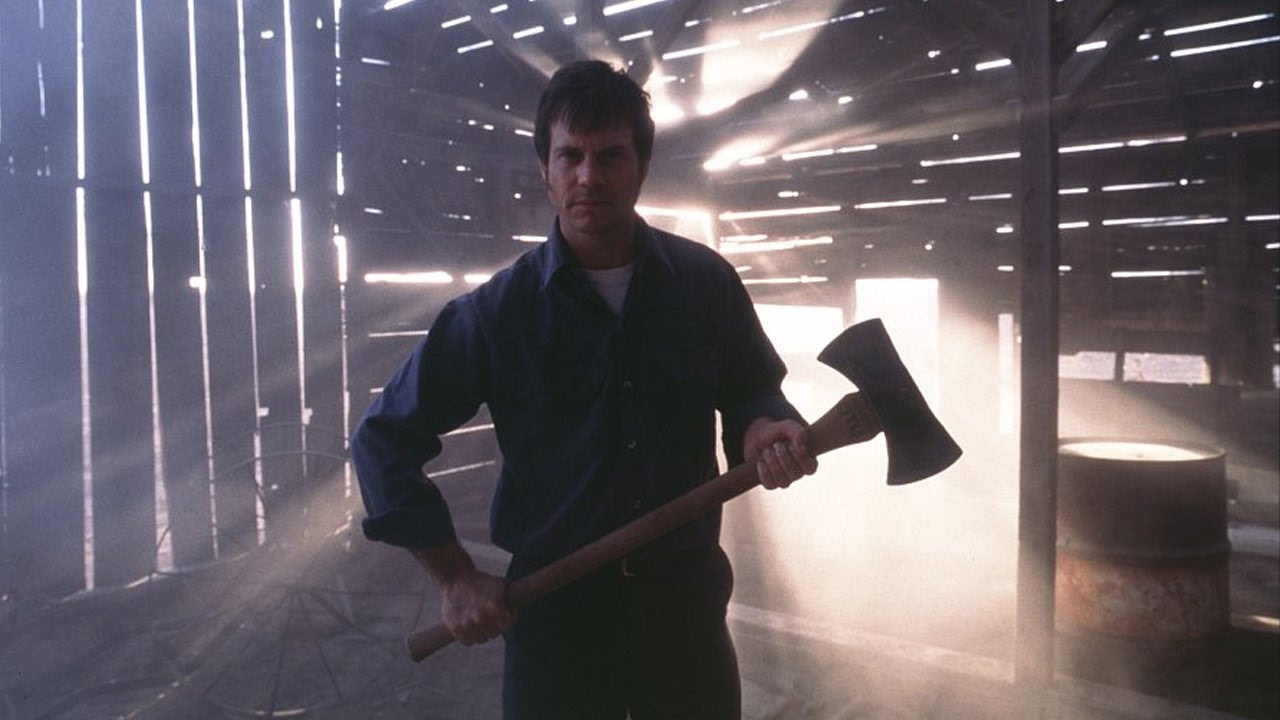
Frailty (2001)

paxton-frailty

Frailty is like the greatest Stephen King adaptation that isn’t adapted from a book by Stephen King. Watching this movie, with its pulp-mystery structure and literate archetypal characters, gives me the same feeling I get when I read a lot of those great King novels. It’s a real page-turner of a movie. Unapologetically mainstream but totally unafraid to tackle a lot of challenging ideas in regards to religion and faith. It does’t offer any easy answers but feels complete in its open end-ness. There’s something incredibly upsetting and bleak about those final moments. Maybe it’s because the conclusion it reaches is uncomfortably honest and true. Probably Bill Paxton’s greatest achievement. The fact he managed it as both actor and director is pretty remarkable. There’s also an axe called Otis that is the best axe in film history. Suck it, Jack Torrance.

R.I.P. Bill.

Watched on blu-ray.

Posted in Reviews, Rewatch | Tagged , , , | Leave a comment