Bong Joon-ho’s steady sidestep into blockbuster filmmaking over the last decade without losing a single ounce of his skewed worldview or compromising an inch of his craft continues to absolutely knock my socks off. There are days, like when I first saw Memories of Murder, The Host, Snowpiercer and now Okja, where I feel like declaring him my favourite filmmaker of all time. He’s certainly way, way up there.
His big pig movie is everything I wanted and more. The story, the characters, the overall fucking design…damn. It meshes the big with the little, the hard and the soft, the intimate and the spectacle with such care and craft. I laughed, I cried. That final shot! Even without knowing what the flying fuck Jake Gyllenhaal was doing, I flat-out ADORED it. My favourite movie of 2017??? Very likely.
This is essential viewing if just for Sarah Silverman’s extraordinary, transformative performance. It often feels like stunt casting when you get comedians in serious roles for indie films but Silverman bears herself so openly here and is so far from her usual persona that it is a genuinely inspired move. Even in something like Take This Waltz she emitted a somewhat radiant presence but in I Smile Back she is bitterly chilly and hostile. Wow.
I watched this very late at night, so late that even the minuscule 84 min runtime looked somewhat daunting but, luckily, the film really engaged me, especially in its opening act. As a day-in-the-life of Silverman’s character, Laney – an addiction riddled housewife recovering from mental illness – it is pretty eye-opening. To see her indulge in her various destructive vices while simultaneously keeping up the facade of normality is captivating. Interestingly, the score feels like something out of a Bourne film too which on paper sounds like an odd choice but it works totally. The filmmaking is at its best here, the handheld camerawork utilised perfectly to plunge you headfirst into this character’s headspace and world. It is chaotic, violent, fragmented but also mundane.
Sadly the film soon shifts gears into a bit of a self-help drama and loses a lot of the immediacy and formal punch of the opening act. Silverman keeps you engaged but the narrative beats feel less unique, more familiar and, well, boring. I would have happily watched this film structured as just one very long day-in-the-life drama of this character, to see her compulsive destructiveness tear her world apart bit-by-bit (I wanted this to be Krisha basically). Then the film’s less-interesting mid-point could be its finishing line. After all, most of the stuff that happens from there you can easily guess without seeing. You may even come up with something better.
By the end the film becomes a pretty bog-standard example of typical indie filmmaking. Well put together with a focus on drama, character and performance but ultimately stale and familiar. In fact it drifts awfully close to being misery porn as Laney regresses back to her old-habits and faces bad ordeal after bad ordeal with increasing grimness. I actually started to resent the film for taking Silverman’s beautiful, open-wound performance and gleefully pouring salt into it. The bleakness doesn’t feel like raw honesty (you can hear the writers shouting “people don’t just change like they do in the movies, man!”) but instead like a punishment to Laney for being so damaged. A character this unstable, with a performance this good, deserves some sort of compassion and tenderness, but with a blunt ending that literally cuts to black on a door-slam without any sense of optimism or redemption just makes you ask “well, what was the point?” Conflicted.
Charlize Theron to Seth MacFarlane in this film: You’re a catch. you’re sweet, you’re funny, you’re smart, you’ve made something for yourself out here! You deserve better than her! (Amanda Seyfried) Me: HAHAHAHAHA.
But in all honesty I don’t hate MacFarlane or anything like that. Neither was this as offensive or as in bad taste as I was expecting. It’s just excruciatingly plain, boring and unimaginative. And for a comedy it commits the greatest sin: it aint very funny. But then again, I’ve seen worse.
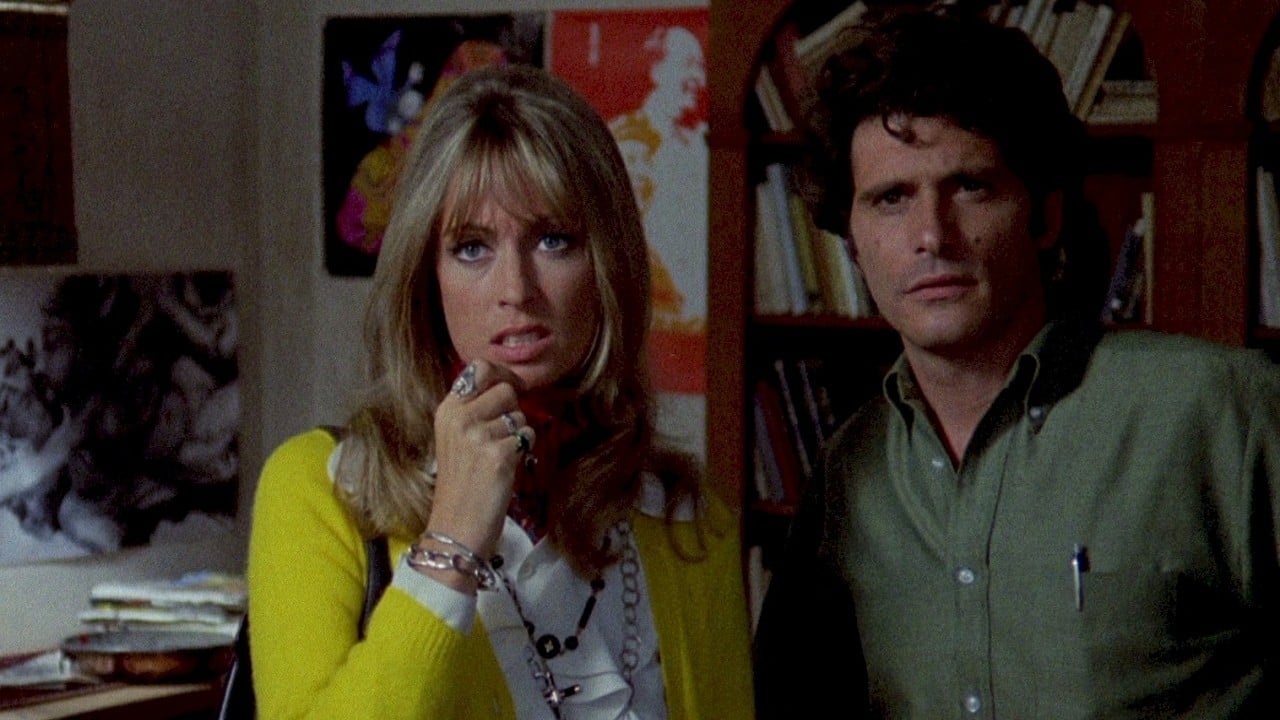
Just flat-out one of the greatest debut films ever made. Within the first ten minutes of The Bird with the Crystal Plumage you know you’re in the hands of a born filmmaker. The use of wide-shots in relation to a flurry of close-ups is remarkable. When Argento first cuts wide to Sam trapped in the gallery, it’s such a release. So much done with one fucking cut! Argento really came out swinging didn’t he?
The futurist design of Deep Red and Tenebre is here as are the earliest seeds of his gift for creating glorious murder set-pieces. This is about as normal as Argento ever got and while it’s easily his most restrained shocker as far as the violence and gore is concerned, he still knows how to use suggestion to make up for it. The attack on the woman in her bed as the killer runs a knife across her skin and tears her underwear off is so uncomfortable and a proper depiction of violation without showing any on-screen nastiness. The razor-blade attack is also aces even if its shot-construction is minimal (De Palma would do the maximalist version of this in Dressed to Kill). In both scenes, Argento also uses EXTREME CLOSE UPS of screaming mouths for added effect. He would take all of these techniques much further of-course, but even from day one they were so effective. Look at that transition from the painting in Dalmas’ apartment to the one in the killer’s lair. SO SIMPLE. SO GREAT. Argento was a proper top-tier stylist.
It also didn’t hurt that Argento had some future-superstar collaborators on this thing, notably DOP Vittorio Storaro – here working on his first colour film – and composer Ennio Morricone. Morricone’s score is never really mentioned as much as his spaghetti western work but it is equally memorable. The mix of creepy lullaby chants with freak-out jazz excursions is so groovy. That score along with Storaro’s glossy camerawork and Argento’s stylish direction completes a three-pronged attack on the senses that young genre audiences were desperate for in 1970. Argento took the giallo framework Mario Bava established and packaged it in such a fresh and exciting way that it’s no surprise this eventually became a worldwide hit. It is one of Argento’s most streamlined and effective thrillers, cut so close to the bone and with a central mystery that is as tight and logical as he would ever get. Big fan of this film.
Paolo Sorrentino just doesn’t do it for me. I certainly enjoy the aesthetic eye-candy but why do I find myself so bored during these things? Caine and Keitel make for an enjoyable double act (their combined acting history and status as British and American icons really adds a lot to their scenes) but every single scene they share is basically the same exact thing over and over. Sure, you might say: “that’s the point! It’s the mundane routine of their life!” but it’s just…not that much fun to watch. Like those in The Great Beauty I like the stylistic diversions but it does make the film feel scattershot as a whole. And the thematic observations feel extremely on-the-nose. Great cast. Proper A-grade filmmaking. Just not my tempo.
Antibirth feels like a horror film built from an arts and crafts box. Given that it mainly focuses on junkies, deadbeats and drug pushers it’s surprising how bright and poppy the ghastly sights can be. Maybe it shouldn’t be surprising as the film is written and directed by Danny Perez who previously directed Animal Collective’s nutty visual album ODDSAC. Nevertheless this is a different beast, even if it does share some visual themes.
Natasha Lyonne headlines the cast in a rare feature film leading role. She is one of my favourite actresses, totally unique to herself with a vast explosion of curly hair that often feels like a supporting character in her movies. She’s the perfect actress to pin this kind of oddball shocker on and she makes for an engaging, likeable fuck-up protagonist. Combining all sorts of horror textures, notably body-horror, the film never really grounds itself onto any one mode of terror and hops around freely. The down side of that is that you don’t get a grasp on what the film is trying to do or how it’s trying to scare you, making it a bit of a restless 90 minutes but on the flipside you also can’t be sure where it’s heading.
Sure enough, the film is never really scary but it does indulge in the squishier delights that come with this terrain. There are fluids, boils flooding with puss and bulging, swollen bellies. It’s clear Perez isn’t actually trying to make you scream as much as he’s trying to make you squirm. As opposed to really digging into that stuff and emphasising more of the medical reality – like, say, Cronenberg – Perez instead treats his horrors like a big old mist of bong smoke. Really, it’s just an excuse to trip out in a horror milieu. Naturally, this only takes you so far but can be appealing in small doses. I can remember the colourful nightmares and the almost textile-quality of some of the special effects (hence the arts and crafts reference earlier). The film culminates in a bugged-out finale that is stupid but memorable. It just doesn’t really amount to much sadly.
I did enjoy the evocative location work though. It all unfolds in a dead-end town with trailer-park flavour. The kind of cold-chill town that always seems to have random piles of snow on the sidewalk. The cast are all game. Not just Lyonne but Chloe Sevigny as her best friend and Mark Webber as a hapless drug dealer. All the ingredients are there for a really singular freak-out but Perez never mixes them together to bring out the best. It’s fine. I just wish it went further out into the fringes earlier rather than at the last minute.
I’ve gone from seeing zero Carlos Reygadas movies to seeing two in the past week. Silent Light is an especially major and transcendental work, one that I often see on those countless “Best Films of the Century So Far” lists and, honestly, it’s hard to argue with the acclaim.
Beginning with a sunrise, silence and a prayer as a family say grace before eating, the film unfolds like a steady heartbeat. The story loosely concerns a husband and father in a Mennonite community, Johan (Jacobo Klassen), as he deals with the guilt of an affair he is undertaking with a local woman. He drifts between family and friends and ruminates on the state of things. Emotion drives the environment, not logic. When he gets some bad news from his father, the scenery is suddenly covered with heavy snow. When Johan and his wife have an argument, an apocalyptic downpour takes place, mirroring the desperate sobs of his wife as she clings to a tree for solace. The sound design favours the nature, with the sound of rain cranked up so high that the raindrops become like machine-gun fire. It is one of those movies that is utterly FELT, deep in your bones and your soul. When a character inexplicably returns from the dead in the final scenes, the way the colour slowly fades back into her face and the presence of a single tear on her cheek are details that feel monumental. Breathtaking.
Reygadas composes everything in superb 2.35 : 1 frames too, occasionally pushing in or going handheld with proper specificity, adding a painterly, almost God-like view of everything. It feels like a religious film. Though it does not explicitly concern itself with such things beyond the Mennonite setting, like Bergman or Dreyer, the omnipresence of something is felt. Is that presence Reygadas, or just the power of cinema in general? Either way, the hovering weight in every cut and between every frame moved me something fierce.
Getting a feel for Reygadas’ tempo and sensibility over these two films – Silent Light and Post Tenebras Lux – has been quite wonderful. His penchant for casting real people, not actors, in all the roles (much like Bresson before him) adds an authenticity to all of the performances. Both these movies feel fantastic and sensual, though where Post Tenebras Lux is crueller, this one feels like a forgiveness. For what, again, I cannot say. It’s just a feeling. When a clock disassembled in the first scene is repaired in the last and the camera once again retreats to an exterior to witness an extended sunset, everything comes full circle. The prayer is finished. Dare I say masterpiece? I dare.
A strange hybrid of fly-on-the-wall documentary with fictional psychosexual melodrama, A Bigger Splash focuses on famed artist David Hockney during the fallout of his breakup with Peter Scheslinger and the creation of his iconic “swimming pool” paintings.
On the one hand it is very intimate and insular and on the other very operatic. At times it’s your standard doc – handheld, loose-focus close ups of pondering faces – and at others it feels like one of those Polanski-does-Hitchcock sexual thrillers. The music is BIG and bombastic, all strings and booming bass notes. The depiction of the gay social-scene feels very progressive too. This is a film full to the brim of naked asses and dangling dicks (Hockney’s included), as well as simulated male-on-male sexual antics. It’s not trying to be controversial or explicit either, but rather an attempt at portraying Hockney’s world and worldview as accurately as possible. It unashamedly looks at the world through a gay – without being sensational – lens and is all the better for it.
I’m not a Hockney expert by any means, far from it in fact, but the very idea of this movie is what drew me to it. It isn’t an educational work – you’ll know as much about David Hockney by the end as you did going in – but as a semi-experimental portrait of an artist during a key creative period it is wholly fascinating and unique. The blurring of the real and the manufactured is very well done (is this the first precursor to reality TV as we know it today?) and at a certain point you realise the whole thing is an illusion, not necessarily meant to be taken at face value but as a complimentary work to go alongside Hockney’s own. Also as a document of a specific lifestyle – the professional and social art world in 70s England – it is historically worthwhile.
De Palma is on fire here taking yet another silly political thriller framework (ala Blow Out) and turning it into yet another A-grade aesthetic funhouse. The opening steadicam shot is just ridiculous (in the best sense of the word) and the Rashomon riffage is a lot of fun. POV shots, split diopters, split screens, you name it every signature De Palma trick is present and accounted for, just the way I like it. Let’s not skim over Nicolas Cage in that jacket* either or Carla Gugino blonde-bobbed as one of De Palma’s classic red blood-on-virgin snow femme fatale/heroines. I have such a crush on her. Anyway, I’ve seen this movie so many times now I’ve lost count. If anyone knows how to pack out 90 minutes with highwire entertainment, it’s Brian De Palma.
*weird how in the 90s Cage worked with two of the best directors ever (Lynch, De Palma) and also wore two of the greatest jackets in film history in the process.
D’ya think Clint and his editors just looked at each other during post on this and said “you know, this is really fucking boring isn’t it?”
Eastwood’s inkblot cinematography is always a pleasure to sit through though. No movies look like his do. You practically have to squint into every frame and I really dig it. Other than that this is just a showcase for performances hampered by some silly make-up and wig work. Should have just got Leo to do the audiobook for some J. Edgar biographies and be done with it. Him and Armie Hammer are hella gay in it though which is a redeeming quality. Oh and Adam Driver pops up too. Everything else? Yawn.








 "This Film Should Be Played Loud"