All the Light in the Sky (2012)

all_the_light_in_the_sky

This greatly benefits from Swanberg turning his lens on older, more seasoned actors. Jane Adams is deservedly front and centre and the film feels like her property. Like Adams, her character is a mature character actress trying to navigate a career in an industry obsessed with youth and vanity, a conflict which gains more clarity with the arrival of her younger niece (Sophia Takal) who is also a budding actress. It’s one of Swanberg’s sweetest films, mainly compromised of frank, sincere conversations between actors clearly comfortable with one another.

They bring out the best in Swanberg; the relaxed nature of their conversations rarely bubble over into hot-headed contention and remain breezy and pleasurable, if occasionally sad. Adams takes on a maternal openness in her scenes with Takal and where most filmmakers would be tempted to uproot their relationship with jealously and contempt for the sake of drama, Swanberg wisely goes in another direction. Their relationship becomes more about support than rivalry but it never makes a point to underline that fact.

Larry Fessenden turns in a lovely, gimmick-free performance too (though he does find room for an entertaining Jack Nicholson impersonation) showing that he can be a massively appealing on-screen presence outside of genre. Between Fessenden and Adams in here and Jake Johnson and Olivia Wilde in Drinking Buddies, Swanberg clearly found his groove mining the will they/won’t they cliches of romantic comedies (and Paul Mazursky movies) and instilling them into his own, understated filmmaking playbook. The results are delightful as both these films sit among his best. They glow with a warmth and kindness many of his earlier, more insidious works try so hard to obscure. You enjoy being in their company, which can’t be said for the majority of Swanberg’s legendary 2011 run.

As the title suggests, All the Light in the Sky is an optimistic, glass half-full movie, certainly one of Swanberg’s most tender. The empathy for the characters feels like a breakthrough for him and the simplicity in the filmmaking puts the interplay of his actors in the driving seat. The self-lensed digital cinematography may be Swanberg’s finest hour as DOP too. A Swanberg movie for those who hate Swanberg movies.

Posted in Reviews | Tagged , , , , | Leave a comment

Joe Swanberg deals with the consequences of his filmmaking in The Zone (2011)

image-w1280

The ferocious realism of Joe Swanberg’s films often leave me questioning where the line between fact and fiction begins to blur. As seen through the pixelations of a low-fi digital lens, the intimacy can be so intense – the nudity and sexuality extremely raw – that I frequently wonder how the experiences of shooting these movies affects the off-camera relationships of the actors and filmmakers involved. For instance, how did Swanberg’s wife and mother of his child, Kris, react upon seeing Nights & Weekends, which many could mistake for being a very real document of an affair between Swanberg and Greta Gerwig? Gerwig and Swanberg are both actors, ofcourse, but they also share authorship credit on that film. The decision to pursue that kind of story, seemingly filmed in situations where the two may be the only two people on set, would surely lead to many uncomfortable tensions behind the scenes. Swanberg has always been an autobiographical filmmaker and this very issue – how the intimacy of his art infringes on personal relationships – is teased in a number of his films but never as explicitly as in The Zone, in which he confronts the issue head-on with terrifying results.

It’s easy to accuse Swanberg of being a masturbatory filmmaker with serious exhibitionist tendencies. The more movies of his you watch, however, the clearer his artistic intentions become. He seems to be obsessed with creating a new kind of sexuality on film, closer to that of every day life, where nakedness is just a mundanity and bodies of all shapes and sizes are exposed, in private and to others, all the time. Swanberg wants to dispel the shock of nudity and sex in cinema, to reclaim it from pornography and let it become a valid part of everyday drama rather than a kinky distraction. Frank sex and nudity remains a taboo in mainstream cinema – usually only there to titillate or to heighten an aesthetic – especially in America, but the nudity in Swanberg’s films is so matter-of-fact, his actors so open and exposed and the sex in which they partake so messy and genuine that you eventually get over any initial discomfort or surprise and just accept it as part of the storytelling.

On the other hand, many of the women who expose their bodies in Swanberg’s movies are attractive and their nudity often front and centre. Given that he himself will either share sex scenes with them or, at the very least, be closely involved in the documenting of it, you can’t help but wonder if Swanberg is merely using his art to either get himself off or experience the thrill of partaking in or documenting sexual acts involving attractive women – simulated or otherwise – without experiencing the emotional consequences. As I said before, the more Swanberg movies you watch, the more you begin to wonder about the methods behind the creation of these scenes.

The curtain is lifted in The Zone, which unfolds in two halves. The first a typically Swanbergian affair in which a stranger arrives at a house and proceeds to seduce the men and women living there. At a certain point, this is revealed to be a half-finished film and we find Swanberg and his collaborators reviewing the edit wondering how to proceed. At the centre of it all is the conflict between actress Sophia Takal and her partner, both on screen and off, Lawrence Michael Levine and the tensions that arise from seeing one other partake is sexually explicit scenes with other people. Discussions abound over the ethics of such filmmaking, with Swanberg himself asking his actors if he is pushing them too far and how no relationship is worth sacrificing for the sake of a movie. He mentions how this has been a problem in the past and, despite his best efforts, many friendships have been fraught in the wake of his filmmaking. Given the nature of his films and as their primary creator, Swanberg is given an intense amount of trust from his actors and collaborators; repeatedly wrestling with the prospect of abusing that power, here nine films into his career and finally making a film about it, is clearly taking an emotional toll on him.

We see attempts at filming sex scenes go awry as jealously and fury interrupt the drama and full-blown arguments ensue mid-scene. Given that the camera never stops rolling and the somewhat “too good to be true” nature of moments seemingly caught out of nowhere, it doesn’t take long for you to question the film’s authenticity. Are these re-created from real situations or is the entire thing a sneakily constructed work of meta-fiction designed by Swanberg to answer the questions he surely knows are swirling in the minds of his audience? That blurring of the line here being more blurred than ever. Either way, it doesn’t really matter.

The conflicts of The Zone are fascinating enough and so worthy of investigation that their on-camera authenticity is besides the point. It’s a provocative film, confrontational in its directness and suffocating in its intimacy. Swanberg and his cast open themselves up for dissection to the point where it is uncomfortable and, at times, scary. The film puts you in the position of voyeur in such close quarters to the filmmaking process, at its most confessional and exposed, that you wish you could just back away and look elsewhere, but Swanberg forces you to watch.

Given that The Zone was produced during a remarkably prolific period for Swanberg – he released no less than six completed self-funded features in 2011 – it’s refreshing to see a certain level of self-awareness suddenly dominate his work. When the director and his cast review the film within a film, Levine’s criticisms of the material echoed my own thoughts as I sat through the assembly – how a male on male sex scene is documented with a level of disinterest not present in those featuring the women, seemingly proof of the director’s worst tendencies – and Swanberg nods, agreeing. It shows that the filmmaker is not closed off to accepting his own shortcomings and considering the criticisms – whether valid or not – frequently levelled at him. Like all great artists, he is looking to improve upon past failures and avoid making the same mistakes. He clearly takes the work seriously and in one scene makes a plea to his cast to to do the same in the search for an emotional truth. In other words, he wants them to get in “The Zone” – a phrase which is never uttered aloud in the movie (I don’t think), but that’s what the title refers to and specifically how that zone can be a place of both exciting creation and oppressive, dangerous hostility.

The Zone might be the best Swanberg film I’ve seen to date, certainly the one which affected me most viscerally. The realism reached beyond the screen and made me complicit in the experience to an uncomfortable degree. I’m not sure I’d recommend it as a starting point for Swanberg novices, as the extra-textual layers do rely on some kind of understanding of the filmmaker’s MO via his other work, and your familiarity with the faces on screen – he frequently casts the same people – makes the film’s conflicts that much more intense and involving. But after you’ve made your way through three or four of his early films, fire up The Zone to see what a Joe Swanberg movie can really do.


Posted in Reviews | Tagged , , , , | Leave a comment

The Lady Without Camelias (1953)

theladywithoutcamelias

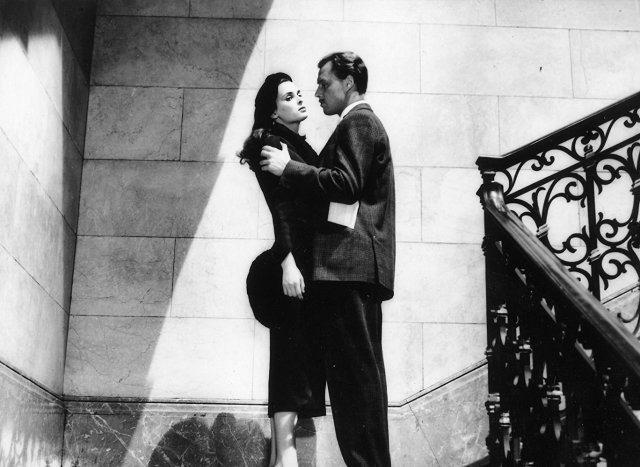
La signora senza camelie could also be translated as “Melodrama and Film Sets”. Antonioni’s scathing takedown of the Italian film industry follows an actress called Clara (Lucia Bosé) as she navigates a world of seedy moviemakers and greedy agents, exclusively personified by possessive men. Antonioni breaks the neo-realist mould as his knack for complex, isolating master shots frequently rears its head. The film begins tracking behind Clara as she enters a theatre, only to see her own film playing on the big screen therefore the first time we actually see her face is on that screen, projected twenty feet high. It all comes full circle by the end as we find Clara broken and compromised by the industry, culminating in a loaded final shot as she struggles to force a smile for the pack of wolf-like paparazzi feverishly snapping her photo. This is a more directly humane affair from Antonioni but even this early you can see his interest in conventional film language becoming distant, his shots getting wider and wider to convey disconnect in the spaces between his actors.

Watched on Eureka Masters of Cinema blu-ray.

Posted in Reviews | Tagged , , | Leave a comment

Sing Street (2016)

maxresdefault1

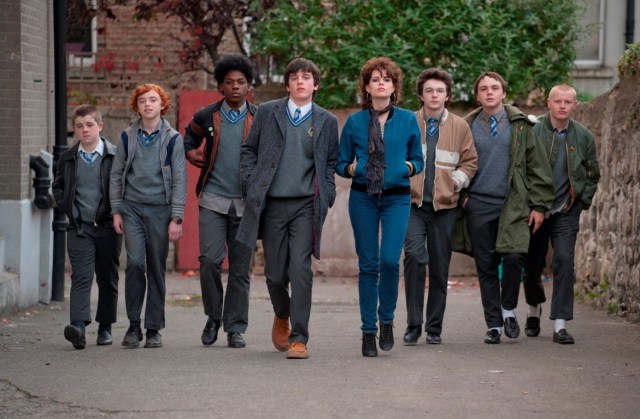
A delightful speaker-blast of kitchen-sink escapism which further proves John Carney to be the modern master of the movie musical. Sing Street makes you feel good, it makes you tap your feet; it’s a vision of Irish streets in the 80s and a document of the music playing in bedrooms by someone who was clearly there, watching and listening. I wasn’t, but the observations are so acute that you don’t doubt their authenticity, even if they’re no doubt rounded off and tinted with a nostalgic slant. The young cast are wonderful, believably selling their musical chops – amateur and otherwise – making this the closest sibling to School of RockI’ve seen since that film came out fourteen years ago. The film’s musical centrepiece, a fantasised, 80s music-video rendition of a school disco, is one of the most unashamedly feel-good feats of mainstream filmmaking I’ve seen in a while. The kind of film you can pass on like a mixtape with a hand-written tracklisting.

Watched on Netflix.

Posted in Reviews | Tagged , , | Leave a comment

Split Screen: Dogtooth (2009)/Split (2017)

In an interview with the AV Club around the time of Split‘s release, director M Night Shyamalan pointed to the influence of Yorgos Lanthimos’ Dogtooth on the film’s cinematography:

Well, then you remember how the frame is so irreverent to the characters. They stand up, and they’re just cut off. It’s doing its own thing. So if you watch our film through “Dogtooth eyes,” you can see how often we did that: a character just standing up out of frame or walking out, or you see just their shoulder. It feels like a window.

The connection between both films is perhaps most explicit here, to the point where it feels like a handshake between the directors.

Posted in Split Screen | Tagged , | Leave a comment

Midnight in the Garden of Good and Evil (1997)

v1.bjsxMzM4NTE7ajsxNzY0MTsxMjAwOzUwNTg7MjUyOQ

This is so unlike anything else Eastwood has ever directed that it feels borderline experimental for him. In adapting a famously populated true crime novel, Midnight in the Garden of Good and Evil works best as a document of an entire oddball town rather than a traditional narrative. It eschews any sense of immediacy and plot movement in favour of tangents anchored by strange conversations or character introductions and explorations. I actually wish it carried on in this mode for the entire runtime instead of digging into the sluggish courtroom drama that bogs down the last hour, meaning most of its characteristic charm eventually fades away. The closest we’ll ever get to seeing Clint Eastwood’s Slacker.

Watched on Warner Archive blu-ray.

Posted in Reviews | Tagged , , , , | Leave a comment

The Lair of the White Worm (1988)

maxresdefault

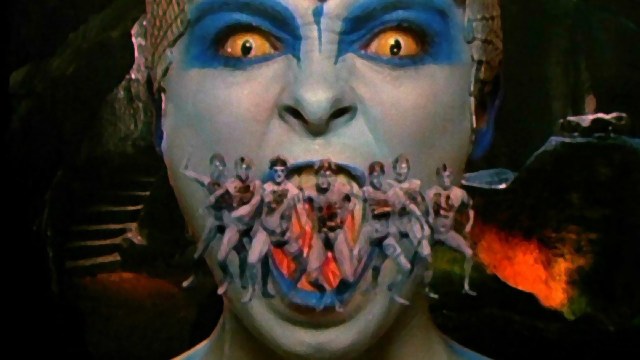
Even when working to create a silly horror mystery full of campy entertainment value, as he is here, Ken Russell can’t help but transform it into A Ken Russell Movie. Lair of the White Worm works best when it’s explicitly dabbling in Russell’s deranged subconscious; the hazy VHS-shot visions and nightmare sequences, indulgences in the kink of the occult and the weird, Amanda Donohoe slinking around as a snake-worshipping dominatrix vampiress – this is the stuff you will walk out remembering forever. There’s also a gloriously batshit ending that goes exactly where the film’s title promises. Russell reassuring you in the final stretch that, yes, you did sign up for a monster movie and he’s going to give it to you. Also, Hugh Grant and Peter Capaldi are the Holmes and Watson we deserve.

Watched on Vestron blu-ray.

Posted in Reviews | Tagged , , , , | Leave a comment

Not Fade Away (2012)

NOT FADE AWAY

“When you’re singing the blues, the lyric line often starts “Woke Up This Morning”. Life just comes and fucks you right over, right?” – Pat, Not Fade Away

“Woke Up This Morning, got yourself a gun” – Opening theme to The Sopranos

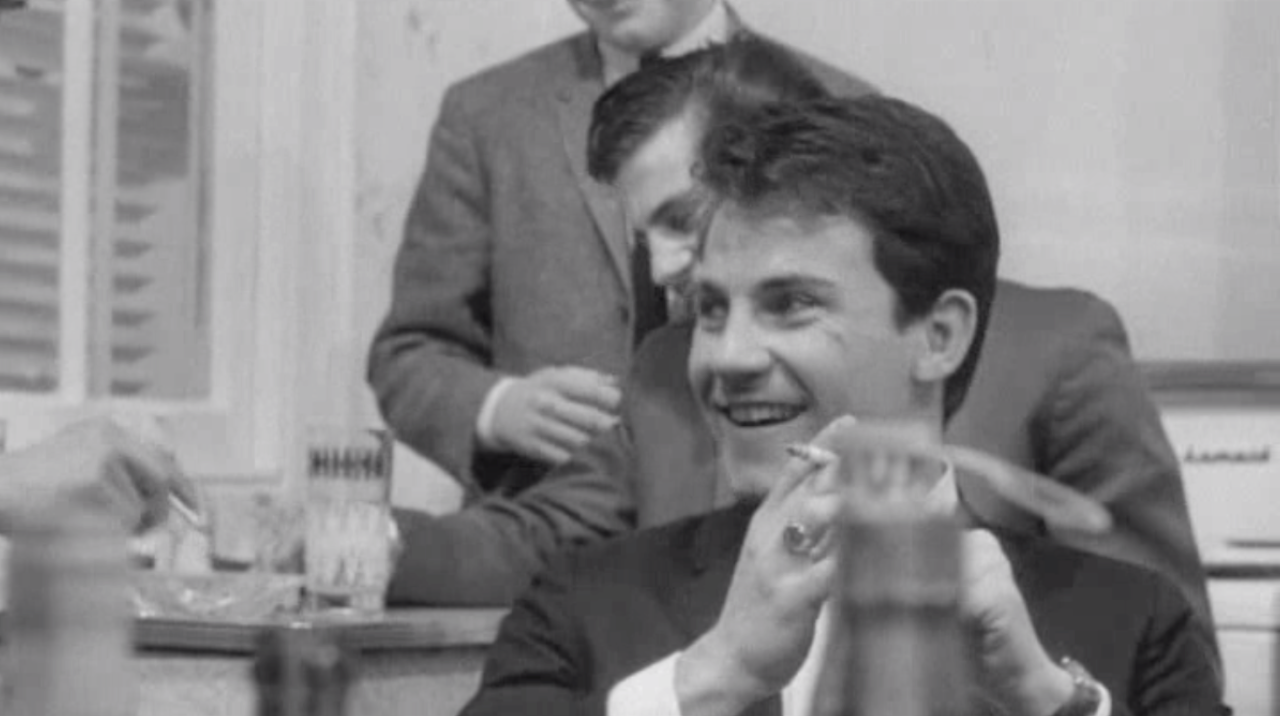
Revisiting this I paid closer attention to Chase’ work, how he holds the film together and transitions from one scene to another, as well as how he uses music to incite emotional momentum or juxtaposition. As a major fan of The Sopranos, I know these are things he is especially good at but the choices can often be so subtle as to not be immediately apparent in their complexity. True to form, this is where Not Fade Away‘s real brilliance shines through.

This is film as memory bank, closer to Terence Davies’ portraits of upbringing than, say, a Scorsese rock n’ roll pic, which is probably what most people expected and/or wanted. The key is in the scenes of domestic turmoil – themselves a cornerstone of Sopranos‘ success, and often more violent and fraught than the pure mob stuff – in which Gandolfini challenges his son’s progressive values and changing image, ultimately building to furious outbursts over the breakfast table in much the same way Pete Postlethwaite explodes in Davies’ Distant Voices, Still Lives.

The story spans multiple years throughout the 1960s and yet Chase rarely signposts the jumps in time, instead relying on mixed in signifiers to clue the audience in: the changes in lingo, hair length and attitudes of its characters as well as the flow from one season into another and, ofcourse, the music.

Rock n’ roll is this movie’s Lord and Saviour. The opening meld of a broadcast test merging into the initial blasts of “(I Can’t Get No) Satisfaction” by The Rolling Stones is truly sublime and the constant presence of music from there on out provides the film with a necessary spine. It works as a document of this era of popular music in America and tracks the development through eyes lit by the glow of The Beatles on The Ed Sullivan Show and various other TV appearances. It lights the fuse which leads to armies of teens picking up instruments and jamming in their garage for the first time. All this stuff has been heavily documented elsewhere, naturally, and the bands and needle drops aren’t exactly from a playlist of deep cuts, but through Chase’s eyes it all flows through an autobiographical lens. This isn’t about the formation of a seminal band, but by one of the countless bands that went nowhere and how that chapter in their lives led to the boys finding their true callings elsewhere.

One last thing: I love Chase’s penchant for constantly stopping to grab the reactions of people on the periphery of the main characters – Magaro’s younger sister earwigging on her brother’s plans, a gardener stopping to interrupt a conversation as he passes – showing that Chase never loses sight of the bigger picture and the other stories and developments constantly in motion elsewhere. It’s these witnesses to progress that will often turn out to be their ultimate gatekeepers: the storytellers. A group of which David Chase is surely a seasoned member.

Watched on blu-ray.

Posted in Reviews, Rewatch | Tagged , , , , | Leave a comment

The Game (1997)

Screen Shot 2018-04-17 at 10.50.38

The one Fincher flick everyone agrees is underrated, right? Every time I return to The Game I’m struck by the level of craft Fincher applies to an otherwise dopey idea. It’s not hard to imagine the various, sensational ways this material would go in lesser hands (this year’s Game Night is a solid variation though it never transcends genre as Fincher’s take occasionally does). It definitely wouldn’t be discussed and re-assessed the way this is, nor would it likely be in the Criterion collection.

Under Fincher’s meticulous eye, The Game becomes a sombre dark night of the soul, one man looking into the murky depths of his own mortality and vacuous lifestyle. It’s almost Cronenbergian in its steeliness; an autopsy on cold metal rather than the lurid, messy investigations of Se7en. Given that I often cite Cronenberg as my favourite filmmaker, it should go without saying that i’m completely down for this kind of character dissection. Douglas gives an all timer performance as Nick van Orten too, expertly modulating his restraint with escalating paranoia and eventual frenzy. Also, whatever happened to Deborah Kara Unger? She joined this hot off of Crash (Cronenberg again) and as far as inverted 90s femme fatales go, she’s certainly up there with the best of them.

Maybe everyone hesitates to equate this with Fincher’s more revered work because of its foundations in popcorn theatrics but it is thrilling to see the director revelling in the trickery of pure plot. You question everything you see which frees him up to be the film’s unreliable narrator – the director as prankster – allowing him to indulge in nightmare plotting, free of traditional logic. I especially love the moment when an ambulance car park suddenly becomes deserted and is cloaked in dark shadow thanks to a sudden blackout. What an image. The film is full of moments like that. A truly beautiful film to squint into and a nocturnal odyssey that ranks among the most underrated mainstream movies of the 90s.

Posted in Reviews, Rewatch | Tagged , , , , , | Leave a comment

The Gate (1987)

gate_shot4l

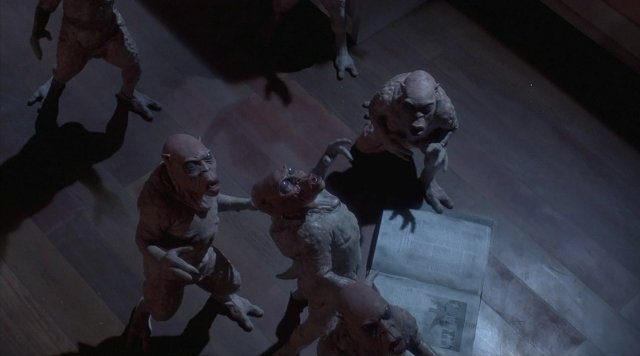
While clearly forged in the age of Spielberg and Dante, The Gate is easily one of the better attempts at achieving that ghoulish tone. From the evocative opening dream sequence – young Stephen Dorff wakes to find his house ransacked and abandoned – through to the barrage of physical effects which give the film’s more fantastic ideas flight, The Gate is more or less everything you’d want from this kind of thing.

It retains a childlike sense of wonder and excitement throughout with key totems emblematic of American youth – air rockets, metal LP’s – scattered about, often using those same totems as gateways into more madness. A downed treehouse, for example, gives birth to a portal to a demonic netherworld, here represented by purple light shining up through the ground, while elsewhere the leg of small doll is repurposed as a stabbing implement.

The special effects are awesome, combining stop motion effects with sculpted rubber latex infused ghouls, with some incredibly effective forced-perspective shots being particularly effective, to the point where I found myself scratching my head wondering how they were achieved. Like Gilliam’s Time Bandits, the film isn’t too protective of its young cast to get nasty either; where it counts, it puts a lot of effort into being genuinely scary. Imagine Joe Dante remixing Fulci’s The Beyond and you aren’t far off. I like it more than The Goonies. Wish I’d seen this as a wee lad.

Watched on Vestron blu-ray.

Posted in Reviews | Tagged , , | Leave a comment