Murder Party (2007)

maxresdefault1

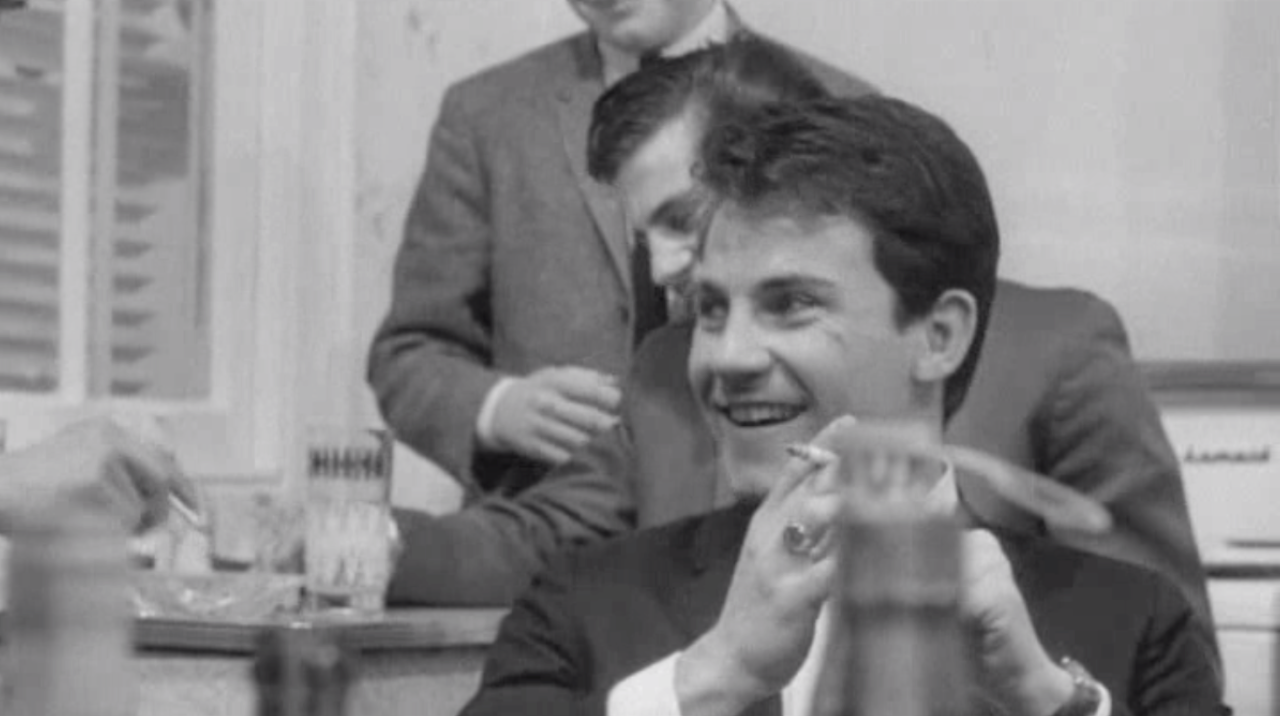
Jeremy Saulnier’s debut feature is a far cry from the controlled genre meditations of Blue Ruin and Green Room but it still feels apiece with those movies. There’s a useless protagonist in the lead and sudden outbursts of violence drive the film’s pulse. It’s a lot funnier than Saulnier’s current work and is first and foremost a farcical comedy. I kept thinking about Peter Jackson’s early movies, namely Braindead as it shares that film’s penchant for excessive gore mixed with broad laughs and, like Lionel in Jackson’s movie, the protagonist of Murder Party makes it to the end of the film covered head to toe in blood and guts.

There’s still a sense that this is mostly an amateur work though. The filmmaking and acting is adept and shows promise but you can’t help but feel like the voice and talent aren’t quite in sync yet. The film gets a bit muddled and tiresome around the mid-point before finding focus and frenzy again for the bloody last act and for a barely-eighty minute flick that’s a problem. At times the whole thing just feels a bit clumsy and unrefined. The passion and energy of a bunch of buddies pulling together to make something keeps the whole thing afloat though. It wears it’s indie-filmmaker passion proudly and all in all is an admirable and enjoyable first swing of the bat. Plus, given the current hot streak Saulnier and star Macon Blair are on, Murder Party is even more of a curiosity. Fans who want to know where the earliest seeds for Blue Ruin and Green Room were planted need look no further. It all leads back to this.

Posted in Movies Watched In 2016, Reviews | Tagged , , | Leave a comment

The Sound of Fate: William Friedkin’s Sorcerer (1977)

vlcsnap-2014-04-16-12h29m29s185

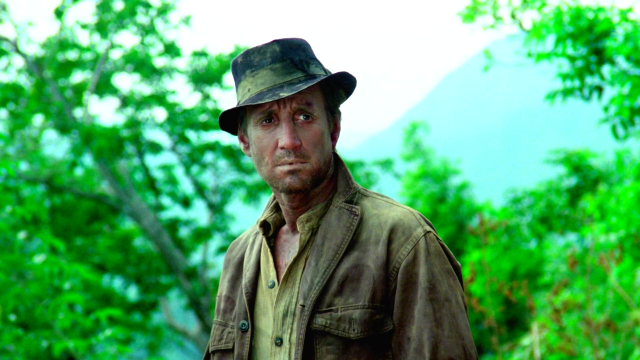
Friedkin’s follow-up to The Exorcist might have taken almost forty years to gain the respect it deserves but better late than never. This is a masculine and brutish picture, extremely physical in design and presentation but flavoured with a crackling existential shroud. I’ve seen the film twice now to confirm my feelings about it and even the second time around it hits with a proper wallop.

I love Friedkin’s spartan direction. He wasn’t a showman, he was a master of patience but could still deliver thrills of the most immediate calibre. The film’s colour is deliberate, mixing from jungle greens and twilight blues broken up by the occasional burst of furious orange in the wake of an explosion. Every cut here builds to an absolute. I appreciate the time he takes in setting up the characters, introducing them in their own extended prologues before bringing them together finally about an hour in. A major studio wouldn’t stand for that kind of pacing in this day and age, you can bet your ass, but it is essential to the film’s impact.

Aside from Tangerine Dream’s discordant score, Friedkin’s main instrument is silence. When I think of Sorcerer I think of all the quiet moments – and there are many – and how all of them feel loud and chaotic because of the tension built in. Roy Scheider, Bruno Cremer, Francisco Rabal and Amidou are the film’s heroes and they each come from separate ends of the earth. All of these characters are broken and abandoned. They might as well be dead. Of-course they are the perfect candidates to dance with the devil and drive two trucks of dynamite across the most hellish terrain you could imagine. In their world, life is cheap and death is a fortune. I think of their faces, occasionally intercut with the boxes of nitroglycerin that any moment could blow them off the face of the earth and I think of the silence on the soundtrack. The sound of fate. They each become increasingly worn down, beaten and frenzied. At many points they laugh in the face of death. What have they got to lose? By the end Scheider finds himself in a wasteland and appears to lose his mind and his soul. Once the film’s credits role, it’s not clear that he ever got it back.

The bridge sequence is one of the great set-pieces in film history. It is mostly scored with the sound of battering rain, wind and the increasingly desperate creak of wood and squeaky tires on planks yet, again, when I think of it I almost see it as a silent sequence. Purely cinematic and unbearably tense. Kurosawa would be proud.

I’m pretty in awe of this movie. I’m so shocked it wasn’t embraced upon release because it so perfectly embodies everything great about 70s filmmaking yet, at the time, it was seen as a director’s folly. Even now it feels fresh, modern and primal. The international cast are perfect, only Scheider’s face is recognisable but even he seemed to resist the label of movie-star. It is as genuine as dirt under your fingernails and will make you sweat and occasionally forget to draw breath. It’s close to being a perfect film. A hot-blooded, stare-death-down masterpiece. Give me this over Star Wars any day.

Posted in Movies Watched In 2016, Reviews, Rewatch | Tagged , , , | Leave a comment

Sleepaway Camp III: Teenage Wasteland (1989)

sleepaway3hd_3

A pretty lacklustre threequel which lacks both the surprise of the first movie and the delight of the second by being little more than a retread. Shot back-to-back with Sleepaway Camp II it’s like the Back to the Future III of slasher movies. Die hard fans will like the returning ingredients – Springsteen’s Angela is always a joy to watch – while more casual moviegoers might feel that things are starting to run out of steam. Easily the most boring of the three but the worst crime it commits is being average. Angela is still kill-crazy and she sports a pretty rocking wig, but everything else just fades into the background or blurs with Unhappy Campers. I know there’s two more troublesome entries after this one but the strain felt here is making me rethink watching them. Cool subtitle though.

Posted in Movies Watched In 2016, Reviews | Tagged , , | Leave a comment

Sleepaway Camp II: Unhappy Campers (1988)

1433799685_1

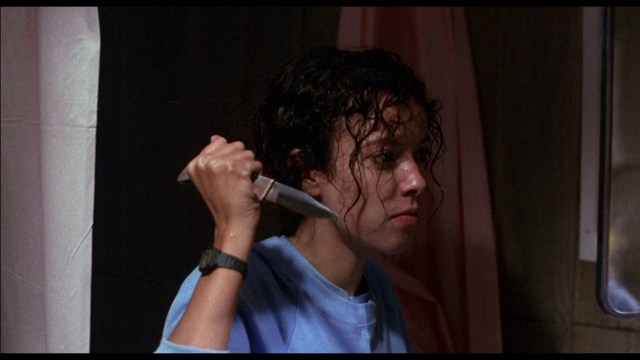
There’s a lot of ghoulish fun to be had here. Gone are the pointless whodunnit shadings of the first film and any pursuit of the transgender subplot is done between movies. By the time we meet Angela Baker here (now played by Pamela Springsteen, the lesser-known sister of the well-known Springsteen) she has transitioned fully into a woman and is older, wiser and more cunning. Sleepaway Camp II skips a few beats movie-wise and dives right into the self-aware, kill-comedy arena the second time around (it took Freddy and Jason at least three or four sequels before lapsing into parody).

It’s great to have a serial killer with a face and personality. For all means and purposes Angela is still the protagonist of the series, despite the fact she’s a psycho. This girl enjoys killing and enjoys finding inventive ways to do so while deploying quippy one-liners. I liked this new dynamic on the slasher flick. The film takes great pleasure in Angela’s murders and practically has her winking at the audience when a soon-to-be victim crops up. My favourite scene involves a female counsellor telling Angela – the girl is unaware she is speaking to the killer – that she has come across some suspicious evidence that would surely expose the perpetrator for all the strange crimes. We know what Angela is going to do. And we see her coolly parading around the room sizing up potential weapons or methods to dispatch the poor girl before finally doing so in glorious fashion. It’s a fun take on a boring scene and the film is full of those little reversals. Director Michael A. Simpson and writer Fritz Gordon know what the audience want and side with them in their glee for bloodlust. And why not? Everyone is on the same page here; the cast, the crew, the audience – we just want some mindless murder and a good time. That’s exactly what the film delivers.

As far as sequels go this is very characteristic of the 80s. It has nothing to rival the impact of it’s predecessor’s finale but purposefully takes a shift in tone. This one is played totally for laughs but it doesn’t sacrifice the gore and splat. Considering the abundance of horror franchises in full swing in 1988, they had to do something different as an antidote and this film is fun attempt at doing so. In one scene, a bunch of pranksters dress up in not-quite-but-obviously-meant-to-be Freddy and Jason masks only for Angela to savagely massacre them all with ease. The message? There’s no 80s serial killer quite like Angela Baker. Springsteen gives the role her all and she’s a riot. She carves her own path and with no shortage of competition, that’s quite a feat.

Posted in Movies Watched In 2016, Reviews | Tagged , , | Leave a comment

Junun (2015)

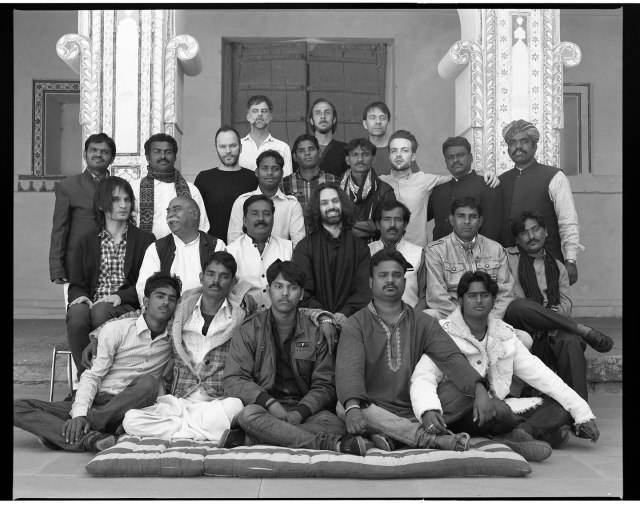
junun-2015-paul-thomas-anderson-01Junun documents the making of the album of the same name by Jonny Greenwood, Shye Ben Tzur and The Rajasthan Express. As far as documentaries go it’s a pretty laid-back affair, more akin to those you get on album bonus DVDs than a film in it’s own right. Still, this is an adventure that demands documentation.

The story goes that Greenwood decided to collaborate on an album with Tzur and producer Nigel Godrich in India and asked Paul Thomas Anderson if he fancied coming along for the ride to film the process. Already we have a superstar cast and crew list. Greenwood, Tzur, Godrich and Anderson are all extremely accomplished in their individual fields but the thing I like most about Junun is just how casual and simple the whole thing feels. This isn’t a P.T. Anderson picture, it’s a thumbnail.

The film is in love with the foreign locale and India’s culture. The country’s geography, language and flavour is front and centre, playing second fiddle only to the actual music. It begins with a call to prayer in which all the musicians sit respectfully at ease before proceeding into the first song. The lack of electricity at the studio – which is housed in a vast and ancient palace-like fort – is a re-ocurring subplot with the band sometimes only getting as little as 10 minutes of generated juice until they are out again. A standout scene features a carefree pigeon flying in during a recording session and Godrich trying to get rid of it with a mic-stand while the band continue playing undisturbed. It is moments like these which make the film worthwhile.

Junun is a pleasant fly-on-the-wall look at a creative process unfolding in a very unconventional environment with a refreshingly eclectic ensemble of creatives. As a fan of Greenwood and Paul Thomas Anderson obsessive and completist it was essential viewing for me but those names aside I still found it to be quite wonderful. I like that Anderson is being more productive and prolific by churning out these little idiosyncratic B-sides to his filmography. Junun is no doubt a minor work but is enjoyable as such. It feels like a home movie in the best sense and it’s refreshing to see Anderson experiment with more basic tools. I think this is the first thing he’s made that embraces digital technology. Perhaps most importantly though, the music at the centre of it all is fantastic. I found it to be so infectious that I bought the album on vinyl immediately after seeing it. If that isn’t a testament to the film’s success I don’t know what is. if you get the chance, don’t hesitate to check it out.

Posted in Movies Watched In 2016, Reviews | Tagged , , | Leave a comment

Torso (1973)

tumblr_nv9hmqgjkb1ubf88so2_1280

Torso is even better the second time around. Martino really commits to making a movie about sexual violence and as is often the case with the genre, there’s a lot of female flesh on show, especially in the murder sequences. It might seem gratuitous at first but there’s something very discomforting about the presentation. These women are beautiful to look at and Martino shows them off proudly in some humorous soft-core sex scenes but as soon as their chests are exposed in the service of an attack, there’s no playful titillation at work. It is sheer, disturbing violation. I think that’s what sets this apart from many other slasher/giallo of the era, it is extremely cruel and played totally straight. Martino takes it seriously and the violence is as shocking and extreme as his effects budget allows. While, yes, this does feel like a cheaply made horror flick there’s still a level of complexity and craft to offset the sleaze.

The amount of disgusting, leering male faces in Torso is pretty excessive, but it is in service of the story. You get a sense that all the women are beautiful angels while all the men are horrible perverts. You wouldn’t put it past any of the male characters, in both the background and foreground, to rape and murder these women. The end result is a film in which most of the women are totally objectified but by the male characters rather than the film itself which is an important distinction to make. It uses the male-gaze as atmosphere and it’s extremely effective. By the time the film narrows itself down to a final girl, trying to avoid the killer’s detection in a house full of her friends’ dead bodies, you are praying for her to escape or outsmart her tormentor. I loved this sequence the first time around and none of it’s impact had diluted upon rewatch. It is one of the great horror set-pieces as far as I’m concerned, a horror house opera free of music and dialogue directed with real restraint, confidence and tact by Martino. Worth the price of admission alone.

The dumb twist and conclusion is still frustrating but this is one of those movies that is far more about aesthetic and themes rather than story and character. It works as a body count thriller as well as a meditation on sexual violence. It feels like an extreme piece of work but not for the sake of it. You can tell Martino had something to say with Torso and it’s all the better for it. I’m already itching to see it again.

Posted in Movies Watched In 2016, Reviews, Rewatch | Tagged , | Leave a comment

Last Embrace (1979)

lastembrace2big

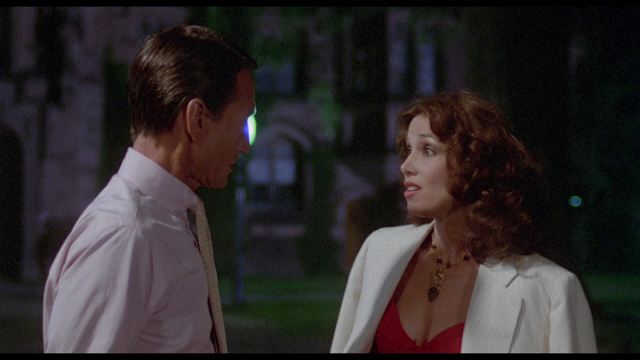
Jonathan Demme’s take on the Hitchcock thriller is enjoyable enough and moves with a 90-minute swiftness. Roy Scheider is one of the best actors the 70s blessed us with and it’s fun to see him play a conflicted, cookie-cutter hero. Christopher Walken also shows up in a surprisingly minor role, but then again this is before he was Christopher Walken good and proper.

The film feels rather slight overall and there’s not a whole lot here to make a lasting impact. Demme’s technique is still forming and he hasn’t quite got to the point where he has enough of a distinctive style to heighten mere genre (like he does in, say, The Silence of Lambs). It’s a disposable movie, designed only to entertain within the 90 minutes it’s on screen and that in itself is admirable. It ends on a bummer which mainstream movies in the 70s were allowed to do and it has a real, fast-moving thriller plot which I’m always grateful for. The allusions to Hitchcock’s work are also welcome, most of the iconography from the Master of Suspense’s oevure (bell towers, grand halls, landmarks) is accounted for. Not as maximalist as a De Palma movie by any means, but Last Embrace does work as a respectful feature length homage.

A perfectly fine middle-of-the-road product but everyone involved has done far more memorable work before and since.

Posted in Movies Watched In 2016, Reviews | Tagged , , , | Leave a comment

Forbidden Planet (1956)

forbidden-planet

Forbidden Planet is such a seminal piece of science fiction history that just the mention of it’s title brings to mind imagery from the film, even if you’ve never heard of Anne Francis beyond her namecheck on the opening song of The Rocky Horror Picture Show. Robby the Robot is an icon alright? Pretty much every major piece of swashbuckling sci-fi made since it’s release owes some kind of debt to Forbidden Planet. Luckily the film itself holds up.

The entire design of the movie is fantastic. It showcases a future of pristine sets, uncreased uniforms and almost total surface perfection. Light just seems to bounce off of this movie. It captures the same forward-thinking optimism that would become the bedrock of Star Trek and is anchored by an excellent, brass-tacks B-movie plot. Everything we recognise as 50s sci-fi could have originated with this movie for all I know. It’s iconography and imagery is so classic. Who knew Leslie Nielsen was once a “serious” leading man? I barely recognised him here but he works as a chiseled hero. Walter Pidgeon’s performance as Dr. Morbius is lots of fun too, complete with villainous goatee. Anne Francis gets the short straw, basically acting as the damsel in distress or a horny minx throwing herself at he male co-stars. The film could also work under the title Alatair IV Girls Are Easyas a result but she too feels somewhat iconic. The movie mines her character for ideas though, which makes up for the simplistic characterisation. Then again, this is a 50s sci-fi movie!

The thing I really like about Forbidden Planet is that the science really does drive the fiction. There’s some terrific heady concepts at work; invisible monsters, alien races, a mind-altering machine and good old-fashioned grand metaphors for man’s folly for good measure. It’s a delight to sit through and even today, sixty years years later, the aesthetic pleasures are even more enjoyable given how far the genre has come since then. It feels stylised rather than dated. More than anything, it’s just a damn entertaining yarn with ray-guns, robots and a scene-stealer called Robby. Very cool.

Posted in Movies Watched In 2016, Rewatch | Tagged , , , , | Leave a comment

The Headspace of a Holocaust Survivor: The Pawnbroker (1964)

the-pawnbroker

Sidney Lumet made a lot of movies in his lifetime, many of them are regarded as classics while others, like The Pawnbroker, have become hidden gems waiting to be unearthed by subsequent generations of filmgoers. The film follows Sol Nazerman (Rod Steiger), a concentration camp survivor living out his later years running a dingy pawn shop in 60s Harlem. He is haunted by the past and can’t go a day without remembering his time as a captive. He relives the murder of his wife and children every day. Nazerman is a man who seems to have given up on finding happiness or even closure. He repays warmth and kindness with a cold shoulder. For him, he gave life a shot and it failed him. Now, he simply exists because the nazis couldn’t even do him the courtesy of putting him out of his misery.

One of the things I love about Lumet’s work, and it’s something I’ve found to be a prominent obsession for him while revisiting a lot of his movies lately, is his knack for capturing time and place. His movies very rarely looked like movies. When the material calls for it, Lumet can plunge you into reality at gutter-level. The Harlem in The Pawnbroker is an oppressive world full of sweat, colour and tensions. It was made in 1964 yet it has all the life, threat and authenticity of New York seen through the eyes of Scorsese or Spike Lee. There is no sugar-coating here. Even the actors are denied the pleasure of looking like movie stars.

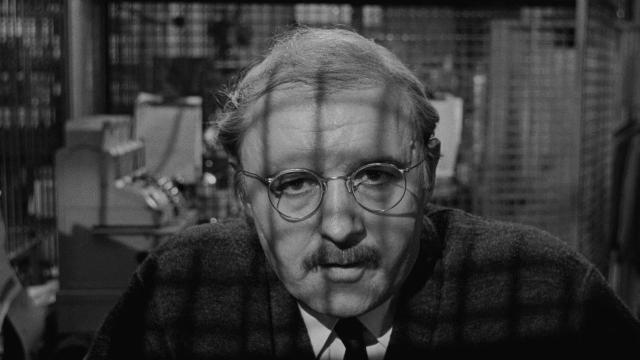
Steiger is shot through cluttered frames, imprisoned by bars in the foreground or surrounding area and even when he is out in the open Lumet avoids flattering angles. Steiger gives a full-blooded performance, full of hated and vitriol that makes him tough to root for but easy to be fascinated by. All the faces in this movie have history in them. At one point a young, black prostitute tries to seduce Nazerman for money in the backroom of his shop. She exposes her body to him but the scene is not erotic but uncomfortable and sad. Both of these people are broken and desperate and Lumet emphasises this through their faces. Nazerman can barely look at the girl, while she wants nothing more than to be looked at and helped. It is an extremely raw and shocking scene, apparently the first time female nudity from the waist up in a US film was passed by the MPAA. The film is full of that kind of rawness. The relationships between all of the characters seem to operate on a razor’s edge. You know things are going to erupt into violence eventually, it’s just a question of when and at who’s expense.

Lumet and editor Ralph Rosenblum create a very distinct language with the cutting. Nazerman’s haunted psyche is represented by subliminal cuts. It’s very rare you get a scene with him in close up that isn’t punctuated by staccato flash frames of violence and ugliness from his time in the concentration camp. Editing was undergoing a bit of a reinvention in America during the 1960s thanks to the French New Wave and Lumet’s use of a very deliberate and intrusive cutting rhythm here feels vital, even today. It makes the film violent and shocking even when what’s happening on screen might be anything but. Scenes of kids scrapping in a playground are juxtaposed with the Nazis beating someone to death. A cluttered subway car match cuts to a loaded train carriage packed with imprisoned jews being led to their deaths. It feels like there is violence everywhere. The overall effect is disturbing and I imagine was especially shocking for audiences back in 1964. The black and white photography by Boris Kaufman also goes a long way to give the film a stark sense of reality and foreboding. Sweat and blood has never looked as parasitic as it does on black and white celluloid. Just ask Alfred Hitchcock.

The Pawnbroker was one of the first major films made to tackle the life of a holocaust survivor head-on. The storyline might get a bit melodramatic as it progresses – big emotions, big plot beats – but the technique is anything but. The film feels in tune with Scorsese’s Taxi Driver in the way it metamorphosizes with the protagonist’s headspace through aesthetic and environment. Both films are committed character studies. Like Taxi DriverThe Pawnbroker is an ugly, bleak little picture but one that feels extremely authentic and blunt without sacrificing complexity. It also features an unconventional jazz score courtesy of Quincy Jones which, like Herrmann’s score for Scorsese’s film, is designed as a very deliberate counterpoint to what is on screen. As with many of Lumet’s greatest films, it appears to be full of rough edges and raw, honest performance but make no mistake; everything here is intentional and orchestrated by the director’s uncompromising hand anchored by a great lead performance by Steiger. Stylistic but not showy, grim but not unpleasant, The Pawnbroker is the real deal. A fantastic film to discover, discuss and pass on. As a Lumet fan, I enjoyed it immensely.

Posted in Movies Watched In 2016, Reviews | Tagged , , | Leave a comment

Cut to the Chase: Midnight Special (2016)

MIDNIGHT SPECIAL

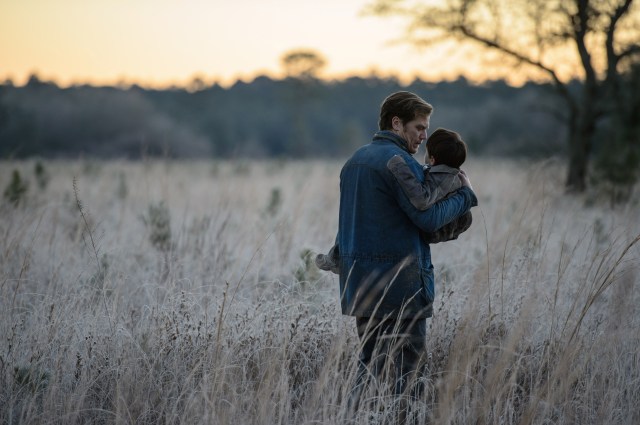
While watching Midnight Special, I suspected that Jeff Nichols wrote an action-packed sci-fi/road movie then decided to completely jettison the first two acts and expand the last third to feature length. He deliberately eschews character set-up and plot context in favour of urgent plot-drive. The film is essentially one long highway pursuit and Nichols literally just cuts to the chase. At first this approach is thrilling. The film begins mid-action in a dingy motel room. There’s a kid called Alton with abilities, his Dad is Michael Shannon, or is he? There’s a cult led by Sam Shepard who also lay claim to the boy. Alton is the key to some kind of impending global event. A catastrophe? A purge? A reckoning? This being a sci-fi movie, we can be sure the event is not completely religious in nature.

Mystery takes the film a long way. Having to play catch up and fill in a lot of backstory yourself is certainly refreshing with this genre. Nichols thrives on character beats and much of the film finds time to breathe in silent moments that find characters alone reflecting on past-events we have not seen. Characters and subplots are completely dropped as soon as they fall out of Alton’s immediate vicinity. They aren’t necessarily missed, just underdeveloped. Nichols’ desire to keep progressing is unforgiving and his refusal to give in to flashbacks or exposition is admirable but it soon becomes frustrating. There comes a point where all the ellipses and suggestions aren’t enough and we just want some hard facts to get on solid footing and enjoy the damn story instead of trying to figure out what it is.

Where the film lacks in it’s storytelling it succeeds in it’s aesthetics. The cinematography of Midnight Special is a nocturnal beauty and many shots feel downright iconic. It is dark, inky and lens-flares splash across anamorphic shots like shooting stars. Just gorgeous. The stylisation extends to the performances too. Michael Shannon, Joel Edgerton, Kirsten Dunst, Sam Shepard and Adam Driver all operate with maximum subtlety. The film seems to be built of squinting eyes or those bulging with wonder. It is in love with close-ups. Shannon’s face feels custom made for staring out of windshields at night and while he feels vulnerable the film relies on Kirsten Dunst for the heart. Her face has gained age and her temperament is no longer that of a young woman. It feels like Melancholia was simultaneously the end of one phase in her career and the beginning of another. It’s been while since I saw her on the big-screen and I was struck by how much maternal presence and strength she has gained in those few years. She isn’t a headlining presence in Midnight Special, her scenes are fleeting and crucial, but her performance is the one I keep thinking about. If I had to guess, I’d say we’re going to see a lot of exciting work coming from her in the next couple of years.

I admire Nichols’ penchant for applying arthouse pacing to rock-solid genre frameworks. He’s carving out his own, very specific brand of storytelling and Midnight Special is a welcome successor to Take Shelter and Mud. His talents still feel like they are in their formative years, however, as none of these films have been wholly successful or satisfying for me (Shelter has come closest). I suspect he is one of those filmmakers who’s filmography as a whole is going to be more important than the individual titles. I can see and appreciate his ambitions with these projects but the final films fall short of their potential. Perhaps it’s his tendency to aim for Malicky visual poetry which is cancelled out by his love of rigid composition. With Midnight Special it’s as if he’s aiming for the old-school thrills and spectacle of Close Encounters of the Third Kind or Starman but also wants to make something elliptical, spare and poetic. The finished product suggests you can’t have your cake and eat it.

It’s exciting that a film this sparse and unconventional gets major studio backing and we seem to be getting a lot of very interesting sci-fi movies lately, on all ends of the spectrum. Maybe this one will fare better upon rewatch but as it stands it held me at a distance when I desperately wanted it to involve me intimately and viscerally. Very well made and impressively conceived yet somewhat underwhelming.

Posted in Movies Watched In 2016, Reviews | Tagged , , , , , , | Leave a comment