Cobra (1985)

20150531154134813

Cobra is one of a handful of action movies Sylvester Stallone wrote and starred in during the 80s (outside of the Rocky and Rambo films) and the legend goes he pretty much directed this one too. As Lieutenant Marion ‘Cobra’ Cobretti, Stallone goes up against an army of underground psychos responsible for a mass killing spree in LA. With its neon-drenched cinematography and sub-par electronic score, Cobra feels like a Michael Mann movie as directed by, well, Sylvester Stallone.

It’s a lot of fun though. Cobra, the character, is a cool creation. With his aviator shades, toothpick, retro car and custom pistol, he cuts a silhouette of pure 80s badassery. I mean, look at the one-sheet poster. Isn’t that just the epitome of 80s action cinema? The whole film is knowingly absurd too. There’s a great moment with Cobra in his beach-pad after a night of kicking ass. Rather than going to bed, he puts on the news, cleans his gun and snips off a piece of cold pizza with a pair of scissors. Stallone is hilariously dead-pan throughout. This is his Dirty Harry and with Scorpio himself, Andrew Robinson, starring as Cobra’s superior, it’s pretty obvious that was his intent all along.

You get a sense of Stallone, the movie star, here too. You’ve only got to read some of the on-set stories to understand how inflated his ego was at this point. Which explains why the film is so big and loving of his abs and jawline. The casting of his then-girlfriend Brigitte Nielsen as the damsel in distress is obviously his doing too, and utterly ridiculous. Like Stallone, Nielsen is a gladiator-like example of her gender. She’s built like a goddess and towers over most of the men in this movie like a blonde statue. That would have been a cool thing to play with, but instead Stallone has her screaming and running away from men half her size when they pull a knife on her. Dumb, dumb, dumb. But it makes for some great unintentional sight gags.

As a kid, when I was the most receptive to these numbskull 80s action movies, I always preferred Schwarzenegger to Stallone. As I’ve grown up, however, I’ve learned to be more appreciative of Stallone because of how involved he was with so many of his key movies. He wasn’t just a beefcake movie star, he was also a writer, director and producer. Now, I’m not saying he’s Josef von Sternberg, but there’s something to be said for someone who had so much invested in his work andmanaged to appeal to mass audiences at the same time. Cobra aint Rocky, hell it aint even Rocky II, but as a Stallone rendition of the “bad cop” trope, it’s a satisfying 90 minutes. Oh, and it inspired Gosling’s toothpick Drive.

Posted in Movies Watched In 2017, Reviews | Tagged , , | Leave a comment

Rocky IV (1985)

stk691234-5

Stallone never really gets his due as a filmmaker. Anyone who believes in the auteur theory could make a serious case for Stallone just by looking at the Rockyseries. I love these movies because of how he utilised them to reflect on his own career and concerns, year by year throughout most of the eighties. Whenever he had something to say, he’d make a new Rocky movie. They’re all incredibly personal to him and truly fascinating to analyse when looked at through that semi-autobiographical lens.

While each sequel follows pretty much the same exact structure, each one pushes the form to a bigger extreme. It’s easy to mock a movie like Rocky IV because it’s the silliest of Stallone’s sequels, and the bluntest. This one especially is so much a product of the mainstream filmmaking tropes and sensibilities of the time. It literally opens with two metal boxing gloves, one adjourned with the American flag, the other with the Russian flag, punching each other and exploding. And the film has like, 70 montages in a row. But damn is this thing a primarily visual experience.

Honestly, you can watch Rocky IV with the sound off and still understand exactly what’s going on, who’s who and how they relate to one another. With this one more than any other Rocky movie, you get the sense that Stallone wished he could just do away with all the talky bits and stage a movie entirely out of wordless training montages and boxing sequences. And you know what? It would work. Like it or not, this dumb American beefburger of a movie is also pure cinema. Yeah, I said it.

Also, as a side note, I once had a crazy theory about this movie when I was a kid. The first time I saw it, I was certain Drago was going to turn out to be an android at the end. Like what’s with Drago’s mega futuristic isolated training regime consisting of electronics and computer screens? And his apparent super-human strength? And robotic demeanour? AND there’s even a fucking SUBPLOT about Paulie getting a pet robot! If that wasn’t intended as foreshadowing, I have no idea what it’s there for. I’m still not entirely convinced Stallone didn’t shoot an original ending where Rocky lays a finishing blow to Drago’s head and the skin tears off revealing a chrome skull beneath that then short-circuits and explodes. If only. Weirder things happened in 80s movies, mark my words.

Posted in Movies Watched In 2017, Reviews, Rewatch | Tagged , , | Leave a comment

Singles (1992)

singles2

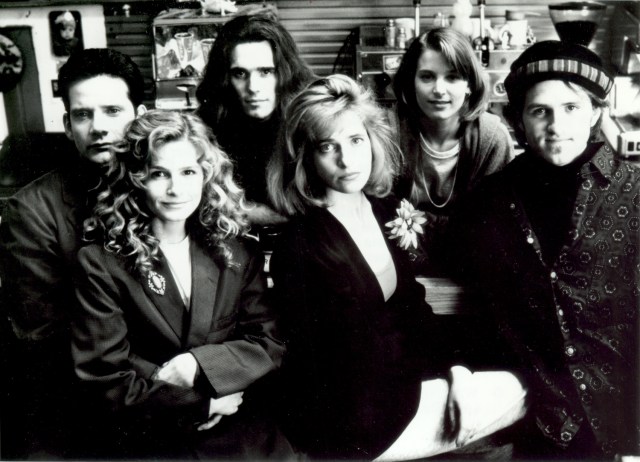
Probably Cameron Crowe’s lightest film (during his “on” period at least) in terms of content but the snapshot – or “single” as opposed to “album” – presentation makes it pleasingly episodic and breezy. It’s essentially a collection of vignettes, each marked by their own painted title-cards and headings, concerning the same handful of characters over an unspecified period of time. Consequently, it lacks the heaviness of the Crowe films which precede and follow it; it doesn’t have the existential teenage drama of Say Anything for instance, nor the mid-life apocalypse of Jerry Maguire. Appropriately, it sits in the dead-zone between the two.

Singles is about the aimlessness of being a twenty-something where the only real signposts are where you live, the job you hate, what music you like, who your friends are and who you choose to have relationships with. The sprawling cluster of characters and short dips in and out of their lives is a nice approach. This is not quite a film to get lost in, but it is one you hang out with. Any film that stars a 90s Bridget Fonda, Kyra Sedgwick and Matt Dillon as an airhead grunge rocker is bound to have a certain appeal and they certainly kept me engaged. I like these characters, as I like most Cameron Crowe characters. They are flawed, witty and ultimately sweet-natured people whom some audience members – cynics and realists mostly – often groan at due to the self-reflective, smart-ass way they articulate themselves. Crowe gets criticised for being cute or saccharine but personally I’m always grateful for the way he populates his films with people who feel both real and stylised. His great trick is taking stock characters (the teenage lead, the 20-something singleton, the sports agent) and giving them an unpredictable heartbeat.

Crowe might always go for the “movie” ending, usually happy and definitive, and savour the big emotions and eye-rolling one-liners, but the road to them is always full of heavy emotional beats most rom-com or “fluff” filmmakers avoid or numb down. Let’s not forget, this is the guy who wrote Fast Times at Ridgemont High, an 80s teen movie where the heroine gets an abortion. I think he’s one of America’s great “mainstream” writer/directors; a filmmaker who makes films for big studios, starring big names and primed for huge audiences but still smuggles in enough challenging drama to be artistically and emotionally valid. Sure he’s been off his game for a while now, but I would nevertheless include Crowe in the same breath as people like Billy Wilder, John Hughes, James L. Brooks, Nora Ephron and Wes Anderson. He’s coming from the same place as those filmmakers and even Singles, a minor work, has more depth and detail to it than so many other lackluster films of its type.

As a document of a time and place, the film feels quintessential. Maybe its portrayal of early 90s Seattle is glossy to those who actually lived there – after all, I’m a twenty-something Brit watching this in 2016 so my judgement of how “accurate” it is is questionable at best – but the film does have a reputation for being a minor cultural touchstone. I’ve always heard about this film’s soundtrack, and the collection of cuts are a huge part of the tapestry. Crowe is always a dab hand at curating mixtapes for his movies and this is probably his most specific. If you were in any doubt that this is 1992, the presence of Pearl Jam, Alice In Chains, Mudhoney, Soundgarden and Smashing Pumpkins coming out of your speakers should put all doubts to rest. Singles a cool little time-capsule of a movie that feels like a tattoo of a time and place long gone by. For a film so concerned with the specificities or age and environment, I’d say that’s an apt legacy to leave behind.

Posted in Movies Watched In 2017, Reviews | Tagged , , , , | Leave a comment

Darkman (1990)

fp2mdl3zz5ke0rbrdwfl

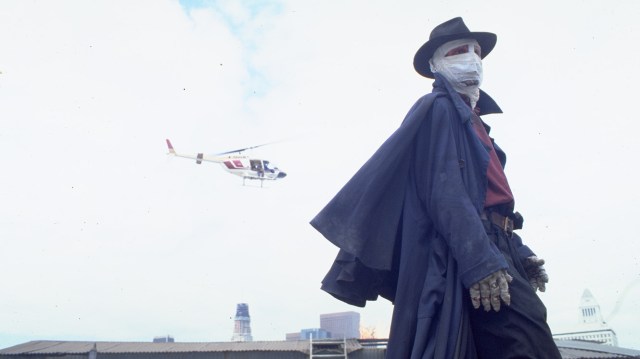
Essentially a dry-run for a lot of ideas Raimi would retool for his Spider-Mantrilogy, but considered on its own terms – as a 1990 made-for-screen comic book movie – Darkman is a fun little curio.

Green-lit and released hot on the heels of Burton’s Batman, it’s allowed to share that film’s ghoulish, semi-adult tone (and score by Danny Elfman) making it a bizarre amalgamation of horror effects and cartoony heroism. There’s as much pillaging from Universal monster movies as there is comic-book mythologies too, ensuring that Darkman’s origin and appearance is as icky as you’d wish from the mastermind behind The Evil Dead.

Raimi’s direction is as madcap as ever and all of the set-pieces crack and fizzle with his trademark sense of mania. The transitions and opticals are seriously on point, despite 90s green-screen leaving a lot to be desired in 2016. Never one to miss the opportunity for a visual gag either, Raimi peppers the film with a bunch of silly punctuations throughout that always earn a giggle; a henchman with a fake leg doubling as a machine gun, Darkman’s hand casually catching fire from a nearby bunsen burner and his endless dumb quips and asides during action scenes. Moments like these would surely derail any other film lacking Raimi’s knack for rubbery tone (or Spider-Man 3…) but here they just make the whole thing more unusual and memorable. Dopey, sure, but memorable.

It’s super weird to see an actor like Liam Neeson on the receiving end of Raimi’s abuse too. His “murder” sequence is pretty full-on and the moment when he gets his head repeatedly smashed through glass cabinets harkens back to any classic Raimi/Bruce Campbell smash-up. A young Frances McDormand does a lot with her thankless role but it’s fun to see her continue the endless bridges between Raimi’s work and that of the Coens. This film marks the first collaboration between Raimi and a few of his key collaborators too, notably composer Elfman and DP Bill Pope. There’s no doubt in hell this flick helped land Sam the Spider-Man gig but it’s pretty nutty to see how candidly he lifts moments from Darkman verbatim in his Spidey films. Darkman, the character, his origin and emotional arc, feel extremely at one with Molina’s Doc Ock in Spider-Man 2 and the building site-bound finale is jazzed up to ridiculous heights in Spider-Man 3.

Maybe Darkman hasn’t aged that well but, as a die-hard Raimi fan, it’s a film I return to every few years and it always puts a smile on my face. There’s one shot of Darkman’s undamaged hand typing alongside his burnt, skeletal one, animated in stop-motion in the same frame, that just makes me so damn happy. Like most Raimi movies, it combines old-school goofiness with a contemporary (for the time) sense of madcap style and energy. The collage of comic-book ideas in service of creating an original cinematic hero also feels fresh in today’s cinematic climate and Elfman’s score is 1000x more memorable than any spandex sound-bed released under the MCU banner. Darkman zips, pings, crashes and cackles. It’s a Sam Raimi movie, so definitely worth a once over. Plus, there’s a stonking Bruce Campbell cameo in the final frame which almost earns the film an extra star. Groovy.

Posted in Movies Watched In 2017, Reviews, Rewatch | Tagged , , , , , | Leave a comment

Raising Cain (1991)

raisingheader

DIRECTOR’S CUT

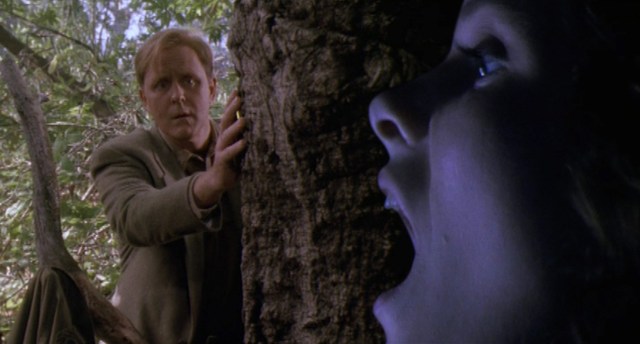
A fascinating re-assembly that restores De Palma’s original structure before he got cold feet and made it more linear to avoid confusion amongst audiences. I rewatched the theatrical version just before this and, for anyone savvy to De Palma’s directorial tics, it’s actually pretty obvious where he meant each scene to fall just from the execution alone. The long POV shot of Davidovich’s character walking into the gift-shop and her appearing on the TV screen is a classic De Palma intro, so I’m not surprised to find that it was originally intended to be the film’s first scene. The riffs on Psycho‘s structure are another big signifier too.

I’d definitely say this cut feels truer to itself; being a film about fractured psyches and psychological blackouts, a twisty plot full of fake outs and dead-ends is wholly appropriate. It also transforms a seemingly typical De Palma thriller into something far more abstract and purposeful. The theatrical cut feels like De Palma on autopilot, whereas the director’s cut suggests a desire to tell this kind of story in a way he hadn’t previously making it more of a valid stylistic exercise. Also: it’s just a lot of fun.

De Palma reaches almost parody levels of self-awareness here with Lithgow going above and beyond his nuttiness in Blow Out, Donaggio’s score going all out in the most obvious places and the disposal of a ridiculous steadicam shot travelling the entire infrastructure of a three storey police station just to spice up some boring ass exposition. I’m so in. The original tagline nails it: “De Mented. De Ranged. De Ceptive. De Palma.”

Posted in Movies Watched In 2017, Reviews, Rewatch | Tagged , , | Leave a comment

The Sixth Sense (1999)

the-sixth-sense-1

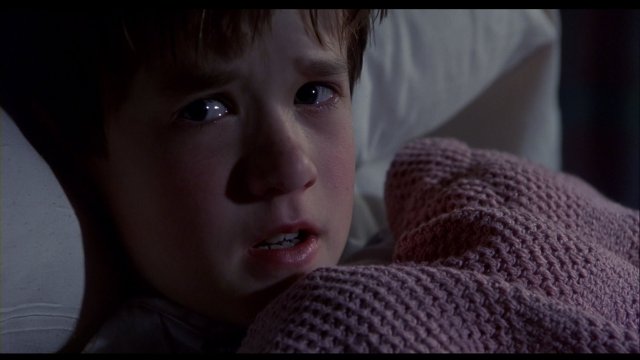
Weird how this was a major studio release in 1999 and in today’s landscape it looks and feels like anything but. An achingly personal portrait of haunted psyches and oppressive spaces that unfolds at exactly the pace it needs to in order to be effective. I’d forgotten how quiet this movie is, how utterly dedicated it is to the breaths between lines, the tension as the camera slowly moves from one face to another and how eye-lines and blocking are favoured in the storytelling over boring close-ups. If this were made in a different language, it would be celebrated as an art-film but as it is, with just the right over-use of that Shyamalan sincerity, it stays on both the accessible end of abstract and the critic-friendly side of the mainstream.

Shyamalan constantly dances with classy horror tropes but expertly re-weaves them into something more human, heartfelt and unexpected. The shot of Cole’s handprint fading on the table surface would be reinforcing terror in any other movie, but here is the sad emblem of a young boy’s trauma. The vomiting girl under the bed would be the insidious ghoul in any recent horror flick but in Shyamalan’s hands is a young victim given sympathy and emotional closure. It’s as if Shyamalan took the glove of the horror genre, turned it inside out and wore it on the other hand. The direction is meticulous and every scene feels like it was built from just the right amount of shots, not blind coverage. There is a real belief in the images here, a dedication to emotionally driven minimalism and controlled colour that makes every scene feel exactly as it should be. The film is so anchored on character that the atmospheric unease feels totally in service of them and not the other way around. Quite the trick.

The film commits to one tone throughout and every scene carries a sad weight that is difficult to shake. I always feel upset watching this film, not to the point of tears but because the pain of the characters, their unresolved issues and their failures are so visible on the face of every actor that it becomes hard to ignore. The performances are so well pitched. Osment puts in one of the greatest child performances ever, one so good in fact that the entire film feels like it could work on the strength of him alone. Willis seems content playing second fiddle but also manages to conjure the best aspects of his own talent by playing a ghost (literally) of the machismo he is so frequently associated with.

I’m pretty startled at how finely tuned The Sixth Sense still feels, almost eighteen years after it was released. Shyamalan knows to keep everything reserved enough – for the most part – that the whole film is constantly working on the two levels so essential to the film’s endgame. That twist, so tainted by its place in mainstream pop-culture, still manages to feel like an essential last piece of the jigsaw puzzle rather than a daft rug-pull slotted in for cheap thrills. Admittedly the script looses elegance in some key dialogue scenes, but there’s enough investment in the people on screen that when they do flat-out say what is so carefully suggested by the filmmaking, you can forgive it. This is a pretty terrific calling card flick that approaches its potentially dumb concept with an utmost seriousness and consideration that I really respond to. It works like a swiss-watch and carries itself like a classic. It’s current status can be debated but box-office leviathans and pop-culture juggernauts are rarely painted on canvases as small and deliberate as this.

Posted in Movies Watched In 2017 | Tagged , , , , , , | Leave a comment

The Matrix (1999)

vkmdq5icdlyji80xamfj4nwe3rq

“I know you’re out there. I can feel you now. I know that you’re afraid. You’re afraid of us. You’re afraid of change. I don’t know the future. I didn’t come here to tell you how this is going to end. I came here to tell you how it’s going to begin. I’m going to hang up this phone, and then I’m going to show these people what you don’t want them to see. I’m going to show them a world without you. A world without rules and controls, without borders or boundaries. A world where anything is possible. Where we go from there is a choice I leave to you…”

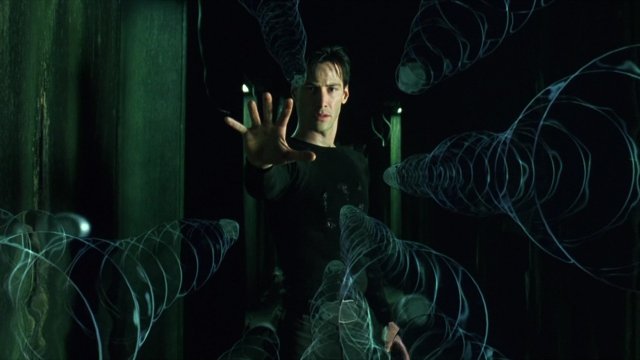
And with that, the Wachowskis threw down a gauntlet that modern cinema is still trying to live upto. The Matrix remains, to this day, the absolute zenith of blockbuster filmmaking for me. The combination of ideas, aesthetic and technical innovation is still un-rivaled. Everything the Wachowskis set out to achieve, no matter how impossible or ambitious – re-writing the entire sci-fi/action movie playbook from the ground up for one – they accomplished. I mean, come the fuck on!

This is probably the defining movie of my childhood too. Released at a time when I was young enough to sit cross-legged, inches from the TV screen, eyes wide, mouth agape in total immersion and awe of the world and story I was being thrown into. I’d never seen a film like The Matrix before. It changed me. A film like The Matrix doesn’t just make you look at movies differently, it makes you look at the world differently. Suddenly bullet time was a staple in imaginations on playgrounds. Rage Against the Machine, Rob Zombie, P.O.D., Ministry, Propellerheads and Lunatic Calm became staples of your first CD collection (make of that what you will, but “Dragula – Hot Rod Herman Remix” is my fucking jam). After I saw this film, I wanted to wear sunglasses and trench-coats (the leather was a bit much). I wanted to be Neo. Except: I didn’t know shit about computers or hacking. Nevertheless, that didn’t stop my first online handle from being TheOne6000 for crying out loud. What a fucking great time. Most of all though, The Matrix just made me want to watch The Matrix over and over again. And I never wanted to fast forward through the talky parts, because somehow, even they too were incredibly exciting. I’ve seen this film so many times that I even know the sound design off by heart.

Beyond just being an incredibly cool, stylish and addictive moviegoing experience, The Matrix has so much intelligence that the older you get, the richer and more impressive the film becomes. The goddamn reading list that comes with this movie alone is bound to make anyone’s IQ bounce up a few points. It’s a film that truly makes you believe that the possibilities are endless. It’s a delicious experience to unpack that only gets more exciting and remarkable the more familiar you become with film as an art form. Practically every great sci-fi idea or popular medium is accounted for in this movie. It combines anime, comic books, video games, music videos – EVERYTHING IS IN THIS FUCKING MOVIE.

Sadly, I’m yet to find a blockbuster experience that matches it. Whenever I see a piece of mainstream entertainment that excites me, I always ask myself “It’s good, but is it Matrix-good?” and the answer is always “No”. The closest I got was Inception but even that somehow seems inferior once it sits in this shadow. I’ve pretty much come to the conclusion that nothing is going to top it. Can you imagine a film like this getting made in this day an age by practically unknown filmmakers? TV maybe. But not for the big screen. In a way The Matrix ruined movies forever because it set the bar so unnaturally high.

Regardless, The Wachowskis continue to push themselves and the medium in exciting new ways. Even though they’ve yet to connect with audience in the same way they did here, They’re among my favourite filmmakers who ever lived and I’ll forever follow them down the rabbit hole no matter how deep or dark. Why? Because they taught me the single greatest lesson in filmmaking: “There is no spoon.”

Posted in Favourite Movies, Movies Watched In 2017, Reviews, Rewatch | Tagged , , , , , , , , | Leave a comment

Tale of Tales (2016)

tale-of-tales-03

It’s easy to get lost in this movie for the initial stretch because of the gorgeous world-building and visuals. There’s a barrage of heightened, fantasy imagery shot like grotesque pastels. It’s a storybook reality and one of the best I’ve seen realised for a while. I mean, who doesn’t want to see Salma Hayek eat the heart of a sea monster? Sadly that only takes you so far and before long Tale of Tales just becomes a modern rendition of familiar fairy tale riffs that is really nice to look at. That being said, even the beauty begins to feel vacuous after a while. The performances are fun (you go Toby Jones!) but I just became increasingly bored as time ticked by and was pretty thankful once the 2 hour, 10 minute running time was up. Maybe I’ll be more receptive upon rewatch but I can’t see me going back for round two any time soon. Beautifully made and creatively cast but disappointingly middling on the whole.

Posted in Movies Watched In 2016, Reviews | Tagged , , , , , | Leave a comment

Hell or High Water (2016)

XXX _HELL OR HIGH WATER _10710.JPG L

The film’s quiet greatness is way more potent upon rewatch. So much to chew on here. The slow-burning sense of the inevitable that looms over everything is really something. It’s not exactly dread, it’s sadder than that, more human. There are car chases, bank robberies and shoot-outs yet it never strays from being a tragic character study first and foremost. Between the bullets and balaclavas you get scenes with surly waitresses, siren-esque prostitutes and endless other periphery characters who are extremely shaded in. The whole film feels lived in and carefully realised.

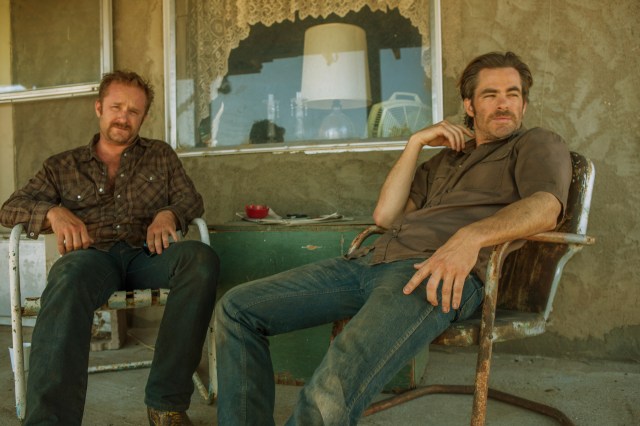
The western sensibility is thrillingly modernised (check out the vaping Texas Ranger) but the storytelling is suitably classicist. I really enjoy the laser-focus of following two pairs of brothers – one literal, one metaphorical – separated by age and geography and having them both creeping towards the same destination. The endless, conversational musings on mortality, fate and paying your dues could easily feel heavy-handed but screenwriter Taylor Sheridan and director David Mackenzie make them work. The mythic western backdrop helps, as do the performances. Chris Pine has never been better and while we’ve seen Jeff Bridges and Ben Foster operate in slight variations of their modes here, they are both supremely captivating and pitch-perfect. Pine reminded me of a young Bridges during this revisit, and to see them both share the screen in the film’s final scene – dressed in matching shades no less – I doubt this was a mere happy accident but rather a crucial part of the film’s design.

Hell or High Water is cowboy poetry. It’s a terrific meditation on brotherhood, the Old West vs. the New West and, as far as modern existential westerns go, it is one of the most satisfying experiences I’ve had recently. Even better the second time around and I can’t wait for round three.

Posted in Movies Watched In 2016, Reviews, Rewatch | Tagged , , , , , | Leave a comment

The Box (2009)

1280x720-0gv

“I like mystery. Don’t you?”

Man, seven years have done The Box a lot of favours. It’s jumped up at least two stars since I first saw it and watching it today, in 2016, every weird and puzzling little flourish feels less like a misstep and more like a gift. In 2009, The Box was an absolute head-scratcher; apparently another sign that Richard Kelly was destined to be remembered as nothing more than the one-hit-wunderkind behind Donnie Darko. The metaphysical elements and melodramatic performances didn’t appear to mesh and all the heady science fiction concepts and visuals felt drastically at odds with the perfect simplicity of Richard Matheson’s pulpy source material. I really didn’t like The Box when I first saw it. It pissed me off. I didn’t get it. With every rewatch though (this is my fourth viewing) all the stuff I disliked about the movie has slowly become thrilling to me.

How exciting to see a filmmaker take this story so seriously that he actually imbues it with countless autobiographical elements (Kelly’s father worked for NASA in the 70s like Marsden’s character, Diaz’s disfigurement is directly inspired by Kelly’s own mother) and tunes it all to his own sensibility and literary interests. This is a Richard Kelly movie! And, along with Darko and especially Southland Tales it is a film that takes time to unfurl and reveal itself. Once all the weirdness and bug-outs click into place, the films actually turn out to be pretty straight-forward, coherent and, yes, emotionally satisfying. Kelly can definitely be accused of taking a real fucking roundabout way of making most of his points. Like, some of this stuff really doesn’t need to be so convoluted, but it makes for a more interesting movie right?

Considering The Box is Kelly’s first (and so far only) studio movie, as well as how much of a trainwreck Southland Tales was both critically and financially just a few years before, it’s pretty remarkable how much hard sci-fi and leftfield ideas he managed to shoehorn into what is, on the surface, a very commercial property. Frank Langella with a burnt face, Cameron Diaz with a disfigured foot, floating water coffins, space and time portals, kids who are cruelly rendered deaf and blind, not to mention the ballkicker of an ending – it all goes a long way to make this movie extremely memorable and distinct. I haven’t seen many mainstream studio thrillers this year that come anywhere near The Box in terms of sheer imagination and audacity. It’s a B-movie through and through, but in Kelly’s eyes, that doesn’t mean it can’t have intelligence.

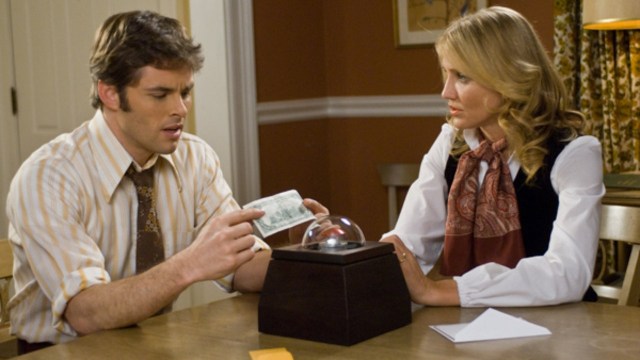
I stuck this film on as part of my annual programming of alt-Xmas movies (and it’s a great Christmas movie by the way) but found myself totally thriving off of all the imagery, ideas and ambition within it. It’s a dumb movie about a button that kills people, walking braindead people with nosebleeds and countless hammy lines, but goddamn does it have a head on its shoulders and formal, storytelling control to match. Such an eye-opener. What I wouldn’t give to have a new Richard Kelly movie every few years. Come on 2017, can you give me that at least?

Posted in Movies Watched In 2016, Reviews, Rewatch | Tagged , , , , | Leave a comment