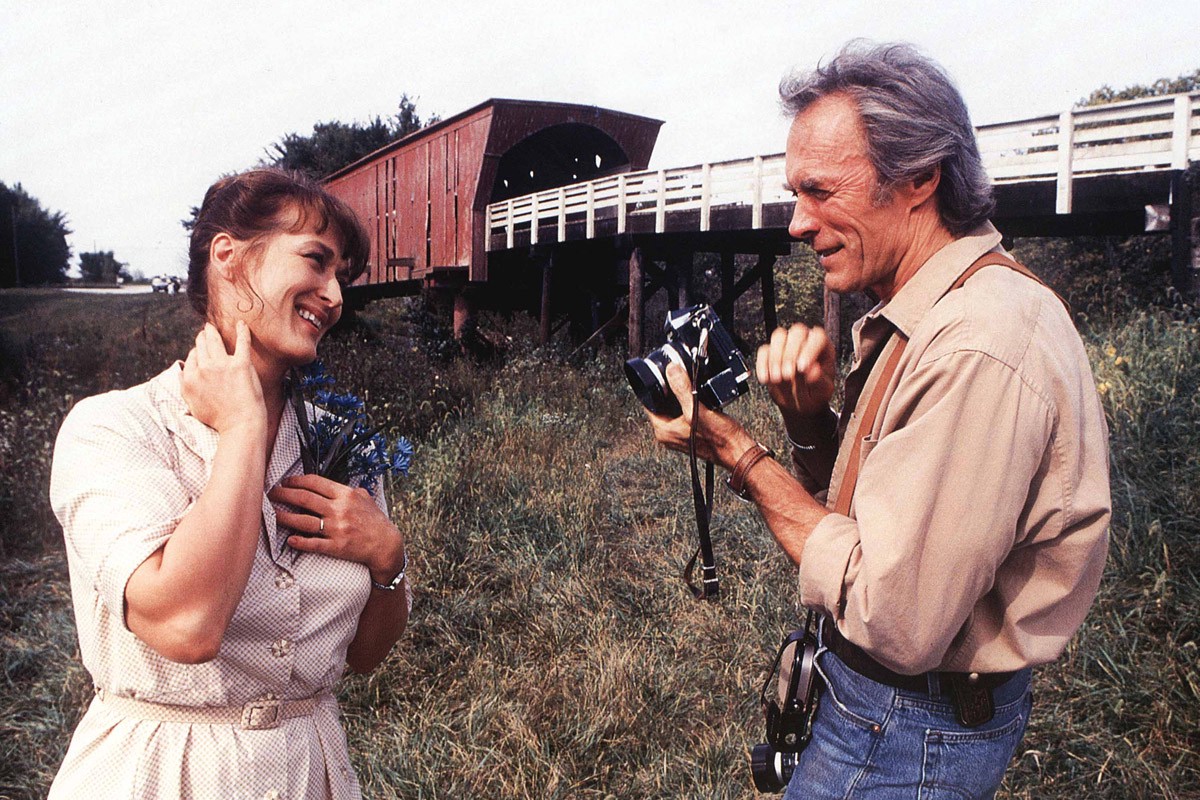
One of Eastwood’s finest. First saw this when I was teenager and enjoyed it then but the added years have really made me appreciate its leisurely tempo even more. Very much Clint’s “people talking in rooms” movie, but the performances are so sensitive and casually nuanced that you’re thankful to spend so much time with them. Both Clint and Meryl really open themselves up here, nailing the budding romance between two older kindred spirits as well as the longing that occurs when they are apart. The beautiful domestic surroundings keep it unfussy stylistically, but there’s just enough going on there to retain a sense of Hollywood craft. This is a film which flutters with butterflies except when it’s beating with heartache. Not sure you need that wrap-around story – a Spielberg suggestion, and a painfully obvious one at that – but this remains Eastwood’s great achievement as a humanist filmmaker. Maybe also his best performance? Not surprised Cahiers voted this the greatest film of the 90s.
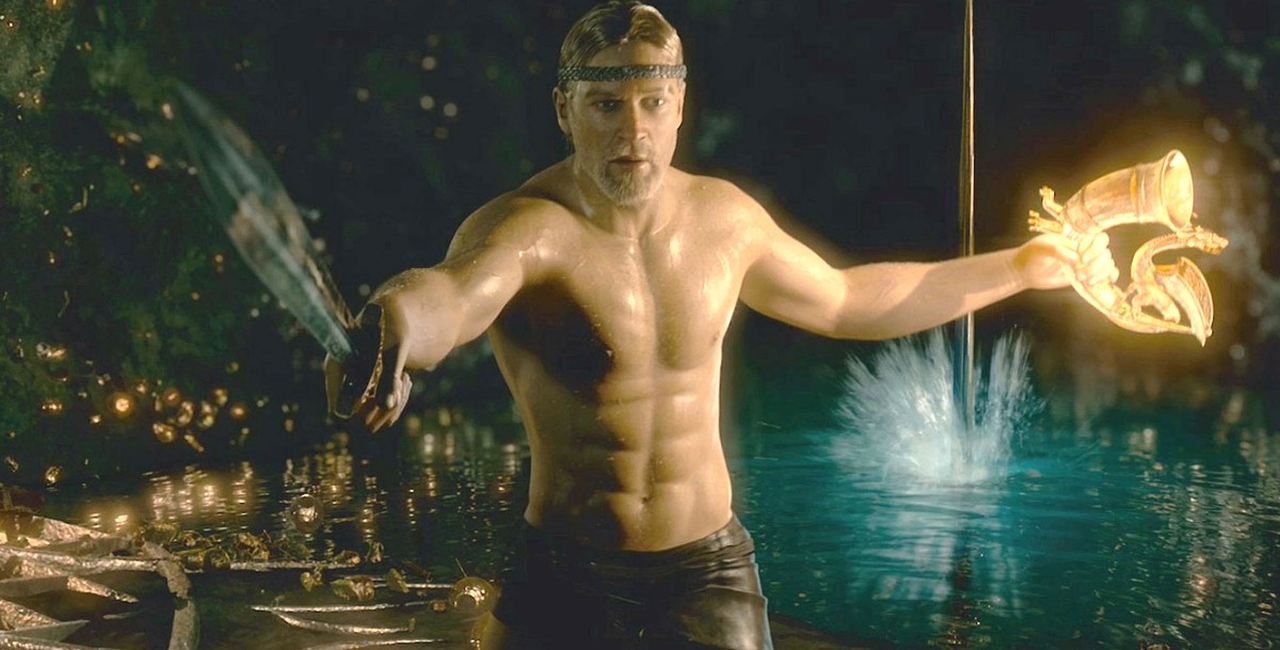
A hot-blooded and incredibly lurid splash-page of medieval fantasy imagery and slick filmmaking. This one genuinely took me by surprise by how wet (bloody) and wild it was willing to get. Zemeckis’ knack for fluid camerawork and VFX gymnastics is on full display, making even the film’s limited square-footing (half of it takes place in a castle) feel epic and raucous. There’s a lot of imagination here. The design of Grendel, brilliantly performed by Crispin Glover, is especially traumatic and Zemeckis’ horndog tendencies go a long way to keep things lively and eye-popping. The butt-naked fight scene (complete with Austin Powers-esque mise-en-scene cock blocking) is a silly riot, and the drooling reveal of Angelina Jolie’s golden goddess pin-up bod is just so brazen and leering that you can’t help but applaud it. These are images I’m not likely to forget any time soon.
If Beowulf was rendered in live-action I don’t doubt it would have a more dedicated following by now as the mo-cap remains a bit of a hurdle to get over – the dead-eyes of Polar Express are still a problem – but the overall bombast of this soon dragged me in. Zemeckis is a terrific visual storyteller and he never lets the thumping pulse of this thing slow down or the gleeful brutality subside. It’s entertaining as hell. Honestly I’m kind of shocked this exists.
Even after acknowledging the fact that this was taken out of his hands and severely re-shot and re-edited, it’s hard to spot any traces of Ti West in this thing. I tried to see through the edits and assemble an idea of what he might have originally conceived with his shots but came to the conclusion that even in its intended shape Cabin Fever 2: Spring Fever would still be a camp and colourful bubblegum gore-romp rather than the kind of meticulously controlled chiller we usually associate with West. Makes sense, given the nature of this franchise, but it might also be the reason why this pairing always seemed to be an uncomfortable fit and why this will always be the outlier in West’s filmography. It’s not really his film, after all, but even if it was it would still probably be better suited to Adam Wingard.
So, a few cameos aside (Swanberg, Fessenden), there’s not much here for Ti West completists, but how about Cabin Fever fans? Sadly, not much there either. This is a sillier, more heightened film that its predecessor, if that’s even possible, and the sole returning cast members (Rider Strong so covered in make-up his return is frankly pointless, and Giussepe Andrews as the original’s MVP Deputy Winston) feel like they’re merely cashing a quick paycheck with little effort given to retaining any sort of character continuity.
The gore gags are all in the service of escalating the absurdity and juvenilia of the original film, to the point where it rarely feels like anything less than a bunch of special effects guys throwing buckets of blood and rubber limbs around. Say what you will about Roth, but he knows how to pull off an icky shock where it counts. I really wish he had more of an active input in this thing because there was potential for a fun franchise to be spawned out of this flesh-eating muck. I get the impulse to level-up the cabin-in-the-woods playbook into another 80s horror staple – the prom night sex slasher – but this is neither clever enough about its references or serious enough about its horror to make the transition worthwhile.
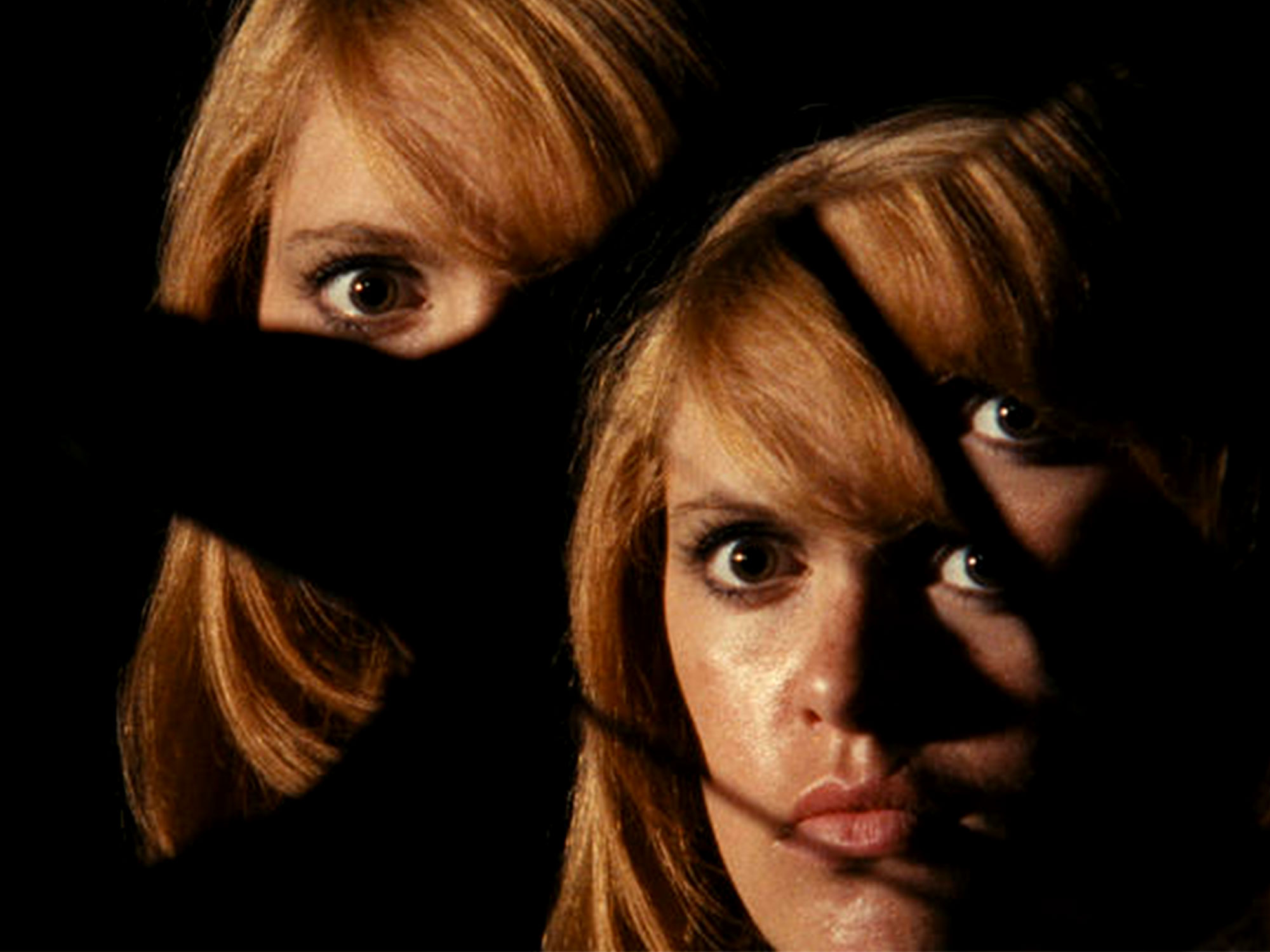
WOW. One of the most cinematically stimulating and erotic movies I’ve ever seen. Has a graphic quality and grasp of cinematic language and technique that just sends my heart racing. It reminded me of the first time I saw Point Blank (one of my ten favourite movies of all time) where every shot, cut and creative choice felt like a shock to the senses. Similar to how Powell used it in Peeping Tom and how De Palma would later in Body Double, Clouzot uses voyeurism as a prism to reckon with sex, cinema and the way the two will always be linked. It’s also a deeply personal essay on his own obsessions. A radical masterwork.
I can’t remember the last time I saw a horror movie set in the woods that actually made the environment feel so oppressive and evocative. The Ritual is certainly the first since The Blair Witch Project to make me dread stepping foot in a forrest at night. The misty photography is so beautiful. The film itself feels damp from the atmosphere.
Not to spoil anything too much but this also contains probably the finest creature design I’ve seen since Annihilation and before that, I don’t know what. I’ve never seen anything like it. The slow descent into folk-horror succeeds where so many before it have failed by having a consistently vague and ominous tone throughout. Once you’re faced with the reality of what’s going on, as extreme as it is, it never feels like the film is reaching too hard or has jumped the gun. The ground work is laid perfectly and it’s all shot and calibrated with the necessary control to keep it all wound so tight.
This really had me in its grip. Fucking spooky, man.
The way this overlays a multitude of spooky stories and ideas together like weaving a tapestry is a clever way of tackling the horror anthology format. Where traditionally structured examples – one short followed by another – can soon feel tiresome due to the uneven nature of the stories, or just plain exhausting as a result of seeing a handful of narratives piled on top of one another, Terrified keeps you engaged by slowly developing all the threads in unison. There’s also some truly unsettling horror ideas and imagery at play here, so much so that for the first 40 minutes I was sure I was watching one of the best horror movies of the decade. Unfortunately it fizzles out soon after, becomes yet another “paranormal experts dealing with phenomena in spooky houses” movie. It doesn’t kill the film by any means, it just becomes routine and familiar in ways the first half is not.
This really hasn’t aged particularly well and increasingly feels like less of an original horror vision* than a gleeful mash-up of every horror movie Eli Roth loved in his teens. There’s very little finesse here. The stupid excess of homophobic and racial slurs in service of juvenile laughs will certainly hinder this in a today’s climate but it does make it a weird, if embarrassing, time capsule of what dumb American teens talked like in the early 2000s. Thank god those days are over.
I saw Cabin Fevera lot back in the day so I will always see it in a fond light but even I can admit the actual film may not really warrant much attention as time goes on. Luckily there’s enough utterly bizarre tonal shifts and bug-out supporting characters to ensure every revisit contains some rewards. I’m a big fan of Deputy Winston and “pancakes!”. Also the flesh-eating disease is a great anchor for a cabin-in-the-woods horror flick, though Roth barely scratches the surface of its potential by the time things get going. Nevertheless, he does manage to get in his fair share of effective gore gags, heightened no doubt by the assistance of two thirds of KNB effects in the make-up department. The fingering fake-out (there’s a sentence I never expected to write today) is still a terrific bit, and the way things escalate so aggressively into either sex or violence is, frankly, very funny. It’s so dumb, but at least it’s self-aware and entertaining.
Had Roth taken more ownership and done his own sequel, I really think we could have seen an excellent Cabin Fever 2. As Hostel Part II shows, the dude really gets into the swing of things once he can play in a sandbox without having to build it first. This probably won’t be the last time I see this in my lifetime.
*Not that Cabin Fever ever really felt like a total breath of fresh air but Roth being so blatant about his influences and playfully tweaking them to his own lurid sensibility did give genre-heads like me a jolt of giddiness back in the day. Never forget that Quentin Tarantino branded Roth “the future of American horror” in the wake of this film’s release.
A solid thriller first and foremost but the calibre of talent involved can’t help but heighten Marathon Man into something far more captivating. Schlesinger is all over this. The performances are imbued with the kind of subtle details he always managed to bring out in his actors, and ofcourse having Hoffman, Olivier and Scheider doesn’t hurt either. The way the film seems to constantly push its thriller conventions as far as it can – the sadistic torture scene, for instance, became immediately infamous – feels characteristic of the same filmmaker who made Midnight Cowboy a handful of years earlier. Not to mention the involvement of writer William Goldman who penned the screenplay based on his own novel. Everyone is trying to make the best film they can, basically.
It looks fantastic too with the legendary cinematographer Conrad Hall really going to town on those night exteriors. I’m sure whenever I think of this movie in the future the image that i’ll go to is that of Hoffman shirtless and terrified, running through the rain-slicked NY streets. Or maybe i’ll remember Olivier being accosted by the Jewish woman at the end. The way this charters an America dealing with the long-term impact of the holocaust also brings to mind Lumet’s The Pawnbroker with Olivier’s concentration camp torturer even sharing a passing resemblance to Rod Steiger’s tortured concentration camp survivor from that film. While one is a prestige 70s thriller and the other a radical 60s character study, the two films certainly feel in conversation with one another
Also, not sure if this holds any water, but Marathon Man feels like a cast-iron template for the Bourne franchise, right on down to the down and dirty fist fights, brutal violence and injection of real-world paranoia. Try watching that Scheider hotel room brawl without thinking about any number of Bourne’s signature smackdowns. It’s not hard to draw a line from here right on through to what Doug Liman and Paul Greengrass were up to.
I felt pretty indifferent towards Pesce’s Eyes of My Mother and I’m about at the same place with this. I do like that it’s a complete 180 from that film visually and has more of an explicit, perverse sense of humour, plus I like all of the actors a lot. Re-purposing iconic giallo music cues throughout is a cheap move* though and you can probably guess where the story is heading just by being aware of Miike’s Audition (this is based on a novel by the same writer). All that being said I went into this with my arms crossed but it kind of won me over as it went on. There’s some vivid nightmare imagery and sound design that had me thinking of Tarsem’s The Cell which is always a plus. At least the dude knows how to keep his movies trim and to the point. Death to 100+ minute horror movies!
*I honestly don’t understand why more genre filmmakers don’t strive towards creating original scores instead of getting stuck in this feedback loop of nostalgic posturing. That’s the impulse that gave us those Goblin, Nicolai, Ortolani, Carpenter soundscapes in the first place after all. In thirty years are filmmakers still going to be sampling these same cues? Or just imitating Reznor/Ross and/or Disasterpeace? I think about this a lot!
An efficient and sturdy bottled-noir that is locked and loaded with an impressive array of character actors who have just been waiting for the opportunity to get their hands on a showcase piece of material like this.
Writer/director Henry Dunham clearly enjoys snapping dialogue together, allowing his characters to have loaded, rhythmic conversations which rat-a-tat like hammer to nail in the echoey warehouse. This is Mamet territory rather than Tarantino, though the set-up will nevertheless have your brain jumping to everything from Reservoir Dogs to 12 Angry Men.
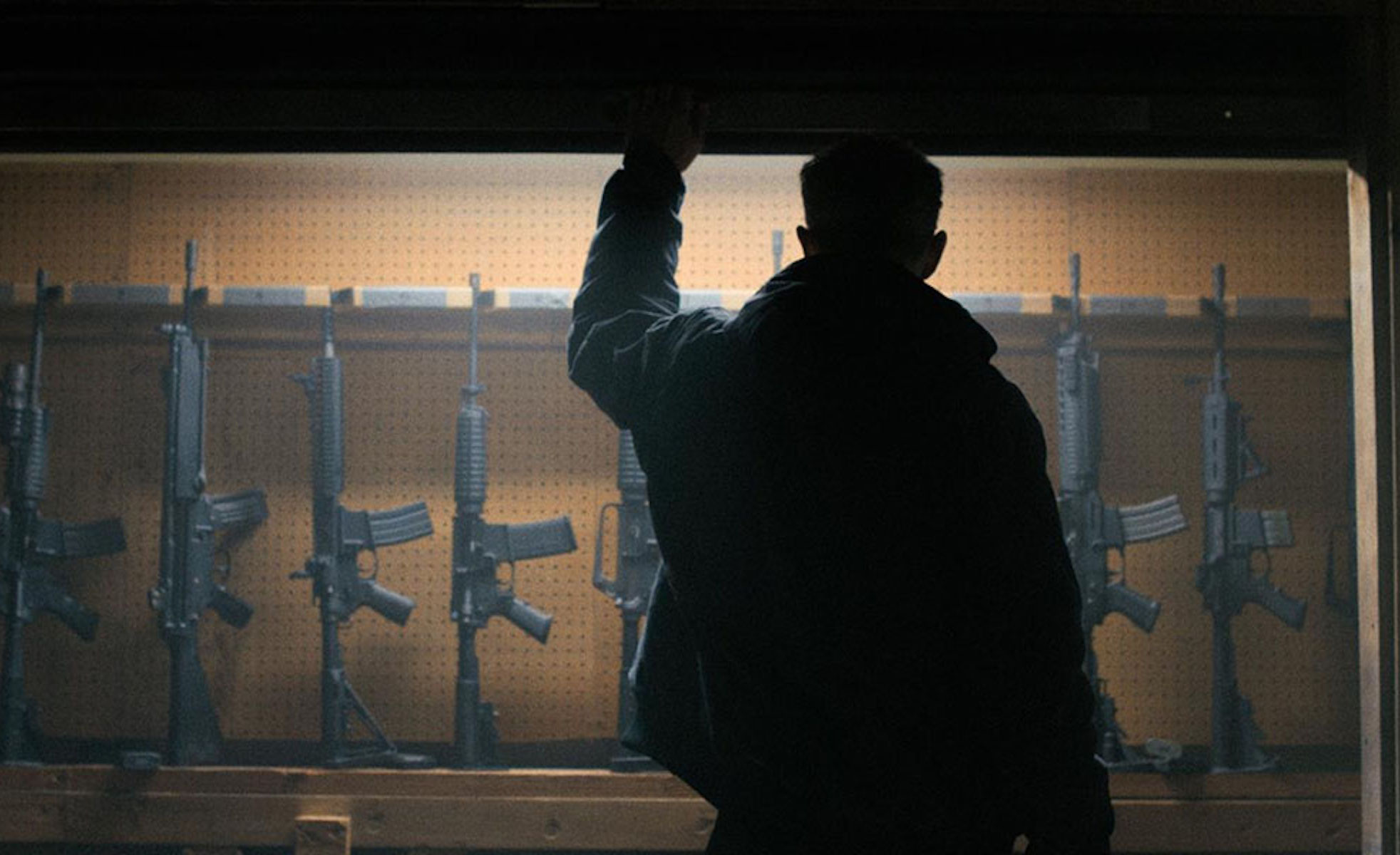
As talky as Standoff at Sparrow Creek can be, this is primarily a film scored by silence and cloaked with absolute darkness. As a suspense picture, it’s the sort where you could hear a pin drop. As a portrait of grizzled machismo, it is soaked in the kind of shadows favoured by Carpenter, Fincher and Eastwood. There’s enough mise-en-scene in the light to suggest an actual surrounding, but the engulfing blackness makes this feel akin to a piece of black box theatre at times. Luckily the dialogue and performances are so engaging that you ultimately don’t care if the surroundings are interesting or not but it does make the film far more visually expressionistic than it may have been were it lit more traditionally.
Sparrow Creek seems to be an exclusive world of men, but all of them feel like characters who know they’re amidst the set-up for a shoot-em-up, have probably been there many times before, but tonight would rather avoid it. They’re all dog tired, weighed down by their own masculinity and therein lies most of the pleasure in watching it all slowly unfold. So much of the film lives in the lines on all their faces. James Badge Dale is handed a long-overdue lead role and he’s the perfect figurehead to drive this particular ship through a dark sea of potential chaos. It maybe gets a little too twisty near the end, but Dunham’s impressive use of spartan genre mechanics is enough to sustain your attention throughout. A terrific debut.





 "This Film Should Be Played Loud"