“Grow Up Mason”: Richard Linklater’s Boyhood (2014)

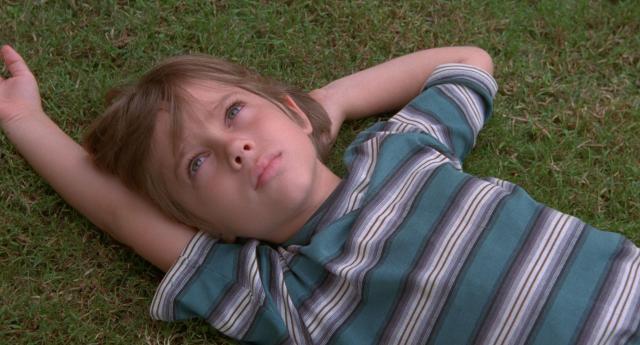
ellar-coltrane-in-boyhood-2014-large-picture

It’s not often we get a film like Boyhood. In fact we’ve never had a film like Boyhood. Not only has it been hailed as one of the best films of the year but as one of the most ambitious and revolutionary cinematic achievements ever completed. It appears to be the crowning diamond of Richard Linklater’s career to date, an ongoing twelve year project that is the summation of ideas and themes that have populated his work since his very first movie, It’s Impossible to Learn to Plow by Reading Books. Linklater’s 1988 debut was a fly on the wall observation piece following one character over 80 minutes as he completed mundane day-to-day tasks. Since then his career has consisted of various riffs on this idea of celebrating the ordinary. Slacker leap-frogged from one character to the next during one day in Austin, Dazed & Confusedspent 24 hours with a sprawling cast of high school students as they celebrated the last day of school in Summer 1976. Then there’s his much-lauded Before trilogy which charts the progress of a relationship through brief snapshots released 9 years apart. Which brings us to Boyhood – another fly-on-the-wall project that documents one boy’s childhood from aged 5 to 18 shot piece by piece one year at a time. Boyhood might not be a surprising project for Linklater to undertake but that doesn’t make the feat any less remarkable. But perhaps it’s finest accomplishment is how casually it achieves it’s greatness. The same could be said for Linklater himself.

Sitting comfortably between the abstract and the accessible, Richard Linklater isn’t showy, nor does he appeal to the masses with populist entertainment. Slowly and surely, however he has emerged as one of America’s most unique and celebrated filmmakers. He’s done this one movie at a time, changing pace and refining his voice and technique through bold narrative experiments (Slacker, Fast Food Nation) stylistic off-shoots (Waking Life, Tape) and exercises in old-school storytelling (School of Rock, Me and Orson Welles, Bad News Bears). No matter how different each film might be from the last, Linklater’s voice remains constant. He isn’t a filmmaker to throw bells and whistles at you, instead he sits back and lets you enjoy yourself. There is rarely a sense of serious threat and danger to his work. They’re smaller than that, more frivolous. His films are rarely anchored by characters in deep crisis, instead they involve people at a crossroads in their life, waiting patiently before they embark on the next chapter. This applies to the aimless sprawl of characters in Slacker, the students in Dazed, even Jesse and Celine in the three Before movies always seem to be at a mid-life dead-end each time we check in on them. While his characters sit and enjoy life on pause they usually pass the time by indulging in conversation and philosophizing on the why’s and what-if’s of life, dreams and pop culture. But isn’t this just the perfect representation of life, itself? Sat watching the world go by while talking shit with strangers and friends?

There is a very clear thread from It’s Impossible to Learn to Plow by Reading Books to Boyhood. The former a more intense and alienating examination of day to day routine while the latter is a grander, more intimate look into this same routine stretched out over many years. They are both fascinating dissections of the human condition, both ambitious in their own very different ways but the ambition of Boyhood is something to marvel at. The dedication and patience it must take for a filmmaker to commit to a cast and a story that won’t form a cohesive whole for twelve years is staggering. It’s a testament to Linklater’s consistency as a filmmaker that his style and approach holds it all together without being a distraction. Aside from the cast aging in front of your eyes and the country developing over time, each episode eases elegantly into the next. There is a sense that Linklater made this movie in his mind before he started shooting and stuck to that vision over twelve years. It doesn’t feel like he shot endless footage and sculpted a finished product in the editing room. Each year that passes feels like one piece of a larger whole. Think how much people change over twelve years; their tastes, views, attitudes, their personalities! There must have been a threat that the Richard Linklater who started shooting Boyhood in 2002 may not have been the same Richard Linklater who finished it in 2014. Perhaps that was part of the experiment. Who knows, maybe the Boyhood Linklater envisioned in 2002 isn’t this movie but you wouldn’t think so watching the final product. It all feels organic and intentional. That to me is astonishing.

There’s also a threat with a movie like this that it could feel self-indulgent or self-important. The filmmakers may have felt the urge to make a grand statement with such a grand piece of art. But no, Linklater stays true to himself and is happy to just document a life as opposed to heightening it for dramatic tension. Watching Boyhood I was struck with just how relaxed and spontaneous the movie felt, how casually it unfolded, so unforced and gentle. It doesn’t zero in on the obvious touchstones of adolescence in the expected way either. We don’t see Mason’s first kiss, his first love nor do we experience a death in the family. If these events happen they happen off-screen, off the film’s radar but their ripples are still felt in Mason’s blossoming as a young adult. Boyhood deals with their distant consequences as opposed to their actual unfolding. The way Linklater avoided temptation to indulge in any huge dramatic beats is really something. In fact, the film only falters slightly in it’s middle section as Mason’s mother (Patricia Arquette) finds herself married to a former University professor and drunk who becomes increasingly dangerous as each year passes. He is one of Linklater’s few villains and this subplot is easily the film’s uneasiest section just because it’s the only time a clear arc starts to emerge, somewhat uncomfortably. But the off-hand, anti-climactic way it all concludes justifies it’s inclusion. The subplot threatens to emerge again later as Arquette marries another jerk but this again is soon pushed into the background to focus on much subtler, poignant life experiences.

We are never explicitly told anything about any of the characters but by the end of the film, through living with them in fast-forward and from the strength of the performances we feel we know everything we need to. Ellar Coltrane who plays Mason, the film’s anchor, is terrific throughout to the point where you don’t even feel like you are watching a performance as much as you are watching a life. Mason’s father, played brilliantly by Linklater regular Ethan Hawke, is only a fleeting presence in his son’s upbringing but he lights up the film whenever he’s on screen. He first appears as a roguish yet charming fuck-up and slowly develops into a softer, responsible adult. Linklater never judges him or any of the other characters. He lets them be who they are and doesn’t ask questions. He accepts them, flaws and all. Of all the faces making up Boyhood’s collage, it’s Patricia Arquette may prove to be it’s real star. As Mason’s single mother she has such a strength to her that is endlessly endearing. Seeing her frustrated outbursts as she comes up against her sassy daughter (Linklater’s own daughter, Lorelei) are some of the film’s most amusing and truest moments. Her development from single young mother in it’s early scenes to a successful, independent woman by the film’s end is close to being Boyhood‘s most pleasing pay-off. She deserves a good life and when she crumbles into tears during her final scene as Mason uproots to college you crumble with her. She’s absolutely terrific in this film and I really hope she gets some recognition come award season.

At one point Mason asks his father “What’s the point of all this?” and it’s a question that can easily be aimed at the film itself but the answer is clear. We’ve already established that Linklater is a filmmaker interested in the discussions people have as opposed to ultimate choices they make or their final destination. “What’s the point of all this?” seems to be a question that fascinates him and his characters but rarely do they come up with a solid answer. It’s the aimless path of life. Linklater’s approach and worldview can be summed up in one image that is constantly appearing in his work – the view out of a car windshield, watching the open road ahead. This shot is present in Plow, is the final image of Dazed and also pops up again here in Boyhood. It’s the road to nowhere. That which cannot be foreseen. Just as we watch a child become a young man over 165 minutes, we still do not see where he will end up and we don’t need to. During it’s twelve year timescale we see people change in Boyhood, we see life unfold one year at a time through carefully chosen pit-stops but is that to suggest these episodes are the defining moments of Mason’s life over those twelve years? Not at all. They’re simply the most interesting and perhaps collectively are what makes him who he is today.

Boyhood, along with Under the Skin, marks the second of two movies I’ve seen this year that has made me appreciate the sheer, transcendental power of ambitious filmmaking. The two films couldn’t be more different in terms of approach and are told from opposing points of view. One is about an alien looking at humanity from the outside while the other embraces it from within. Under the Skin is challenging whereas Boyhood is involving. Linklater is a different filmmaker to Glazer too. He isn’t pushing cinema forward with striking visual language or unusual film grammar but with character and observation. They are both trying to redefine how movies can be made and what can be engaging about them. While Glazer is cold and methodical Linklater is warm and welcoming. Under the Skin seems to damn humanity while Boyhood celebrates it. It’s funny how these two opposing films seem to be aiming for a similar goal – to reinvent form.

What sets Richard Linklater apart from other filmmakers is that everyone in his films is an individual with an opinion and a voice. His characters don’t emerge out of a faceless mass as outstanding, unique or even cinematic, no, they belong to the ensemble of life and reality but still manage to be nuanced and memorable. Linklater can’t really be compared to anybody else working in American cinema right now, not because he’s necessarily trying to be groundbreaking or daring, but because he is telling stories about characters nobody else is shining a light on. With his seventeenth feature, he has created a beautifully observed examination of growing up and growing old. It’s an extremely subtle journey with an exhaustive sweep that can only be felt once the film has finished and you actually start to think about what you’ve just seen. It achieves a level of truth and reality few films even dare to go near. The set-pieces of Boyhood consist of a father taking his kids bowling, high school kids drinking beer in an abandoned house – endless scenes with little consequence and closure but as part of a whole form a resonant and moving construct. It’s also lacks the boring intensity of high-drama that has come to define so many “important” movies of recent times. The conflicts in Boyhood aren’t life threatening and the film feels light on it’s feet and refreshing as a result. It’s most stylised moments arrive in the form of song choices which perfectly signal the arrival of a new time period. It might be the most naturalistic and genuine character study ever made. It’s certainly the most ambitious. I loved this movie and I can’t wait to watch it again and again. Boyhood might have taken twelve years to complete, but it’s impact will be felt for much longer than that.

Posted in Movies Watched In 2014, Reviews | Tagged , , , , , | Leave a comment

Seven Dwarfs – California Split (1974)

I only just saw California Split yesterday but it’s been buzzing around in my head ever since. I can’t stop thinking about the casual, breezy tone Altman creates. Both performances by George Segal and Elliott Gould are fantastic. I keep returning to this scene, it struck me immediately at being quite special. It’s the moment that the film sucked me in and had me completely. It feels so natural and of the moment that I wouldn’t be surprised if it was improvised by Segal and Gould on the spot. The way they both bounce the dialogue off of each other is wonderful. Gould even fucks up at one point (“that’s four”) but it’s an honest fuck up and totally works, especially as Segal remains in character and corrects him without missing a beat. Or perhaps this was all entirely scripted? With Altman’s films you never can tell which is part of their magic. What makes them great is that he could allow for moments like this, he’d let them slip through the cracks and become part of the intentional fabric. Fantastic.

Posted in You've got a killer scene there, man! | Tagged , , , | Leave a comment

Under the Skin (2014)

undertheskin-2014-4

For his third feature film, his first in ten years, Jonathan Glazer has delivered a purely cinematic work of such surprising power and audacity that I had to take a long walk afterwards in order to let it all sink in and settle. I have so many thoughts about this film, so many observations, questions and ideas it’s difficult to find a place to start. So I’ll start in summation: Under the Skin is an incredible movie. Like a waking nightmare it leaves you with both a lingering sense of unease and horrific relief. It is a singular vision that goes exactly where it’s title promises.

I’ve long been a fan of Glazer. Both Sexy Beast and Birth are impressive expressions of a daring voice pushing the envelope in different directions. One a flashy exercise in surreal pulp the other a Kubrickan display of sustained emotion on both an operatic and intimate level. Under the Skin, however, is the film he has been working towards his entire career, delivering on the promise of his striking work in music videos and advertising. It’s so daring in it’s technique and approach that audiences will either embrace or dismiss it’s alienating ambience. Glazer takes liberties with narrative and structure and successfully forces you to look at the world through a foreign pair of eyes. Blazingly original in it’s depiction of alien technology and anatomy, it’s a film painted with grand oblique strokes. What better way to depict that which we will never understand? That which we cannot compare? Glazer finds the answer by presenting us with imagery we have never seen before. The creation of an iris, naked men sinking into black liquid, skin as a costume, dimensionless voids, all scored to a droning soundtrack of sharp edges – it is an absolute vision, darkly hypnotic and seductive.

The casting of Scarlett Johansson as the film’s alien heroine is a master stroke and there is something perfect about her star power combined with this project. This is Johansson like we have never seen her before. With a black bob, prowling the Scottish streets in a white van, the glamour is stripped back and the beauty made raw, her silhouette is totally recontextualised. She is a predator, fierce yet delicate, welcoming yet threatening. She is a sexual object in the eyes of the men peering into her van but a venus fly trap to us, the audience who are savvy to her dark intent. What we witness here in Under the Skin is an actress completely reclaiming her image. She is taking control of her body and claiming ownership of her talents.

As an actress who is constantly paraded in front of us a sex icon, it’s as if her sexiness and qualities – her soft curves and sultry voice, have become a selling tool, a mere product. It’s a shame that this movie will only appeal to many as “the film in which Scarlett Johansson takes her clothes off” but there is indeed something extremely overwhelming and beautiful about the moments in which she bares all for the camera. It’s something that has been nothing but a figment in many imaginations until now. Some may argue, those who only see Johansson as a pretty specimen of the female form, that keeping herself covered up on-screen only makes her more beautiful. Countless films and photoshoots in which she has appeared tease her voluptuous figure but never reveal it, it is part of her allure. That which is unattainable and mysterious. To finally reveal it all on screen is a brave choice on Johansson’s part, a potentially dangerous one but the gamble pays off. She took the risk for the right project and for the right director.

Glazer does not sexualise her in any degrading way, he simply presents her faithfully and her nudity is not gratuitous or exclusive. Her male co-stars bare just as much, if not more flesh. As opposed to delivering mere titillation, when she removes her clothes it feels like shackles have been removed, a weight is lifted and there is a rebirth happening in front of us. It is a bold statement of intent on Johansson’s part, as if she is saying “here you go, look at it, it’s mine, now let’s move on”. With this film and last year’s Her and Don Jon, she has been assuring control over her image and using her sex appeal as a weapon, a trojan horse which unleashes the blossoming of a truly great actress. She’s not simply “the world’s sexiest woman” anymore, she means buisness. As a result her mystique and appeal is not diluted, but intensified. I’m not suggesting that actresses need to take their clothes off to be taken seriously by any means, but in this case, it’s a particularly revelatory and admirable artistic choice, one which makes the film all the more authentic. As a male film-goer who has been totally infatuated with Scarlett Johansson’s beauty for a long time (I would argue she is the most beautiful actress who has ever lived) I could easily be accused of putting way more importance on this element of the film than is perhaps necessary but I can’t deny the intense effect it had on me. It was not a feeling or arousal or attraction but a deep admiration for a daring artistic choice. Her work in this film is exceptional and fearless and we should all keep a very close eye on her in the years to come as I feel like there is no territory she dare not explore. It’s a liberating and exciting place for an actor to be.

Under the Skin is a film which blurs the line between reality and genre unlike anything I have ever seen before. Much has already been written about the choice to have Johansson drive around in a van kitted out with secret cameras and pick up genuine, unsuspecting Scottish bystanders who would then be seamlessly weaved into the film’s tapestry, if they permitted it. But beyond that, Glazer’s choice to place this story and this actress where he does is quite remarkable. It was absolutely bizarre for me to see so many familiar British shops and brands light up the backgrounds in shopping centres while Johansson floated amidst them. This is not a tourists eye view of the UK (Scotland more specifically, but the two look the same). This film is populated by faces and voices that saturate my every day life and the mundane grey skies, damp fields and rolling green hillsides are images I take for granted by this point. I rarely see them depicted on screen beyond the kitchen sink realism of Ken Loach and they’re often something I go to the movies to escape from rather than escape to. But seeing them through Glazer’s lens and moving beneath Johansson’s feet hit incredibly close to home for me. It’s quite profound to see something so familiar suddenly become unfamiliar. It’s the power of movies, to transcend, transport and force you to re-evaluate. Under the Skin showed me things I see every day and made them fantastic and sublime. I’ve never wanted to escape into my own home town until now. It’s was an eye-opening experience and one I feel slightly changed and reinvigorated by.

This is the best film I have seen in a long time and easily one of the most powerful cinematic experiences I’ve had the pleasure of enjoying. Even after just one viewing I’m comfortable with declaring it as one of the few masterpieces I’ve seen created in my lifetime. Like, say, There Will Be Blood, it’s a film that I feel has already had it’s place cemented in film history to be discussed for years to come. It’s going to take a lot for another film to top this in 2014 for me. Jonathan Glazer has made one hell of a movie that embraces and exploits the infinite possibilities of the medium itself. Intoxicating as it is horrific but never anything less than extraordinary. A truly astonishing achievement.

Posted in Movies Watched In 2014, Reviews | Tagged , , | Leave a comment

Come to Daddy (1997)

come to daddy,

As a budding filmmaker who grew up in the 90s it goes without saying that music videos  have influenced and shaped my tastes and style just as much as any feature film has, maybe even more so. Directors like Spike Jonze, Michel Gondry, Jonathan Glazer, Mark Romanek and of-course, Chris Cunningham are all filmmakers who’s short-form work in music videos and advertising ended up burnt onto my eyeballs at a very young age (between them they pretty much have this list covered). I’m constantly returning to and obsessing over their work. They took the whole music-video format and turned it into a legitimate art form. Not only did they promote a band and a song, they could tell a story or create a world. They were like mini pieces of art or short films. The way they established a style, a mood, a texture in under five minutes and set it to a rhythm has always been something I’m striving for. There’s a real sense of authorship to all of their videos, a feel that is unique to their sensibilities. Even now we are stood in their shadow trying to replicate or build on what they did.

I’ve been thinking a lot about these filmmakers recently and trying to pin-point the exact moment or the exact video that really made me sit up and take notice. There was a documentary that aired on Channel 4 sometime in the early 2000s that ran down the greatest music videos of all time, or maybe it was a documentary on the 100 scariest moments of all time? Either way this video was high on both lists. Chris Cunningham’s video for Come to Daddy by Aphex Twin hit me like a ton of bricks. At this point my tastes were varied but primarily gauged to horror movies and visceral, violent cinema. I was looking to be shocked and scarred. This video did both:

I only saw snippets of Come to Daddy in the documentary but they were dark, vivid and absolutely unlike anything I had ever seen before. When I finally saw the entire video I felt shaken, thrilled and naughty. It’s the kind of thing that feels forbidden. I must have been around twelve years old at the time and I knew this was not something a twelve year old should be watching. I loved that about it. Not only was it fucked up, harrowing and totally relentless but also strangely relatable. Living in England you see blocks of flats like the one in that video all the time. I’ve seen little old women walking their dogs, letting them piss on a discarded TV and walked through car parks at night while kids are playing when they should really be in bed. Cunningham tapped into these familiar and mundane British sights and transformed them into an electronic nightmare. It attacks you. Watching it now I can appreciate more of the dark humour. Whereas before the image of that weird thing screaming in the old granny’s face was a purely terrifying moment, now it’s kind of ridiculous and well, funny. But no less of a powerful visual statement. The impact hasn’t been diluted one bit.

Out of all the directors from the 90s music video boom, it’s surprising that Chris Cunningham is the only one yet to make a feature film. I suspect it’s because his singular and uncompromising vision is difficult to translate to a mainstream medium. Following Come to Daddy I devoured as much of his work I could set my sights on and found them all to be equally fascinating and unsettling (I highly recommend the Work of Director DVD’s that Palm Pictures put out a few years ago). He’s a true visionary and a genuine original. I’ve never seen a Chris Cunningham video I’ve forgotten. It all started with Come to Daddy which certainly holds claim to being among the most influential 6 minutes I’ve ever seen. After seeing this video I knew what music videos were capable of. You could even say it changed my life.

Posted in Inspiration | Tagged , , , | Leave a comment

Baby, You’re a Rich Man – The Social Network (2010)

The Social Network

Out of all the movies released in the past couple of years, hell maybe even the past decade, I’ve seen The Social Network more than any other. I’m addicted to the film’s sound, the rapid-fire Sorkin-speak that bludgeons you in the first scene and dares you to keep up until the last. Fincher’s visuals too are remarkable. His careful, precise compositions and the moody cloak of his dark lighting may not have been the obvious choice for this story but in hindsight, looking at it through his obsessive eye is a masterstroke. It’s a terrific study of the Mark Zuckerberg character, not the person, the character, one of the most fascinating and complex anti-heroes to ever grace our screens. Today is the 10th anniversary of facebook and it’s not only a great excuse for me to revisit The Social Network yet again, but gives me a timely opportunity to shine a light on one of my favourite moments.

I wanted to look at the film’s final scene because, unlike many of it’s other showy high points (the opening scene, the initial hacking sequence to name but a few) this moment is deceptively simple but so heavy with poignancy.

The film starts off with Mark Zuckerberg being told he’s an asshole and ends with him being told that he isn’t, even though he’s trying to be. Sorkin’s suggests that without Zuckerberg being an asshole, there would be no facebook. If his girlfriend didn’t dump him, he wouldn’t have made facemash out of spite, he wouldn’t have met the Winklevi, wouldn’t have had (or stole) the idea and therefore would have never created facebook. So, here he is, sat in a high tower looking over his digital empire having conquered his enemies and alienated his friends. He is the world’s youngest billionaire and completely alone. It’s really the first time in the movie that we see Zuckerberg isolated from everyone else and it’s a strange moment of privacy to be suddenly privvy to. The quietness too is uncharacteristic of a film so in love with the rhythm of clattering dialogue and machine-gun back-and-forth’s. Finally the film is at peace, but it’s protagonist isn’t.

What does Mark Zuckerberg do when he’s alone? He thinks about the one that got away. Throughout the film he seems un-phased by money and success but strives for recognition. When he sees Erica for the first time since their break-up he doesn’t approach her to apologise, he approaches her to see if she has heard about facebook in the hope that his new success will have calmed the waters between them. And now, with his battles won, he finds her on his own creation and sends her a friend request. Is this suggesting that Zuckerberg did all of this to win her back? Would he sacrifice all of his success if it meant making it right with Erica Albright? Not quite. I don’t think Sorkin and Fincher are simply trying to decode Zuckerberg as a hopeless romantic but they are showing us that underneath that asshole-encrypted surface he is only human. We never know if Mark and Erica interact again but it’s that gesture, an out-stretched hand of online friendship that closes the film’s central character arc. Whereas before he wanted to hear it from Erica herself because he felt like he has it coming to him, now Mark Zuckerberg is finally saying sorry. The film leaves him sat, hitting away at that refresh button over and over, waiting to see if it will be accepted. It’s a fitting punishment.

I always get excited whenever I hear a Beatles song in a movie or TV show. They’re a notoriously difficult and expensive band to license from so it always feels like an event whenever one makes it through. It’s a gloriously sly moment when the song kicks in during these closing seconds of The Social Network. It’s a perfect choice. So perfect in fact that whenever I hear the song now I can’t separate it from this scene. Despite being written 43 years before the film’s release, Baby, You’re a Rich Man feels like it was written for Mark Zuckerberg to hear in this moment. It mocks him. When that final title fades up over Mark’s blank face the message is loud and clear: money aint everything.

Just like most people my age, I’m a slave to facebook. I look at it countless times a day. There’s no denying it’s power and control over us. We could get lost in discussions about it’s effect on social lives and how it’s desire to connect people is actually isolating them more than ever, but it will just get us nowhere. Plus this is a blog about movies, that shit isn’t even relevent. So I’ll close off with my final word, I wholeheartedly believe that the best thing we’ve got out of that fucking website is this great movie. Ten years of facebook? Here’s to three years of The Social Network.

Posted in You've got a killer scene there, man! | Tagged , , , , , , , , | Leave a comment

Boiling Point – Taxi Driver (1976)

Taxi Driver

If there was ever a shining example of a movie being summed up in one shot it’s this moment from Taxi Driver (1976).

Martin Scorsese’s seminal urban noir is full of visual flourishes and audacious camera moves. He plunges his audience fearlessly into the point of view of his unhinged protagonist Travis Bickle (Robert De Niro) by shooting the movie exclusively from his point-of-view. It’s a masterclass of subjective filmmaking, seen here at it’s most effective.

It’s a very simple but evocative moment. Travis stares deeply into a glass of fizzing water as an Alka-Seltzer dissolves inside. The slow zoom into the bubbling liquid is an image that has always stayed with me and it’s the first that springs to mind whenever I think of Taxi Driver. Not the shootout, not “You talkin’ to me?”, not the infamous pan away phone call, nope: that fizzing water is what Taxi Driver means to me. What a perfect way to illustrate Travis’ state of mind: a chemical reaction, slowly increasing and becoming more severe. An element undergoing change, reaching it’s boiling point. That’s Taxi Driver in a nutshell.

Like many filmmakers in the 70s, Scorsese found himself freed up by the rule-breaking of French New Wave filmmaker Jean-Luc Godard and it inspired him to make bold abstract touches such as this one. As Mark Cousins points out in The Story of Film, a thread of influence can be traced from this shot through Godard’s 2 or 3 Things I Know About Her (1967) all the way back to Carol Reed’s Odd Man Out (1947):

Scorsese loves the films of Carol Reed and Jean-Luc Godard and so used the same idea that a character looking into bubbles can see their own troubles and also, somehow, the cosmos – Mark Cousins, The Story of Film

It’s certainly an unconventional beat and one that isn’t entirely subtle, but that’s what’s so great about it. Just like Travis we become transfixed by this moment and reality slips away for a second. Within that fizzing water lies the fuse which will eventually spark and transform Travis from a man of dark thoughts to a man of horrific action. Want to see how a master filmmaker can transport you into a character’s psyche with pure imagery? Look no further.

Posted in You've got a killer scene there, man! | Tagged , , , , , | Leave a comment

Media Diet 2014

January:
1. Silent Night, Deadly Night (1984)
2. American Hustle (2013)
3. Anchorman 2: The Legend Continues (2013)
4. Date Night (2010)
5. Southern Comfort (1981)
6. Streets of Fire (1984)
7. Beyond the Valley of the Dolls (1970)
8. All Is Lost (2013)
9. 12 Years a Slave (2013)
10. Point Blank (1967)
11. Looney Tunes: Back In Action (2003)
12. Her (2013)
13. Short Term 12 (2013)
14. Baron Blood (1972)
15. Hell Comes to Frogtown (1988)
16. Inside Llewyn Davis (2013)
17. L’Avventura (1960)
18. The Wolf of Wall Street (2013)
19. Dallas Buyers Club (2013)
20. The Dirties (2013)
21. Hellgate (1989)
22. Room 237 (2013)
23. Red Desert (1964)
24. Bullet to the Head (2013)
25. Swimming to Cambodia (1987)
26. Belle De Jour (1967)

Rewatch:
After Hours (1985) 
21 Jump Street (2012) 
The Grey (2012) 
Taxi Driver (1976) 
Side Effects (2013)
The Wolf of Wall Street (2013)
The Wolf of Wall Street (2013) 
You’re Next (2013) 
Hugo (2011) 
The Silence of the Lambs (1991)
Casino (1995)
Inside Llewyn Davis (2013)

Commentaries:
Red Dragon (2004) – Brett Ratner, Ted Tally
Point Blank (1967) – Steven Soderbergh, John Boorman
Baron Blood (1972) – Tim Lucas

TV:
Justified 1.05 – The Lord of War and Thunder
Spaced 1.01 – Beginnings (4th)
Spaced 1.02 – Gatherings (4th)
Spaced 1.03 – Art (4th)
Spaced 1.04 – Battles (4th)
Spaced 1.05 – Chaos (4th)
Spaced 1.06 – Epiphanies (4th)
Spaced 1.07 – Ends (4th)
Spaced 2.01 – Back (4th)
Justified 1.06 – The Collection
Girls 3.01 – Females Only
Girls 3.02 – Truth or Dare
Justified 1.07 – Blind Spot
Louie 2.01 – Pregnant
Enlightened 1.01 – Pilot
Girls 3.03 – She Said OK
Girls 3.04 – Dead Inside

February:
27. Byzantium (2013)
28. Rush (2013)
29. Caged Heat (1974)
30. Mystery Train (1989)
31. The Crazies (1973)
32. The Great Beauty (2013)
33. Elysium (2013)
34. Grand Piano (2014)
35. Computer Chess (2013)
36. Filth (2013)
37. Pina (2011)
38. Pickpocket (1959)
39. The LEGO Movie (2014)
40. Son of Rambow (2007)
41. Thor: The Dark World (2013)
42. Our Day Will Come (2010)

Short Films:
All Hail the King (2014)

Rewatch:
The Departed (2006)
The Social Network (2010)
RoboCop (1987)
Shutter Island (2010)
Before Midnight (2013)
Carnage (2011)

TV:
Girls 3.05 – Only Child
Louie 2.02 – Bummer/Blueberries
Girls 3.06 – Free Snacks
Girls 3.07 – Beach House
House of Cards 1.01 – Chapter One
House of Cards 1.02 – Chapter Two
House of Cards 1.03 – Chapter Three
Girls 3.08 – Incidentals
True Detective 1.01 – The Long Bright Dark
True Detective 1.02 – Seeing Things
True Detective 1.03 – The Locked Room
True Detective 1.04 – Who Goes There
True Detective 1.05 – The Secret Fate of All Life

March:
43. Stranger by the Lake (2013)
44. Island of Lost Souls (1932)
45. Olympus Has Fallen (2013)
46. John Dies at the End (2013)
47. Nymphomaniac Vol. 1 (2014)
48. Nymphomaniac Vol. 2 (2014)
49. The Stuff (1985)
50. The Grand Budapest Hotel (2014)
51. Sólo con tu pareja (1991)
52. Cul-de-sac (1966)
53. Lady Snowblood (1973)
54. In Fear (2013)
55. The Blue Angel (1930)
56. Under the Skin (2014)
57. Alligator (1980)
58. Roadgames (1981)
59. M. Hulot’s Holiday (1953)
60. Lawrence of Arabia (1962)
61. La Dolce Vita (1960)
62. 21 & Over (2013)
63. Cheap Thrills (2014)
64. California Split (1974)
65. Centurion (2010)
66. Weekend (1967)

Short Films:
Lights Out (2013)
Lick the Star (1998)

Rewatch:
Gravity (2013)
Children of Men (2006)
The Counselor (2013)
The Wrestler (2008)
Reservoir Dogs (1992)
Kiss Me Deadly (1955)
Game of Thrones 1.01 – Winter Is Coming
Game of Thrones 1.02 – The Kingsroad
Game of Thrones 1.03 – Lord Snow
Game of Thrones 1.04 – Cripples, Bastards and Broken Things
Game of Thrones 1.05 – The Wolf and the Lion
Game of Thrones 1.06 – A Golden Crown
Game of Thrones 1.07 – You Win or You Die
Game of Thrones 1.08 – The Pointy End
Game of Thrones 1.09 – Baelor
Game of Thrones 1.10 – Fire and Blood
Game of Thrones 2.01 – The North Remembers
Lost 1.01 – Pilot Part I

Commentaries:
Breaking Bad 5.14 – Ozymandias
Breaking Bad 5.13 – To’hajilee
Breaking Bad 5.15 – Granite State
Breaking Bad 5.16 – Felina
Breaking Bad 5.09 – Blood Money
Breaking Bad 5.10 – Buried
Breaking Bad 5.11 – Confessions
Breaking Bad 5.12 – Rabid Dog
The Counselor (2013) – Ridley Scott

TV:
True Detective 1.06 – Haunted Houses
Veep 1.01 – Fundraiser
Veep 1.02 – Frozen Yoghurt
Veep 1.03 – Catherine
Veep 1.04 – Chung
Veep 1.05 – Nicknames
Veep 1.06 – Baseball
True Detective 1.07 – After You’ve Gone
Girls 3.09 – Flo
Girls 3.10 – Role-Play
True Detective 1.08 – Form and Void
Girls 3.11 – I Saw You
Game of Thrones 2.02 – The Night Lands
Game of Thrones 2.03 – What Is Dead May Never Die
Game of Thrones 2.04 – Garden of Bones
Game of Thrones 2.05 – The Ghost of Harrenhal
Girls 3.12 – Two Plane Rides
Game of Thrones 2.06 – The Old Gods and The New
Game of Thrones 2.07 – A Man Without Honor
Game of Thrones 2.08 – The Prince of Winterfell
Game of Thrones 2.09 – Blackwater
Game of Thrones 2.10 – Valar Morghulis
Game of Thrones 3.01 – Valar Dohaeris

April:
67. Starred Up (2014)
68. Band of Outsiders (1964)
69. Noah (2014)
70. Detour (1945)
71. Breaking News (2004)
72. Captain America: The Winter Soldier (2014)
73. Pit Stop (1969)
74. Branded to Kill (1963)
75. Snowpiercer (2014)
76. Frozen (2013)
77. Muppets Most Wanted (2014)
78. The Raid 2: Berandal (2014)
79. Big Bad Wolves (2013)
80. Basket Case (1982)
81. Rabies (2010)
82. Greetings (1968)
83. Basket Case 2 (1990)
84. Dead & Buried (1981)
85. The Amazing Spider-Man 2 (2014)
86. House of Usher (1960)
87. The Long Riders (1980)
88. Coffy (1973)
89. Corman’s World: Exploits of a Hollywood Rebel (2011)
90. Nebraska (2013)
91. Martin (1976)
92. The Other Woman (2014)
93. Creepshow (1982)
94. Blue Ruin (2014)
95. Vigilante (1983)
96. The Square (2008)
97. The Little Shop of Horrors (1960)

Short Films:
Bear (2011)

Rewatch:
The Descent (2005)
The Long Goodbye (1973)
Something Wild (1986)
Django Unchained (2012)
Fargo (1996)
Assault on Precinct 13 (1976)
The Big Lebowski (1998)
Night of the Living Dead (1968)
Inglourious Basterds (2009)
Killer Joe (2012)
House of Games (1987)
Crazy Stupid Love (2011)
True Romance (1993)
Machete (2010)
Mad Max 2: The Road Warrior (1981)

Commentaries:
La Dolce Vita (1960) – Richard Schickel
Basket Case (1982) – Frank Henenlotter
True Romance (1993) – Quentin Tarantino
Breaking Bad 5.01 – Live Free or Die
Breaking Bad 5.02 – Madrigal
Breaking Bad 5.03 – Hazard Pay
Breaking Bad 5.04 – Fifty One
Breaking Bad 5.05 – Dead Freight
Breaking Bad 5.06 – Buyout
Breaking Bad 5.07 – Say My Name
Breaking Bad 5.08 – Gliding Over All

TV:
Game of Thrones 3.02 – Dark Wings, Dark Words
Game of Thrones 3.03 – Walk of Punishment
Game of Thrones 3.04 – And Now His Watch Is Ended
Game of Thrones 3.05 – Kissed by Fire
Game of Thrones 3.06 – The Climb
Game of Thrones 3.07 – The Bear and The Maiden Fair
Game of Thrones 3.08 – Second Sons
Game of Thrones 3.09 – The Rains of Castamere
Game of Thrones 3.10 – Mhysa
Game of Thrones 4.01 – Two Swords
Game of Thrones 4.02 – The Lion and the Rose
Game of Thrones 4.03 – Breaker of Chains
Mad Men 7.01 – Time Zones
Mad Men 7.02 – A Day’s Work
Veep 1.07 – Full Disclosure
Veep 1.08 – Tears

Books:
Quentin Tarantino: Interviews
Easy Riders, Raging Bulls 
by Peter Biskind
Saga of the Swamp Thing Vol. 1 
by Alan Moore
Crab Monsters, Teenage Cavemen and Candy Stripe Nurses: Roger Corman, King of the B-Movie
 by Chris Nashawaty

May
98. Machete Kills (2013)
99. High Plains Drifter (1973)
100. Three…Extremes (2004)
101. The Sacrament (2014)
102. Ju-on: The Grudge (2002)
103. Down Terrace (2009)
104. Blind Woman’s Curse (1970)
105. City on Fire (1987)
106. Bad Neighbours (2014)
107. Teeth (2007)
108. Project X (2012)
109. The Beast Within (1982)
110. Rififi (1955)
111. Vanishing Point (1971)
112. Godzilla (2014)
113. Frank (2014)
114. Sorcerer (1977)
115. Black Snake Moan (2007)
116. Law Abiding Citizen (2009)
117. X-Men: Days of Future Past (2014)
118. The Hitcher (1986)
119. Essential Killing (2010)
120. The Rum Diary (2011)
121. The East (2013)
122. Wolf Creek 2 (2014)
123. Searching for Sugar Man (2012)
124. Sweetie (1989)
125. The Getaway (1972)

TV:
Top of the Lake 1.01 – Paradise Sold
Top of the Lake 1.02 – Searchers Search
Top of the Lake 1.03 – Edge of the Universe
Mad Men 7.03 – Field Trip
Mad Men 7.04 – The Monolith
Mad Men 7.05 – The Runaways

Rewatch:
Anchorman 2: The Legend Continues (2013)
Kill Bill Vol. 1 (2003)
Kill Bill Vol. 2 (2004)
X-Men: First Class (2011)
50/50 (2011)
From Dusk Till Dawn (1996)
Hustle & Flow (2005)
X-Men (2000)
X2 (2003)
Bernie (2012)
Wake In Fright (1971)
Gran Torino (2008)
The Skin I Live In (2011)
Dredd (2012)
Inside Llewyn Davis (2013)
Life of Pi (2012)
The Wolf of Wall Street (2013)

Commentaries:
Ju-On: The Grudge (2002) – Bey Logan
City on Fire (1987) – Bey Logan
From Dusk Til Dawn (1996) – Robert Rodriguez, Quentin Tarantino
Breaking Bad 3.01 – No Mas

Books:
The Kill Bill Diary by David Carradine
Rebel Without a Crew by Robert Rodriguez
The Getaway by Jim Thompson

June
126. The Party (1968)
127. Oculus (2014)
128. The Piano (1993)
129. Tie Me Up! Tie Me Down! (1989)
130. Eden (2012)
131. 22 Jump Street (2014)
132. Red Lights (2012)
133. We Are What We Are (2013)
134. The Ladykillers (1955)
135. Texas Killing Fields (2011)
136. Porky’s (1982)
137. Edge of Tomorrow (2014)
138. Mulberry Street (2007)
139. Thunderbolt and Lightfoot (1974)
140. Chef (2014)
141. The Monster Squad (1987)
142. Cold In July (2014)
143. Deep End (1970)

TV:
Game of Thrones 4.04 – Oathkeeper
Orange Is the New Black 2.01 – Thirsty Black
Louie 2.03 – Moving
Louie 2.04 – Joan
Louie 2.05 – Country Drive
Louie 2.06 – Subway/Pamela
Louie 2.07 – Oh Louie/Tickets
Louie 2.08 – Come On, God
Louie 2.09 – Eddie
Louie 2.10 – Halloween/Ellie
Louie 2.11 – Duckling

Rewatch:
Midnight In Paris (2011)
Inside (2007)
Delicatessen (1991)
Blue Jasmine (2013)
Cube (1997)
Death Proof (2007)
The Terminator (1984)
Rise of the Planet of the Apes (2011)

Commentaries:
Breaking Bad 3.05 – Mas

Books:
Miami Blues by Charles Willeford
I am Legend by Richard Matheson
Norwood by Charles Portis
Rum Punch by Elmore Leonard
Collected Plays 1 by Martin McDonagh
Stick by Elmore Leonard
Pop. 1280 by Jim Thompson

July:
144. Red White & Blue (2010)
145. Two Lovers (2008)
146. The Long Kiss Goodnight (1996)
147. Pieces (1982)
148. The Thing (2011)
149. Jersey Boys (2014)
150. Mrs. Brown’s Boys D’Movie (2014)
151. Razorback (1984)
152. Cold Fish (2010)
153. Tammy (2014)
154. It’s Impossible to Learn to Plow by Reading Books (1988)
155. Boyhood (2014)
156. The Call (2013)
157. The Driller Killer (1979)
158. Me and Orson Welles (2008)
159. Night of the Creeps (1986)
160. Dead of Night (1972)
161. Dawn of the Planet of the Apes (2014)
162. The Mirror (1975)
163. Gimme Shelter (1970)
164. Broken Flowers (2005)
165. Lynch (One) (2007)
166. The Family (2013)
167. eXistenZ (1999)
168. The Purge: Anarchy (2014)
169. Smoke (1995)
170. The Zero Theorem (2014)
171. The Last Horror Film (1982)
172. The Last of the Mohicans (1992)
173. Prince Avalanche (2013)
174. The Good Girl (2002)

TV:
Louie 2.12 – Niece
Louie 2.13 – New Jersey/Airport
Louie 3.01 – Something Is Wrong
Louie 3.02 – Jokes/Set Up
Orange Is The New Black 2.02 – Looks Blue, Tastes Red
Black Mirror 1.01 – The National Anthem
The Beatles Anthology 1
The Beatles Anthology 2
The Beatles Anthology 3
The Beatles Anthology 4
Eastbound & Down 1.01 – Chapter 1
Eastbound & Down 1.02 – Chapter 2
Eastbound & Down 1.03 – Chapter 3
Eastbound & Down 1.04 – Chapter 4
Eastbound & Down 1.05 – Chapter 5
Eastbound & Down 1.06 – Chapter 6
Eastbound & Down 2.01 – Chapter 7

Rewatch:
The Thing (1982)
Transformers: Dark of the Moon (2011)
Aliens (1987)
Her (2013)
The Last House on the Left (2009)
The Last House on the Left (1972)
The Terminator (1984)
The Grand Budapest Hotel (2014)
A Hard Day’s Night (1964)
The Hills Have Eyes (2006)
Spring Breakers (2013)
The Hills Have Eyes (1977)
Under the Skin (2014)
Stranger Than Paradise (1984)
The Thing (1982)
Alan Partridge: Alpha Papa (2013)
Cloverfield (2008)
Eraserhead (1977)
Miami Vice (2005)
The Brood (1979)
Observe and Report (2009)
The Strangers (2008)

Commentaries:
The Thing (1982) – John Carpenter, Kurt Russell
It’s Impossible to Learn to Plow by Reading Books (1988) – Richard Linklater
The LEGO Movie (2014) – Phil Lord, Chris Miller, Alison Brie, Chris Pratt, Charlie Day, Elizabeth Banks
Breaking Bad 3.06 – Sunset
Breaking Bad 3.07 – One Minute
Breaking Bad 3.08 – I See You

August:
175. Guardians of the Galaxy (2014)
176. The House Bunny (2008)
177. The Double (2014)
178. Locke (2014)
179. Life Itself (2014)
180. Rio (2011)
181. Silent Hill (2006)
182. Calvary (2014)
183. The Inbetweeners 2 (2014)
184. Coherence (2014)
185. The Rover (2014)
186. Don’t Be Afraid of the Dark (2010)
188. The Conformist (1970)
189. What If (2014)
190. Lucy (2014)
191. Fata Morgana (1971)
192. Transcendence (2014)
193, Sin City: A Dame to Kill For (2014)
194. The Innocents (1961)
195. Vamp (1986)

TV:
The Leftovers 1.01 – Pilot
The Leftovers 1.02 – Penguin One, Us Zero
The Leftovers 1.03 – Two Helicopters and a Boat
The Leftovers 1.04 – B.J. and the A.C.
The Leftovers 1.05 – Gladys
The Leftovers 1.06 – Guest
The Leftovers 1.07 – Solace for Tired Feet

Rewatch:
Twin Peaks: Fire Walk With Me (1992)
School of Rock (2003)
Slither (2005)
Memento (2000)
The Fly (1986)
Videodrome (1983)
Blue Velvet (1986)
Snowpiercer (2014)
Lost Highway (1997)
A History of Violence (2005)
Bound (1996)
Wild at Heart (1990)
Mulholland Drive (2001)
Sin City (2005)
Shut Up and Play the Hits (2012)

Commentaries:
Slither (2006) – James Gunn & Nathan Fillion
Sin City (2005) – Robert Rodriguez, Bruce Willis, Quentin Tarantino
Sin City (2005) – Robert Rodriguez, Frank Miller

Books:
Cronenberg on Cronenberg
Lynch on Lynch
Sin City: The Hard Goodbye (re-read)

September:
196. Gates of Heaven (1978)
197. The Fearless Vampire Killers (1967)
198. Venus in Fur (2014)
199. The Guest (2014)
200. How I Live Now (2013)
201. The ‘Burbs (1989)
202. Ms. 45 (1981)
203. Old Joy (2006)
204. Wendy and Lucy (2008)
205. Macbeth (1971)
206. Brute Force (1947)
207. Katalin Varga (2008)
208. Drugstore Cowboy (1989)
209. Enemy (2014)
210. Bad Words (2014)
211. Obvious Child (2014)
212. Only Lovers Left Alive (2014)
213. River of Grass (1994)
214. Young Frankenstein (1978)
215. Funny Games (2007)
216. A Walk Among the Tombstones (2014)
217. Gone Girl (2014)

Rewatch:
Repulsion (1965)
The Amazing Spider-Man 2 (2014)
The Pianist (2002)
Ghostbusters (1984)
Captain America: The Winter Soldier (2014)
Blue Ruin (2014)
Captain Phillips (2013)
The Hunger Games: Catching Fire (2014)
Safe (1995)

TV:
Boardwalk Empire 1.01 – Pilot
Boardwalk Empire 1.02 – The Ivory Tower
Boardwalk Empire 1.03 – Broadway Limited
Boardwalk Empire 1.04 – Anastasia
Boardwalk Empire 1.05 – Nights in Ballygran
Boardwalk Empire 1.06 – Family Limitation
Boardwalk Empire 1.07 – Home
Boardwalk Empire 1.08 – Hold Me In Paradise
Boardwalk Empire 1.09 – Belle Femme
Boardwalk Empire 1.10 – The Emerald City
Boardwalk Empire 1.11 – Paris Green
Boardwalk Empire 1.12 – A Return to Normalcy
Boardwalk Empire 2.01 – 21
Boardwalk Empire 2.02 – Ourselves Alone
Boardwalk Empire 2.03 – A Dangerous Maid
Orange Is the New Black 2.03 – Hugs Can Be Decieving
Orange Is the New Black 2.04 – A Whole Other Hole
Hannibal 2.01 – Kaiseki
Hannibal 2.02 – Sakizuke
Hannibal 2.03 – Hassun
Hannibal 2.04 – Takiawase
Hannibal 2.05 – Mukozuke
Hannibal 2.06 – Futamono
Hannibal 2.07 – Takimono
Hannibal 2.08 – Su-zakana
Hannibal 2.09 – Shiizakana

Commentaries:
Captain America: The Winter Soldier (2014) – Anthony Russo, Joe Russo, Christopher Markus, Stephen McFeely

Books:
RED by Warren Ellis

October
218. Stage Fright (1987)
219. Maps to the Stars (2014)
220. White of the Eye (1987)
221. A Serbian Film (2010)
222. Intruder (1989)
223. The New York Ripper (1982)
224. Stretch (2014)
225. Permanent Vacation (1980)
226. ’71 (2014)
227. M (1931)
228. Amer (2009)
229. Onibaba (1964)
230. Down By Law (1986)
231. The Stendhal Syndrome (1995)
232. Harry Brown (2009)
233. Open Windows (2014)
234. Night on Earth (1991)
235. The Filth and the Fury (2000)
236. Along Came Polly (2004)
237. 20,000 Days on Earth (2014)
238. The Town That Dreaded Sundown (2014)
239. What Ever Happened to Baby Jane? (1962)
240. Who’s Afraid of Virginia Woolf? (1966)
241. The Babadook (2014)
242. Dolls (1987)
243. Jacob’s Ladder (1990)
244. Les Diaboliques (1955)
245. Nightcrawler (2014)

Rewatch:
The Girl With the Dragon Tattoo (2011)
Indiana Jones and the Kingdom of the Crystal Skull (2008)
Repo Man (1984)
A Clockwork Orange (1971)
Contagion (2011)
Bubble (2005)
All the President’s Men (1976)
Zodiac (2007)
The Texas Chainsaw Massacre (1974)
The Texas Chainsaw Massacre 2 (1986)
Carnal Knowledge (1971)
The Limey (1999)
Sex, Lies and Videotape (1989)
High Tension (2003)
Suspiria (1977)
The Evil Dead (1981)
The Girlfriend Experience (2009)
Godzilla (2014)
The House of the Devil (2009)
Point Blank (1967)

TV:
Hannibal 2.10 – Naka-Choko
Hannibal 2.11 – Ko No Mono
Hannibal 2.12 – Tome-wan
Hannibal 2.13 – Mizumono
The Knick 1.01 – Method and Madness
The Knick 1.02 – Mr. Paris Shoes
The Knick 1.03 – The Busy Flea
The Knick 1.04 – Where’s the Dignity?
The Knick 1.05 – They Capture the Heat
The Knick 1.06 – Start Calling Me Dad
The Knick 1.07 – Get the Rope
The Knick 1.08 – Working Late a Lot

Commentaries:
Repo Man (1984) – Alex Cox and Co.
Intruder (1989) – Scott Spiegel and Lawrence Bender
Bubble (2005) – Steven Soderbergh and Mark Romanek
Solaris (2002) – Steven Soderbergh and James Cameron
The Limey (1999) – Steven Soderbergh and Lem Dobbs
Sex, Lies and Videotape (1989) – Steven Soderbergh and Neil LaBute
The Girlfriend Experience (2009) – Steven Soderbergh and Sasha Grey
Who’s Afraid of Virginia Woolf? (1966) – Steven Soderbergh and Mike Nichols
The House of the Devil (2009) – Ti West, Larry Fessenden, Peter Phok, Graham Reznick

November
246. Catch-22 (1970)
247. Fatal Attraction (1987)
248. Seconds (1966)
249. My Own Private Idaho (1991)
250. Interstellar (2014)
251. Life of Crime (2014)
252. Rabid Dogs (1974)
253. Mr. Turner (2014)
254. Promised Land (2012)
255. Whatever Works (2009)
256. The Girl Who Knew Too Much (1963)
257. The Witches (1990)
258. Silkwood (1983)
259. The Drop (2014)
260. Proxy (2014)
261. Ida (2014)
262. Restless (2011)

Rewatch:
The Bling Ring (2013)
Clerks (1994)
Clerks II (2006)
Gone Girl (2014)
Out of Sight (1998)
Interstellar (2014)
Red State (2011)
Inception (2010)
Antichrist (2009)
Blow Out (1981)
Elephant (2003)
The Innkeepers (2011)
Carrie (1976)
Alien (1979)
Halloween (1978)
Evil Dead II (1987)
Guardians of the Galaxy (2014)
The Dark Knight (2008)
Blade Runner (1982)
THX 1138 (1971)
Snowpiercer (2014)
Carlito’s Way (1993)

TV:
The Beatles Anthology 5
The Beatles Anthology 6
The Beatles Anthology 7
The Beatles Anthology 8
The Knick 1.09 – The Golden Lotus
Fargo 1.01 – The Crocodile’s Dilemma
Fargo 1.02 – The Rooster Prince
Fargo 1.03 – A Muddy Road
Fargo 1.04 – Eating the Blame

Commentaries:
Catch-22 (1970) – Steven Soderbergh, Mike Nichols
The House of the Devil (2009) – Ti West, Jocelin Donahue
Out of Sight (1998) – Steven Soderbergh, Scott Frank
Rabid Dogs (1974) – Tim Lucas
The Girl Who Knew Too Much (1963) – Tim Lucas
Following (1998) – Christopher Nolan
The Innkeepers (2011) – Ti West, Larry Fessenden, Peter Phok, Graham Reznick
Antichrist (2009) – Lars von Trier, Professor Murray Smith
Guardians of the Galaxy (2014) – James Gunn
THX 1138 (1971) – George Lucas, Walter Murch

December
263. Transformers: Age of Extinction (2014)
264. Sleepless Night (2011)
265. Paddington (2014)
266. Two Days, One Night (2014)
267. Tusk (2014)
268. Night Moves (2014)
269. The Immigrant (2014)
270. Dead Man (1995)
271. Pierrot le Fou (1965)
272. Nekromantik (1988)
273. Fury (2014)
274. Ghost Dog: The Way of the Samurai (1999)
275. The Signal (2014)
276. New York Stories (1989)
277. Goodbye to Language (2014)
278. Joe (2014)
279. Sleep Tight (2011)
280. Daybreakers (2009)
281. Bad Boy Bubby (1993)
282. Labor Day (2013)
283. Whiplash (2014)
284. Dumb and Dumber To (2014)
285. The Hunger (1983)
286. The Battle of Algiers (1966)
287. Guy and Madeline on a Park Bench (2009)
288. Fantastic Planet (1973)
289. The Interview (2014)
290. Lone Survivor (2014)
291. Westworld (1973)
292. What Richard Did (2012)
293. Foxcatcher (2014)
294. The Umbrellas of Cherbourg (1963)
295. Klute (1971)

Rewatch:
Dawn of the Planet of the Apes (2014)
Let Me In (2010)
Cold In July (2014)
Tusk (2014)
The Conversation (1974)
Kill Bill Vol. 1 (2003)
Kill Bill Vol. 2 (2004)
Phantom of the Paradise (1974)
Minority Report (2002)
Sin City: A Dame to Kill For (2014)
Memories of Murder (2003)
Traffic (2000)
Looper (2012)
Whiplash (2014)
The Guest (2014)

TV:
Fargo 1.05 – The Six Ungraspables
Fargo 1.06 – Buridan’s Ass
Fargo 1.07 – Who Shaves the Barber?
Fargo 1.08 – The Heap
Fargo 1.09 – A Fox, a Rabbit and a Cabbage
Fargo 1.10 – Morton’s Fork
The Knick 1.10 – Crutchfield
The Sopranos 1.05 – College
The Sopranos 1.06 – Pax Soprana
The Sopranos 1.07 – Down Neck
The Sopranos 1.08 – The Legend of Tennessee Moltistanti
The Sopranos 1.09 – Boca
The Sopranos 1.10 – A Hit is a Hit
The Sopranos 1.11 – Nobody Knows Anything
The Sopranos 1.12 – Isabella
The Sopranos 1.13 – I Dream of Jeannie Cusamano

Commentaries:
Dawn of the Planet of the Apes (2014) – Matt Reeves
Let Me In (2010) – Matt Reeves
Cold In July (2014) – Jim Mickle, Nick Damici, Michael C. Hall
Snowpiercer (2014) – Scott Weinberg, Drew McWeeney, James Rocchi, William Goss, Jennifer Yamato, Peter S. Hall

Posted in Movies Watched In 2014, Uncategorized | Leave a comment

Little Lab of Horrors – Piranha (1978)

I’m a big, big fan of Joe Dante. He has a unique stylistic personality, one which combines cartoony humour, ghoulish shocks and B-movie affection effortlessly. He’s always climbing higher and higher up my list of favourite directors with every passing year.

Piranha is the first movie Joe Dante directed by himself. Having previously co-directed Rock ‘n Roll High School for Roger Corman, the filmmaking legend enlisted Dante again for this project. Considering Piranha was designed as a cheap cash-in on the success of Jaws (it was released at the same time as Jaws 2) it has a lot of inspired little touches which make it memorable in it’s own right. Not only was it written by John Sayles (the first of two movies he wrote for Dante) it also features a terrific early score from Pino Donaggio.

The scene in question pops up about ten minutes into the movie. An insurance investigator (Heather Menzies) goes searching for two missing teens and, with the help of a stubborn backwoods booze hound (Bradford Dillman), stumbles upon a decrepit old military compound. The two venture inside and find an old laboratory full of abandoned experiments.

While this little scene is one of many wonderful flourishes peppered throughout the film, it’s probably my favourite. The thing I like most about it is how it hints at a world beyond the film we’re watching and how it celebrates the grotesque. While our main characters snoop about the lab looking at the ugly little creatures in pickle jars, presumably unsuccessful test-run’s for the deadly piranhas, Dante lets his audience in on a little secret –  there’s another little creature roaming free, sneaking about avoiding detection. It’s a simple, crudely animated little stop-motion puppet, part fish, part lizard, but it has character. The way it observes Dillman and Menzies, letting out little groans really makes you feel sympathy for the little guy. It’s also worth noting that the stop-motion was completed by Phil Tippett who would go on to be an award winning titan of special effects, and most notably worked on Jurassic Park.

I’m sure there’s a story to be told about this little monster, whatever he (or she) is. Dante apparently wanted it to re-appear in a later scene and even toyed with the idea that it would mutate into a large monster and start terrorising people in a cheeky ending joke but as it stands the creature doesn’t show up beyond it’s one appearance. Regardless, the moment doesn’t feel out of place, it belongs. This is all down to Dante, his movies have always welcomed horrible little creatures great and small and offered them a haven to be showcased and celebrated. That’s why this scene means so much to me: out of all the monsters Joe Dante has brought to life, this is his first.

Posted in You've got a killer scene there, man! | Tagged , , | Leave a comment

You and Whose Army? – Incendies (2010)

incendies-2011-001-boy-with-knife-to-head_1000x750

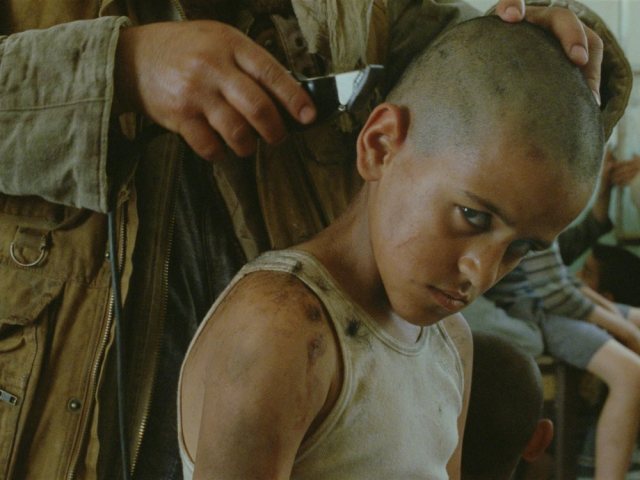
Incendies, Denis Villenueve’s twisty political thriller from 2010, washed over me and left me in a bit of a haze when I first saw it. I’ve only seen it the once and as I try to recall the specifics of the plot while writing this I am struggling without a quick look at Wikipedia. I remember liking the film but it’s not one that has especially stayed with me. It’s opening frames, however, have been permanently burned into my memory.

The film begins to the sound of Radiohead’s You and Whose Army?, a haunting, echoey track from their 2002 album Amnesiac as we see a room full of bruised and clearly traumatised young boys. A group of armed figures slink around them, shaving their hair, prepping them for a future in warfare. This mix of sound and image combines so wonderfully that as soon as the camera zero’s in on one lone boy, staring straight at us as Yorke’s voice wails – there are some serious goosebumps to be had. It’s so good in fact that it manages to make an already incredible song even better. An amazing opening sequence that the film never quite lives up to.

Posted in You've got a killer scene there, man! | Tagged , , , | Leave a comment

Hotel Punch Up – Haywire (2012)

Haywire is another typical, unexpected gem from Steven Soderbergh. It’s a fast, stylish almost throwaway exercise in genre filmmaking which is what makes it so fun. Unashamedly a vanity project originated by the director to transform real-life mixed martial artist Gina Carano into a badass action heroine, the star definitely has the looks and the muscle for the part and her character’s steely persona is a clever front to mask her inexperienced acting ability.

The film doesn’t have much range but it works amazingly well in the small pitch it does occupy by delivering the goods through brutal and simply choreographed fight sequences as well as a slick digital aesthetic. The film truly kicks into overdrive at around the halfway point when Soderbergh finally lets his secret weapon loose against Michael Fassbender.

There’s a bunch of reasons why this scene is so effective and singular. It could be presented out of context and work as a brilliant short film simply because it does so much at once. Not only does it flip gender expectations completely on their head it also subverts action-movie tropes and basic rules of the fight sequence. You have Michael Fassbender, practically playing James Bond suited and booted in a shiny suit, dashingly escorting Mallory Kane (Carano), also elegantly clad in a stunning dinner dress, back to their hotel room. Once inside Fassbender suddenly lays his knuckles into his female partner sending her crashing to the ground. Then Carano swiftly gets back to her feet and proves herself to be worthy opponent by giving just as good right back to him, repeatedly. The two proceed to practically destroy the hotel room as they engage in a painfully calculated prolonged martial-arts battle. In Haywire you can feel the punches, and you can feel them even more when they’re being laid into Carano herself. We’re hardwired to expect women in films to be fragile and vulnerable so there’s added surprise and pleasure from seeing her not only sustain her beatings but retaliate with more agressive blows and ultimately come out on top of her male opponents with little fuss. A genuine woman of steel. Soderbergh’s choice to keep his fight scenes completely stripped of music too is a master stroke. He instead relies on the rhythm of the punches to score his violence.

There’s also something really sexy about this sequence. In a twisted way it’s the most original sex scene 2012 had to offer. Like any standard depiction of love-making the scene is all about release, the collision of human flesh and intense passion. The way their flashy attire is slowly torn away by primal claws – Fassbender’s shirt is violently unbuttoned and Carano’s tights become increasingly laddered – only reinforce this idea further. As the scene reaches it’s heated climax with Fassbender’s head clamped firmly between Carano’s thighs –  it’s hard to ignore the steamy air that fills the battered room.

Posted in You've got a killer scene there, man! | Tagged , , , , , , | Leave a comment