Tropical Malady (2004)

tropical-malady

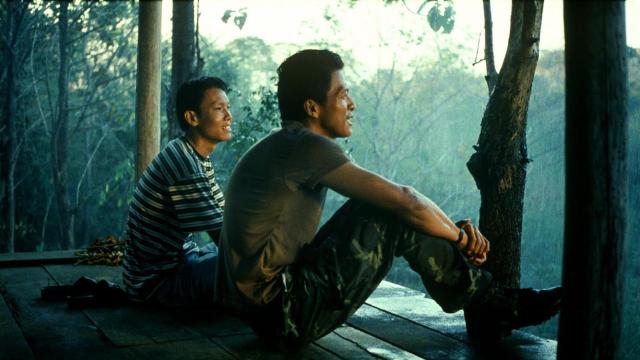
I love how Apichatpong “Joe” Weerasethakul tells stories. He likes to reset his narrative halfway through in order to show us a mirror story that shares characters, dialogue and scenes with the one that preceded it. When I first saw this structure utilized in Syndromes and a Century I was gobsmacked. It was like somebody blew open my preconceived notions of what narrative storytelling could do and what it could be.

As with Syndromes, both halves of Tropical Malady would be fascinating in isolation, but when paired together they become bewitching and extraordinary. Side A of Malady appears to be a straight forward love story between two men in Thailand. There are enough caverns and ellipses mind you to leave certain things out in the fog. Then the film switches gears into it’s second half and becomes an existential adventure story as a solider is pursued by a tiger shaman in the rainforest. How these two tales rhyme and compliment each other, you will have to see for yourself. Enchantment and mystery lie at the heart of Tropical Malady and it’s unraveling is a real pleasure.

Like all of Joe’s films, Tropical Malady sits with you long after you’ve first experienced it. Even now I find myself revisiting that mystical rainforest in my mind before I go to sleep or even at abrupt moments in the day. There’s a deepness to these films that becomes more vivid as time goes on. The imagery and the poetry is seriously startling. They really do cast a spell on you. Weerasethakul is a genuine wizard.

Posted in Movies Watched In 2016, Reviews | Tagged , | Leave a comment

Vampyr (1932)

vampyrf

Vampyr is one of those movies that feels like the seed for everything that came after it. Not only is this the earliest vampire movie I’ve seen (Nosferatu I’m coming for you) it’s also my first Carl Dreyer movie (applause).

As far as 30s horror goes, it’s not hard to see why Vampyr is held in such high regard. It’s a stunning piece of genre art. Dreyer knew how to concoct a chilling frame and his use of optical effects, light and shadow as well as a pioneering use of sound is brazen and nightmarish. All the iconography we’ve come to associate with the genre is present and accounted for; the walking dead, wooden stakes, foggy graveyards, which all make it feel especially modern and influential. There’s something about the atmosphere here, so thick, hazy and mythical that it practically soaks into your bones like drizzle on Halloween night. I loved just taking in the individual images as well as the ever-present darkness haunting their edges. After recently seeing The Witch, it’s painstakingly clear how far Dreyer’s influence still reaches to this day.

After reading about Dreyer’s countless technical innovations the film feels even more monumental. I also love how it’s a lean, mean 76 minutes. This is basically the 30s equivalent of a 70s John Carpenter movie; a stripped back genre exercise so minimal and specific that every shot is an essential piece of the whole. It doesn’t feel like it’s trying to reinvent cinema or define a genre, though somehow that’s exactly what Dreyer ended up doing in a way.

Don’t let the four star rating throw you off too much, it’s only because the film feels so familiar now that some of the narrative surprises have been blunted. I also get the feeling that this isn’t a definitive showcase for Dreyer’s talents at full-speed. It doesn’t feel like a major work for the filmmaker, but rather a technical exercise he knocked out of the park. Vampyr is quite wonderful and even watched on-mute or used for background projection at a Halloween party it would still be wholly effective. A truly historic horror movie made by a true artist. What Dreyer should I watch next?

Posted in Movies Watched In 2016, Reviews | Tagged , | Leave a comment

Some Kind of Hate (2015)

some-kind-of-hate

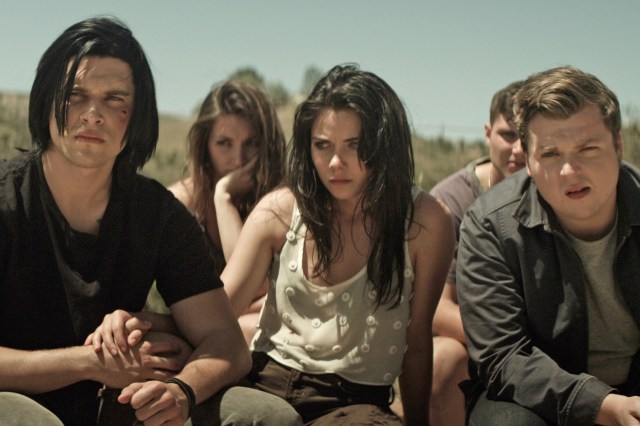
Some Kind Of Hate is a very unpleasant slice of VOD horror but it’s not without it’s merits. Essentially a very bloody anti-bullying ad the film cleverly combines vengeful ghost-story with more common psycho-slasher tropes in an attempt to say something fresh about teen violence. The setting, a reform school/rehab centre, is an imaginative setting and all the characters have something that makes them memorable at least. Yet the protagonist is one of those frustrating angsty emo types who has floppy black hair but is still pretty ripped under his metal-t-shirt. Nothing against that archetype but the actor playing him just isn’t to my taste at all. Talk about Blandville. I’m always more drawn to the actresses in these movies than I am the male performers as they usually get more screen-time and opportunities for emoting. True to form, the two people I remember most from my watch last night are Grace Phipps and Sierra McCormick. They don’t put in great work by any means but they are by far the strongest faces on screen. They’re also very pleasing to the eye (despite McCormick spending 90% of her screen-time as a rotting apparition) which often helps in this genre. But even the most beautiful actress can’t hold my attention if their acting and character are forgettable.

A lot of the execution is off too. The splatty violence never really registers as anything other than special-effect work and the logic and rules behind the ghost’s powers are frustratingly undercooked. The ideas are quite strong with some nifty visual motifs but the writing – dialogue, characterization, plot developments – are all too familiar and uninspiring to keep them front and center. The dour, depressing tone could also have used a bit of pep as the movie slowly descends into a blur of kill-scenes and desaturated digital cinematography. Turns out all the characters are assholes. Cheap attempts at revealing backstory for sympathy in the third act also don’t wash with me. By the end I was just happy for the credits to roll but even then there is a Marvel-esque sequel-tease dropped in. Bless. You wish, guys.

Unremarkable on the whole but there is a good movie in there somewhere which just about keeps it on the “average” shelf. Oh and goddamn Noah Segan is in it as well! I’m glad he’s keeping busy while Rian Johnson is off making Star Wars.

Posted in Movies Watched In 2016, Reviews | Tagged | Leave a comment

The Premonition (1976)

americanhorror11

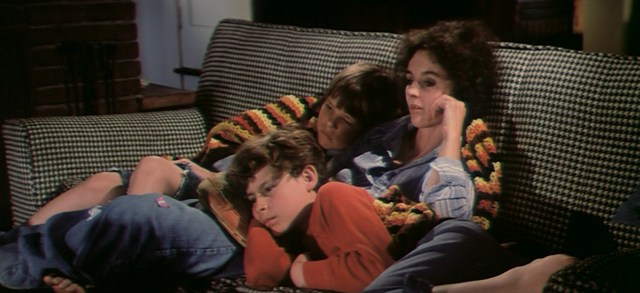
A kind-of bummer freak-out rendition of Raising Arizona featuring a pair of dysfunctional carnies who decide to kidnap their daughter back from her adoptive parents. The story ping pongs between the two mothers as they are connected with a psychic bond that is never really explained but is indulged in with various glorious visual set-pieces. It’s a bleak film and has echoes of Cronenberg in it’s depiction of marriage and parenthood. My attention definitely faltered here and there but there’s enough metaphysical shit going on to keep you tuned in overall. Hmm. A weird one that doesn’t feel like it will stick but it’s unusual enough to stand out. Time will tell.

Posted in Arrow Films, Movies Watched In 2016, Reviews | Tagged | Leave a comment

Looking Ahead: The Cable Guy (1996)

79d79bfd81e29a8b87a6953461775af4

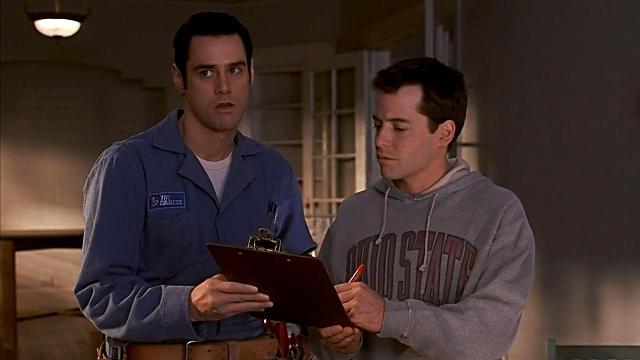
The Cable Guy is an incredibly prescient comedy for 1996 that not only predicts The Internet Age but also the rise of the bromance and cruel comedies. Much was said at the time about Carrey’s mammoth paycheck but the fact he got that paycheck for this movie is fucking nuts. Essentially a bro-centric riff on Play Misty for Me and Fatal Attraction, it’s as dark as 90s comedy gets and Stiller even shoots it like a horror movie full of cramped rooms and shadowy crawl-spaces. There’s also a hellish nightmare sequence thrown in for good measure.

There’s nothing obviously funny about The Cable Guy aside from the absurdist and surreal tone in certain set-pieces. When Carrey’s cable guy hosts a karaoke party and invites his “regular customers” round, it’s like a scene out of Twin Peaks. Every single extra in that crowd has a face from a Polanski movie and it’s quite glorious. Plus his rendition of “Somebody to Love” is next-level whacked out. You could probably take this exact screenplay and make a good B-thriller out of it. I mean, how the hell did the scene where Carrey beats the living shit out of Owen Wilson in a public bathroom read on the page? It’d be hard to see potential there for big laughs. Even the finished sequence has a disturbing undercurrent that makes it all the more delicious. Has a Freddie Mercury mustache ever inspired such conflicted emotions?

Chip Douglas is a zany creation and I wonder how that character would have worked without Carrey. You can’t imagine anyone else doing it can you? With his endless TV geekdom, pop-culture riffage and penchant for sudden violence, he too feels like an early sketch for how comedy would develop and pan out in the subsequent years (see: Seth McFarlane’s rise to prominence). In my pre-teens Carrey was my favourite actor and I always loved this film despite it’s darkness tonal mixing pot leaving me a bit dumbfounded. There really was nobody like him headlining comedies back then. Even now it’s difficult to think of an actor who has mastered both physical and linguistic gymnastics to the extent Carrey did in his prime. This is the first film that suggested he had ambitions bigger than the films he was in (same goes for Stiller and Judd Apatow who produced the film in addition to providing uncredited re-writes). Carrey used his fame and cred to get this movie made. That’s pretty cool right?

I’m glad The Cable Guy has outlived it’s status as a colossal flop and example of Hollywood going Icarus and is instead becoming more recognized as an interesting piece of satire. I wish the film ended on that oh-so-brilliant slam-to-black as Chip impales himself on the satellite dish as that finale feels way more in keeping with the movie’s sick sense of humour than the five minutes that come after, but I guess they could only get away with so much (“He kills himself, everyone’s TV cuts out and the movie ends. Sounds commercial huh?”). Plus the homoerotic undertones feel a bit closed-minded and half-baked looking back but there’s still a ton of fun to be had. Just the faces of the supporting cast alone will put a smile on your face. Was this the last time we saw Jack Black pre-Jack Black persona? Is that Bob Odenkirk? Andy Dick? David Cross? Janeane Garofalo? My, look at how adorable Leslie Mann is! Ahh 1996. What a time. Somehow this film was way ahead of it.

Posted in Movies Watched In 2016, Reviews, Rewatch | Tagged , , , , , , | Leave a comment

Birdemic (2010)

56484

James Nguyun wanted to make a film. He didn’t have a lot of money. He didn’t have good actors. He didn’t have a good script. He made a film anyway. The film is bad. The filmmaking is incompetent. The special effects are absolutely abysmal. The plot is nonsensical. This should never have seen the light of day. People laugh at it. The film is seen as a joke. But somewhere down the line Birdemic gained a following and a reputation. For reasons good and bad it is a film you will never forget. James Nguyen made a film and six years later people like me are still talking about it. Even at one-star quality, the resilience of the filmmaking shines through. Maybe you can make a film too.

Posted in Movies Watched In 2016, Reviews | Tagged , | Leave a comment

The Witch Who Came From the Sea (1976)

new_picture_28_2

After the disappointing Malatesta’s Carnival of Blood, Arrow Video’s American Horror Project finally delivers the goods. The Witch Who Came from the Sea is a gem.

It’s a complex movie. Shockingly so. The sexual abuse of a child is central to the story and the scenes depicting those horrors are sickening and raw. Director Matt Cimber uses the film to really burrow into characters’ consciousness and reality is frequently submerged under dark fantasies and deceptive hallucinations. The sound design often plunges dialogue and background noise into a chamber, making it sound as though we’re hearing it through a fishbowl. It’s very disorientating and effective and much more inventive than it has any right to be.

Last year I watched Monte Hellman’s The Shooting and saw, for the first time, an actress called Millie Perkins. When you watch enough movies you develop a kind of gut reaction to actors and actresses and certain ones just stick with you. Something about Perkins immediately struck me in Hellman’s film and for some reason I became a fan for life. Now Perkins is the star of Witch and again I found myself enamoured by her. She shot the film while she was in her late 30s. That in itself is something special. How many 70s horror films have you seen anchored on a middle-aged woman? The added maturity makes her shine, maybe even brighter than she did in the earlier film. She bears all Witch, not just her body but also her soul. It’s a brilliant performance with real nuance and depth. Again, the kind of thing you don’t expect to find in a film of this nature.

The film’s real power comes from it’s perspective. It feels refreshingly female. The movie begins with Perkins watching topless body-builders on a beach, with their oiled up torsos and bulging swimming trunks granted huge, anamorphic close-ups (courtesy of the great Dean Cundey no less). Cimber isn’t afraid of showing Perkins’ body either. Of-course seeing a woman lose clothing in a horror film is no rarity but seeing a woman close to 40 go topless and indulge in her sexuality is. It feels revolutionary rather than gratuitous. Even though Perkins’ character goes on to commit some satisfyingly bloody and excessive crimes (genre box ticked!), we never really leave her side or lose sympathy for her. She herself is a victim and her psychosis stems from great trauma.

I actually wonder if The Witch Who Came from the Sea should even be classed as a horror film. There are horrors on show and it provides much discomfort but the film doesn’t seem designed to shock, titillate or necessarily entertain. It’s a lot heavier than that. Even it’s imagery and aesthetic goes beyond what most meager horror films of this era were happy to settle for. The mostly daylight and seaside setting is quite unusual and the screenplay by Robert Thom (also Perkins’ husband at the time) is so thematically rich. Why this film ended up on the video nasties list is beyond me. To lump it in with grindhouse tripe is doing it a big disservice. The Witch Who Came from the Sea is an excellent little picture and so far the crowning jewel of the American Horror Project. The box-set is worth it for this title alone.

Posted in Arrow Films, Movies Watched In 2016, Reviews | Tagged , | Leave a comment

L’Eclisse (1962)

leclisse20torn20shoulder202

The finale of Antonioni’s unofficial disconnect trilogy (preceded by L’Avventura and La Notte) is something I’ve been working towards for a few years now. I first had my interest piqued in these movies by Antonioni’s dominance in Scorsese’s My Voyage to Italy where he describes L’Eclisse‘s form-over-fiction ending as “a frightening way to end a film… but at the time it also felt liberating. The final seven minutes of L’Eclisse suggested to us that the possibilities in cinema were absolutely limitless.” How can you not get excited by that?

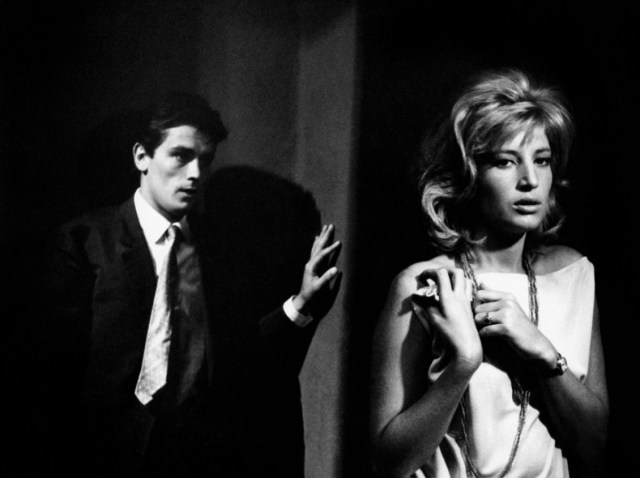
So lets start with that sequence. From my experience of Antonioni, he has a real knack for endings. I’m still recovering from the Zabriskie Point climax which rocked my world last year and seeing the closing movements of L’Eclisse the other night also had quite a poignant effect on me. Antonioni abandons the idea of traditional closure and instead descends deeper into the form of film itself to find meaning. The empty shots that close L’Eclisse are so loaded with meaning that they become haunted. You don’t need to see Alain Delon or Monica Vitti anymore. We know how their story pans out by these select images. It’s quite extraordinary.

I often see these three Antonioni movies as celebrations of Monica Vitti’s absolute beauty. She is one of the most enchanting actresses I’ve ever come across and as she was the director’s lover and muse at the time, I’m not surprised she’s so central to their effect. She isn’t the greatest actress ever but she has a presence and an aura that is more important than mere acting talent. She belongs in cinema. At the beginning of L’Eclisse we find her occupying an apartment with a mysterious breeze constantly blowing her hair. We later find out the breeze comes from a fan but it enhances her otherwordliness. She so effortlessly captures a mood and tone that is exclusive to this period of international filmmaking. She really is dazzling to watch and I find her fascinating in all three of these films. Has any actress embodied unfulfilment, female independence and geographical disconnect with one look as effectively since Vitti? I think not.

The film looks wonderful and the silvery photography (present also in the previous two films) is a wonder. I did feel like this one had more dips in interest than the other films in the trilogy and Delon never really grabbed me as much as the other faces. It might be my least favourite of the three but is essential because of how boldly Antonioni was willing to experiment with form. That ending is an all timer. A film only a true artist could make. It’s no wonder he transitioned to colour from here on out. A key text in world cinema that still feels modern and bold. I look forward to revisiting it in five years.

Posted in Movies Watched In 2016, Reviews | Tagged , , , | Leave a comment

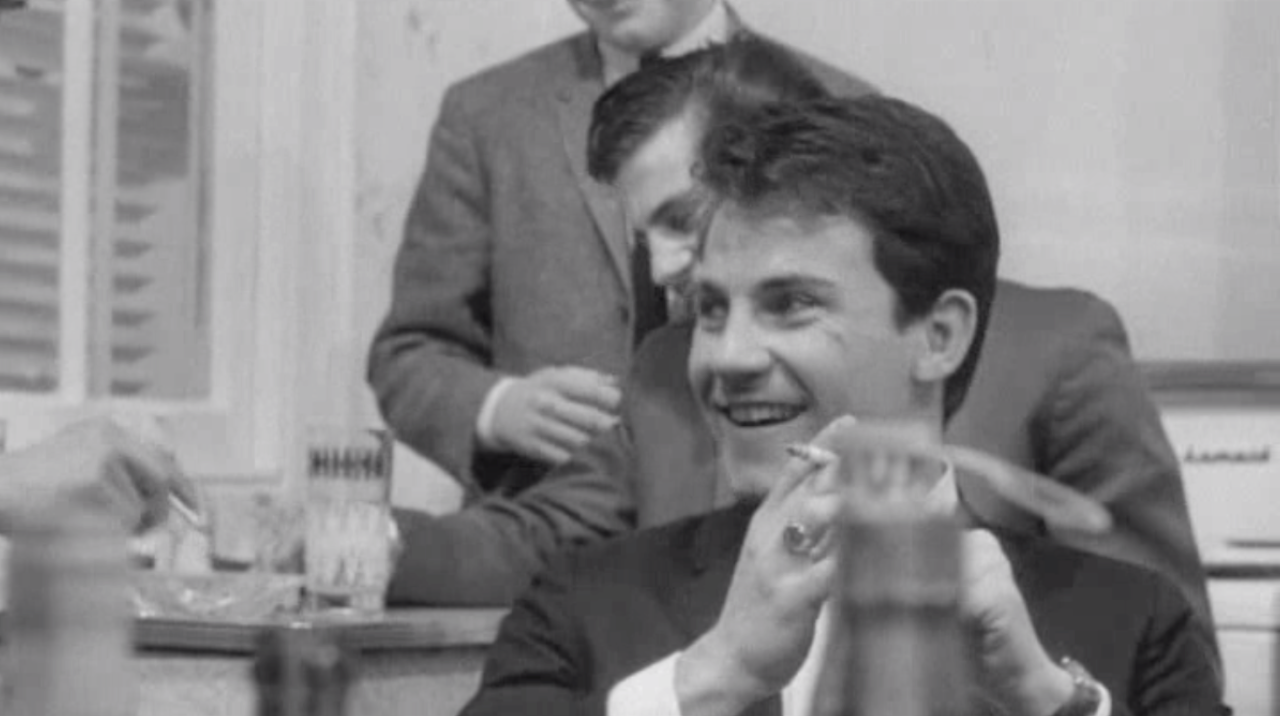
Kissing on the Mouth (2005)

richard-thelessonsoffilmschooldistilledinonespeech-1200

An early entry in the mumblecore movement, Joe Swanberg’s Kissing on the Mouth is a raw, amateur and occasionally engrossing document of early-twenties aimlessness. Sure the production quality is shitty as hell but one of the core values of true independent filmmaking is getting something made no matter what your resources are. The thing that’s so cool about mumblecore in the evolution of digital filmmaking, is that it meant feature films with student-film resolution could actually find an audience and be seen as legit art. As long as you have a voice, emphasis on character and actors good enough to feel authentic, for a brief period you could make a film on consumer-level equipment and get it seen.

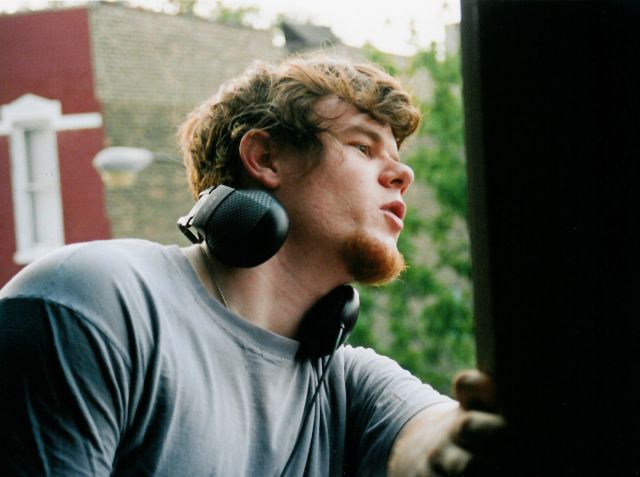
Out of all the mumblecore pioneers, I’m probably the least familiar with Swanberg’s work. Of-course I’ve seen his face crop up in countless movies but his early, formative work as director has evaded me until now. Kissing on the Mouth is very low-fi and pretty slim in terms of actual content. My favourite sequences feature little more than characters bumbling about listening to confessional audio snippets on headphones. It’s quite charming to see a mega-young Swanberg in front of the camera, complete with puppy-fat and nu-metal beard. Knowing, in hindsight, how far his career would progress and how endless his output would be you can really appreciate how naive and innocent he must have been while making this movie. The kid just wanted to express himself and make something. It’s a leap so many of us never take, no matter your age, so I really admire his resilience and determination in getting a film like this made with all the odds seemingly stacked against him.

To be so young and make a film as provocative and stripped-bare as Kissing on the Mouth – which features countless scenes of gloss-free nudity and real sex – you’ve got to have some serious balls. I mean, what happens when your Mum’s friends, or even old school friends find out you made a movie where you masturbate on camera in the shower (like for real)? If Swanberg’s gambit didn’t pay off, Kissing on the Mouth could have been a giant embarrassment hanging over him for the rest of his life. Luckily though, this film launched him on a path that he is still hasn’t veered from to this day (along with his wife Kris, who also features here). If you’re looking into modern indie film, it’s hard to avoid Swanberg’s output and influence.

I didn’t really think much to Kissing on the Mouth as an actual film. It’s an authentic depiction of the nothingness of early 20s life but that in itself doesn’t amount to heavily entertaining film or even a very memorable one. The film is more interesting to me as a development in the mumblecore movement. It’s brave and comes from a place of sincerity but the filmmaker behind it hasn’t quite crystalised yet. That being said, it’s still an important work. Glad to cross it off the watchlist.

Posted in Movies Watched In 2016, Reviews | Tagged , | Leave a comment

Malatesta’s Carnival of Blood (1973)

americanhorror9

The first entry in Arrow video’s American Horror Project is a film I would have never heard of or seen otherwise. In all honesty Malatesta’s Carnival of Blood is a bag of shit. Even at a meager 74 minutes I actually struggled to make it through the film without having my laptop nearby to distract me from its awfulness. But given my trust in Arrow, if they have chosen to save this film from obscurity then there must be something worth saving right?

Okay. The set-up is fun. A couple infiltrate a fun-fair in order to find their missing son but end up being picked off by the cannibals who dwell in the tunnels beneath the rides. B-side Bond villain Nick Nack (Hervé Villechaize) crops up as the obligatory horror movie dwarf. I really like Vellechaize and when he’s on screen he brings some much-needed charisma into the proceedings. There’s a gonzo nuttiness to everything as well that is enjoyable. You know this was made for no money, probably by filmmakers who didn’t have a clue what they were doing but there’s something about a bunch of people banding together to make a horror movie that never ceases to warm my heart. Many of the scenes look like they were lit by car-headlights which I like to think was an aesthetic decision rather than a practical one. I don’t know. If you aint got money, improvise!

As far as carnival-set shockers go I can’t pretend it’s anywhere near as good as Tobe Hooper’s The Funhouse or (the gold standard) Carnival of Souls but I will say that the location work is pretty damn impressive. Speeth shot the film in a real carnival after hours and the added production design has a junky charm that wouldn’t be apparent if they had more money. The film reminded me of the utterly fucking awful Manos: The Hands of Fate in its utterly fucking awful acting, pacing and construction and I doubt I will ever sit through this again but something tells me when I’ve seen all three of the films in this boxset I won’t feel the need to toss it onto the sell pile. Movies like Malatesta’s Carnival of Blood are as much a document of a certain period in American cinema as they are forgettable genre fodder. Horror is where the heart is. I can appreciate that.

Posted in Arrow Films, Movies Watched In 2016, Reviews | Tagged | Leave a comment