Grey Gardens (1975)

grey-gardens-albert-maysles-holding3

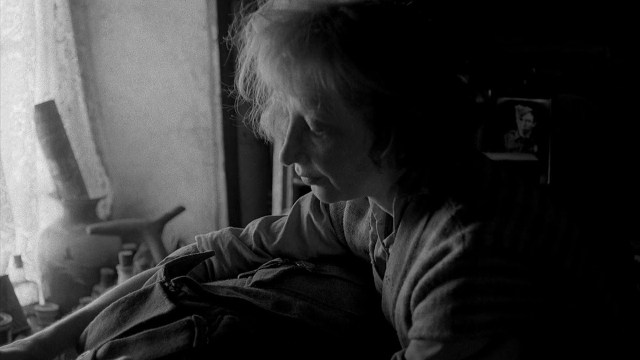
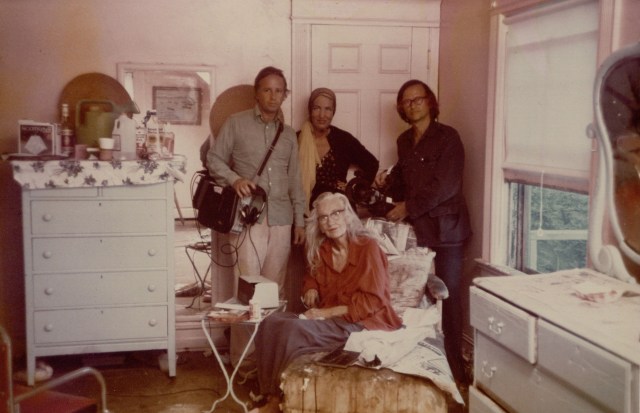
As far as slices of life go, Grey Gardens is especially bizarre. An eccentric little film about two eccentric ladies, it brings to mind that line in Pulp Fiction: “Just because you are a character, doesn’t mean you have character”. Well, both Big Edie and Little Edie have the best of both worlds. What unique creatures they are. I had to stop myself from calling them creations because they feel too large for life. You can’t help but be struck by them.

This film by the Maysles is appropriately cluttered and busy. The soundtrack consists of little more than these two women bickering together, singing or screaming over one another. It’s quite the trip and avoids being grating because it is so surreal and fascinating. The Grey Gardens estate of the title looks like something out of a Cormac McCarthy novel. It is a vast decaying mansion with countless rooms closed off and is overrun by cats and raccoons. The two women live happily alongside the animals and never see them as pests or intruders. Big Edie spends most of her time singing in bed with the cats as her loyal audience. Little Edie scurries from room to room, digging up memories, telling stories and generally guiding the Maysles and the film through the long, colourful history of the Beale family. Many of the stories sound like myth or legend, but as both Edies look like legend made flesh themselves, it’s difficult to disregard them as untrue.

I really had no idea what to expect from Grey Gardens but it proved to be a very striking, amusing and bemusing little documentary. There’s not much structure at work so the film does start to feel aimless and repetitive the closer it gets to the finish line but the overall sensation it emits – that of utter bric-a-brac – is pretty charming. There aren’t many documentary subjects as memorable on a purely sensory level as the Beales. The real world may have shunned and disregarded them but in front of a camera, they feel a home. That their legacy is now immortalised through this film feels appropriate. Grey Gardens is a decaying enchantment and a busy document of two very distinctive souls. Dysfunctional, yes, but no less divine.

Posted in Movies Watched In 2016, Reviews | Tagged , , | Leave a comment

The Actor’s Movie: Tootsie (1982)

tootsie-1982-10-g

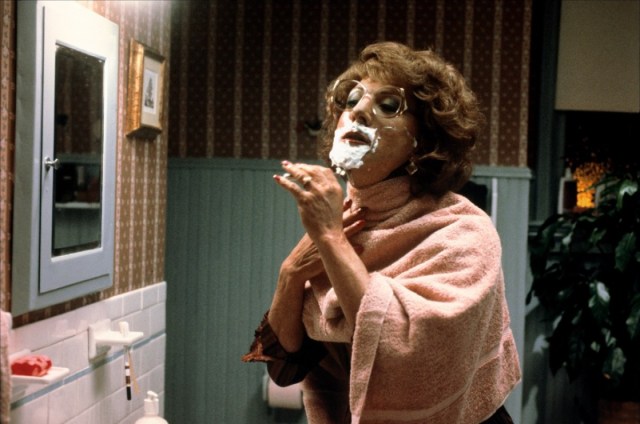
Last year, Tootsie was voted the greatest film of all time by a handful of actors and I thought it was a refreshing choice for the top spot. There’s clearly something about this movie that resonates with actors, that speaks to them and showcases a world of situations they are familiar with.

As the film starts the choice made a lot of sense. It’s about Michael Dorsey (Dustin Hoffman) an actor who loves the craft but his years of work in the business have battered his patience. Now he trains fellow actors, desperately trying to beat into them the same love and understanding of the art that he has. He can’t get work for himself because he’s a pain in the ass, which his agent (Sydney Pollack) is so fond of reminding him about. In the meantime he attends parties, works a side-job waiting tables and talks shit with his best friend and room-mate (Bill Murray). The frustration of being a young actor is the heartbeat of the film’s earliest scenes and they are all acutely observed. The staying up late learning lines, the panic before an audition, the feitishization of make-up, the envy and endless conversation about theory and craft as well as the unknowing of where the next pay check is coming from; it’s all accounted for. Finally Michael disguises himself as a woman, Dorothy Michaels, and auditions for a part on a popular soap opera in order to prove he can do any part just as good as anyone, gender be damned. Of-course, he gets the part and that’s where the film really starts.

As with many of Sydney Pollack’s movies, Tootsie is directed and staged very simply. He favours performance over style and as funny as the film can be, it is handled like a drama. Dustin Hoffman clearly had a lot invested in this role (just check out the numerous times he tears up while telling stories on Criterion’s release) and he is spectacular in it. As an unconventional star himself, he manages to put all his sensitivity, strength and neurotic edges in both Michael Dorsey and Dorothy Michaels. It is one of his great roles and he is totally convincing in drag as the battle-ax Dorothy. The potentially button-pushing gimmick of having him in drag is never played for edginess or provocation. I forget that Some Like it Hot did this over twenty years earlier (and Mrs. Doubtfire would do a broader variation a decade later) because the way it’s handled really feels revolutionary.

Jessica Lange is just a diamond as the soap actress Michael falls in love with. There’s a certain tragedy to her character – she constantly feels alone, is preyed upon by sleazy men and mostly misjudged by women – and resorts to alcohol to numb her isolation. Pollack doesn’t judge her or make her seem like a train wreck, she’s never anything less than genuine and heartfelt, quite the tightrope walk by Lange and it’s a role that rightly earned her an Academy Award.

Bill Murray and Terri Garr also show up in supporting roles and, as both of them are mainly known for their comedy work, it’s great to see them do something more grounded. I’ve never seen Murray be this casual in an 80s movie and he works well as the obligatory “best pal” role. He has some of the film’s best lines but doesn’t seem interested in stealing the light away from everyone else, which is rare for Murray. It’s proof he’s just as good in small doses as he is in leading roles (remember he was in Ed Wood?) Pollack uses him here in much the same way Wes Anderson would twenty years later. Garr, who I adore from her work in After Hours is characteristically wild and wired and whenever she enters the picture the saturation and energy seems to increase. She’s a great foil for Hoffman and a nice contrast to Jessica Lange. Oh and future-star spotters will appreciate a young Geena Davis cropping up a few times too, in her underwear no less.

I wonder what a film like Tootsie would look like if it was made today. It would probably be The Danish Girl. Pollack’s film is so light on it’s feel and grounded in character, a love of the subject and focus on it’s core story that it totally avoids being a hamfisted message picture. Really, it’s about different people coming together under absurd circumstances. It’s absolutely Hollywood, the film ends with a sense that everyone and everything will be okay, but it has that New York street-level authenticity that this generation of actors ushered in which makes it much sharper and memorable than it would have been a decade earlier. The performances are a delight, the characters are a joy and the script is excellent. Pollack’s direction might be the least memorable thing in it, but his steady hand over the tone and characterisation is essential. Maybe Tootsie doesn’t mean as much to this generation as it does to those that came before. But I love that it means so much to so many people and has now officially become “the actor’s movie”.

Posted in Movies Watched In 2016, Reviews | Tagged , , , , , , , | Leave a comment

In a World… (2013)

vlcsnap-2016-04-12-10h18m21s125

A joyous and idiosyncratic directorial debut from Lake Bell. The great pleasure of In a World… comes from it’s setting in the world of voice-acting. Carol Sotto (Bell) is a vocal coach looking to get into doing voice-overs for movies. She carries a portable tape recorder around to obsessively capture accents so that she can perfectly emulate them, she talks to strangers in their dialect to communicate more effectively and her day job consists of training A-listers in the art of the accent during ADR sessions. Her father (Fred Melamed) is a well-respected voice over legend but refuses to support Carol in this male-dominated industry and at the beginning of the movie cuts her off by kicking her out of his house in favour of his young wife because, well, he’s a douche.

All of this stuff is fascinating. It’s a look at a Hollywood subculture I’ve never seen before and with a lead as charismatic and likeable as Bell at the center, the film quickly pulls you in. The observations feel incredibly authentic, it’s clear this is an industry Bell has had first-hand experience in. All of the scenes, both around the industry and Carol’s relationship with her father, feel rooted in some kind of anecdotal honesty. Bell is extremely self-effacing though and you can feel her heart in this material. There is a voice at work here that understands comedy and characterisation, it isn’t tainted by cynicism and the film’s brightness keeps it light on it’s feet. Even a subplot involving infidelity is handled very casually, with warm emotion and without damnation. It’s an outlook on life that feels especially feminine and we need more voices like this in movies.

A strong supporting cast including Rob Corddry, Michaela Watkins, Ken Marino, Demitri Martin and Nick Offerman make up the film’s tiny ensemble and they are all memorable. While the story of thirty-something aimlessness might not be especially original on a basic plot level, the sheer pleasure of watching all these people on screen, against this very specific backdrop elevates it into something far more entertaining and fresh. The film becomes less exciting as it ticks by. A plot that has been slowly developing in the first two acts kicks into overdrive in the final twenty minutes and culminates in a very “movie” finale that comes across a bit too suddenly and perfectly in contrast to the messy casualness and episodic structure of the film’s preceding acts. But again the optimism and characters are still a delight, and besides, Bell seems like a filmmaker more interested in escapism than realism. While the characters feel real, there’s a certain level of stylisation and music to how they interact that keeps them at home in a movie as opposed to a documentary.

I’m a big fan of this film and sorry I came to it three years late. I think Bell is a major talent, a strong presence both in front of and behind the camera, I can’t wait to see what this movie leads to in regards to her writing/directing career. Not only is she immensely watchable but she feels unique to herself. This isn’t just a brisk and entertaining little comedy, but a lovely adventure into the world of voice acting. I expect this to become a favourite as the years go by.

Posted in Movies Watched In 2016, Reviews | Tagged , , , | Leave a comment

Sympathy for the Parasite: Shivers (1975)

Screen Shot 2016-04-21 at 20.20.37

“Roger, I had a very disturbing dream last night. In this dream I found myself making love to a strange man. Only I’m having trouble you see, because he’s old… and dying… and he smells bad, and I find him repulsive. But then he tells me that everything is erotic, that everything is sexual. You know what I mean? He tells me that even old flesh is erotic flesh. That disease is the love of two alien kinds of creatures for each other. That even dying is an act of eroticism. That talking is sexual. That breathing is sexual. That even to physically exist is sexual. And I believe him, and we make love beautifully.”

This crude early effort from David Cronenberg is a personal favourite of mine. Shivers is Cronenberg at his schlockiest, the sex and violence more akin to mindless grindhouse exploitation than the cerebral dissections of his later work. Yet, as the above quote testifies, it is still unmistakably Cronenbergian. The parasitic creatures and venereal plot drive are wonderfully icky and there is a respect for and fascination with anatomy and medical science that sets it apart from other deadly virus B-pictures of the 70s. It feels of a piece with Romero’s Night of the Living Dead and The Crazies but where Romero appears to relate to his characters, Cronenberg, of-course, seems more sympathetic towards the parasites.

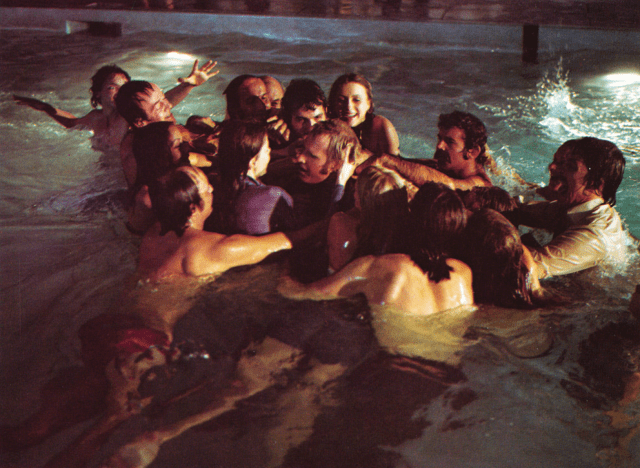
There is a provocative edge too. The opening act of an old scientist apparently savaging a young schoolgirl – murdering her, stripping her bare then slicing open her torso before pouring acid inside – is a startling cold-open. Almost Sam Fuller-esque in it’s extremity, it puts you on solid uneasy ground that the rest of the film seeps outward from. The explicit sexuality in the film also feels raw and subversive. Sex and horror have always gone hand in hand but the way Cronenberg uses it, here and in future films, is played more for terror than titillation. I mean, it’s about a parasite that transforms it’s victims into sex-mad nutters. There’s incest, lesbianism and even suggests pedophilia. When the film descends into a swimming-pool bound orgy in it’s final moments, the images are truly psychotic and horrifying rather than sexy and fun.

For as much as Shivers does lack the polish of Cronenberg at his best, it’s moments like these, when the film’s effect is in tune with the director’s intent, that make it worth your time. As a Cronenberg nut, I’ve seen this movie a handful of times over a few years and just when I think I won’t return to it anytime soon, I find the imagery creeping back into my brain. There’s something addictive about seeing great filmmakers find their feet in their formative years. Shivers is really everything you would want from a first outing from Canada’s king of body horror. It would also make for good advance-reading for Ben Wheatley’s upcoming High-Rise.

Posted in Movies Watched In 2016, Reviews, Rewatch | Tagged , | Leave a comment

Night Tide (1961)

8bdijwdsexz6yfxndwyvmk15ibb

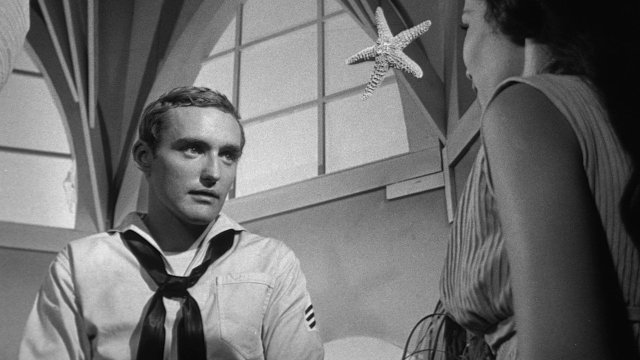
Night Tide walks the tightrope between B-movie and arthouse sensibilities with varying degrees of success. The atmosphere drips off of the film. It’s vision of spooky seaside loneliness certainly registers and the black and white photography feels very much of the Val Lewton/Jacques Tourneur tradition. On one level it’s a horror of psychosis, on the other a story of strange love. Dennis Hopper plays a seaman who becomes fascinated by a woman called Mora who appears to have a very skewed perception of reality. She works as a sideshow mermaid at the local carnival and takes the job quite literally, believing herself to be a creature from the sea created to lure sailors to their deaths. So Mora is either psychologically damaged or a genuine siren. She’s a mystery and Hopper likes that.

The plot never stacks things too heavily allowing director Curtis Harrington’s dreamy aroma to overwhelm the film. Night Tide therefore becomes more about feeling and the subconscious; a collection of imagery and mood more than a concrete character study or storyline. There’s not a lot to grasp onto and it becomes a bit of liquid haze. I’m finding it difficult to recall the story without the aid of wikipedia as it’s been a few weeks since I saw it but I can easily remember the feel of the film. It goes without saying that seeing a young Dennis Hopper indulge in a leading role is fun. Again nothing memorable but it adds to the shelf life.

This is a cool little film to be aware of, a film that seems to be getting more attention now than it ever did in 1961. The film has terrific mood and ideas even if it never comes together to feel like a misunderstood masterpiece or neglected classic. It’s a B-movie at heart but it’s ideas are more subversive and unusual. A strange one, but intentionally so.

Posted in Movies Watched In 2016, Reviews | Tagged , , | Leave a comment

Excellence vs. Excess: Ben Wheatley’s High-Rise (2016)

hiddles2

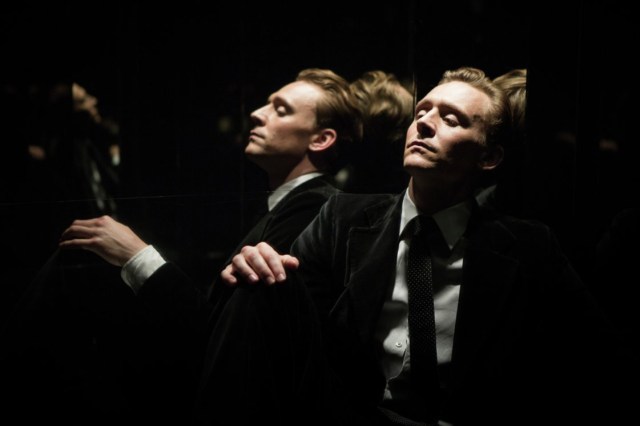
Early on in High-Rise, Dr. Robert Laing (Tom Hiddleston) demonstrates the dissection of a human skull by tearing the face off of a severed head. This being a Ben Wheatley movie, we see the moment in glorious detail: flesh, muscle and tendons are ripped away messily revealing the meat-caked cranium smiling beneath. Just before one of his students faints from nausea, Laing coolly explains “The facial mask simply slips off the skull”. In a film loaded floor-to-ceiling with extreme ideas, this scene distills the film down to one key image. By the end of High-Rise, all exterior facades–facial masks included –are abandoned in favor of ugliness and lunacy.

Whether you’re familiar with J.G. Ballard’s source novel or not, it’s clear from the get-go that life in High-Rise is not going to go smoothly. We first find Laing in a state of total disarray, casually cooking a dismembered Alsatian on a makeshift spit in his squalid apartment. The film then jumps back three months earlier to Laing’s arrival at the high-rise; a luxurious tower block which houses hundreds of apartments, a supermarket and gymnasium and is designed to be completely self-sufficient. It is 1975 and most of the apartments are filled. But already the electricity is starting to fail and elevators are breaking down. It doesn’t take long for the relationships between the upper and lower floors to follow suit.

Perhaps the most surprising thing about High-Rise is how quickly things regress into violence and debauchery. Wheatley and screenwriter Amy Jump aren’t interested in slow-burn storytelling and, in keeping with Ballard’s novel, let things get out of hand pretty sharpish. Before all that though, we meet Laing’s neighbors: a sultry single mother (Sienna Miller) who immediately takes a liking to Laing, and the brutish Richard Wilder and his pregnant wife Helen (Elisabeth Moss) The high-rise is also home to more eccentric characters such as a crazed dentist obsessed with the garbage chute (Reece Shearsmith), the TV actress who parades around the supermarket behind dark sunglasses hoping to be recognized and the building’s architect Royal (Jeremy Iron), a scarred, regal figure occupying the building’s penthouse like an overlord with his aloof wife.

In contrast to many of his supporting players, Laing lacks flavor and distinction. As the film’s protagonist Hiddleston adopts the role of straight man, sharing scenes with characters far more bizarre and interesting than he is. At one point Laing says of his new home: “I was rather expecting to find a certain anonymity here” Well, being that for much of the film’s running time he the least memorable thing in it, I’d say Laing found what we was looking for. This isn’t a problem with Hiddleston’s performance–he’s always watchable–but rather the character itself. As the film becomes increasingly hectic, I became frustrated with Wheatley and Jump’s insistence at keeping Laing front and center. I would have happily let him fall aside if it meant deepening the other characters. A romantic subplot between Laing and Helen Wilder also feels unwarranted. This development is missing from Ballard’s novel and I wonder what Jump’s motivation was for inventing it. Perhaps she felt that with so much deranged madness occurring, seeing two characters connect amidst the chaos would make it easier to digest, or maybe even more tragic? I am not sure.

Most of the film’s early sequences are dedicated to the high-rise itself, letting us take in the space as a feat of production design. Both slick and claustrophobic, it’s a perfect approximation of what the future looked like from the vantage point of 70s Britain. In daylight the apartments look open and hopeful but as night descends the same spaces become shadier and the corridors outside more oppressive. There is a slight disconnect however, between the gloriously physical sets of the high-rise’s interior and the CGI assisted exterior shots intended to add extra scale. As a result, the sheer grandeur of the building’s inner workings never come into real focus nor does the geography of all the floors in relation to one another. I couldn’t tell you how many floors sit between Laing and Wilder, or Laing and Royal for that matter. It’s not essential to understanding the film by any means but more clarity would certainly lessen the unwanted confusion felt during the film’s later sequences. When Wilder sets himself the mission of getting to the top floor, we don’t really know how big or small a task that is. When scenes intercut between apartments we wonder if the proximity between characters is important to their discussion. I have no doubt that Wheatley intends High-Rise to be a disorientating experience but it frequently becomes alienating to the point where you disengage with it entirely.

Showcasing his biggest budget to date and featuring a lavish cast of A-Listers it’s easy to see High-Rise as Wheatley’s grasp at reaching a bigger audience. By choosing to adapt such a challenging novel though, any notions of him “selling out” are immediately dispelled. This is a Ben Wheatley movie through and through. In the few years since Kill List, his visual style has become more assured and as a composer of images he is one of the best currently working. Like his fellow countrymen, Ken Russell and Nicolas Roeg, Wheatley is not afraid of psychedelic cutting and provocative imagery. High-Rise is full of striking visuals: that peeling of the skull at the beginning, a poor soul falling to his death in super slow-motion, a flickering television set lying amidst a sea of garbage — all of this accompanied by Clint Mansell’s brilliant score (which also includes an inspired Portishead cover of ABBA’s “SOS”). The building’s initial descent into madness is also thrilling in its brute force. As the tenants become more primitive and their surroundings more grimy you can feel the horror of that environment. The film reaches visceral heights in these moments and for a time, it’s very effective. But slowly any semblance of plot or clarity gives way to repetitive sequences of cluttered frames.

While this is a film inherently about extremities and excess, the film loses shape and drive in its endless depictions of that excess. At its worst, Wheatley’s penchant for raw shocks and vulgarity feels juvenile. By the time Royal’s wife asks a roomful of men mid-orgy: “Which one of you bastards is going to fuck me up the arse?”–a line clearly played for belly-laughs–you find yourself checking your watch wondering when all of this is going to amount to something. High-Rise is a bold film painted with bold strokes. There’s a lot of ideas at work here, an ambition and vision that reaches beyond anything Wheatley and Jump have attempted before and I am glad for that ambition. It’s great to get movies like this that aim to challenge and provoke us, even when their reach exceeds their grasp,.

I have seen High-Rise twice now and the second viewing was greatly enhanced by reading Ballard’s novel in the interim. The film never explicitly goes into why the tenants devolve into mindless mobs but Ballard suggests there is some kind of unspoken group psychosis that occurs when human beings are packed like sardines in such a vast concrete chamber. In their savagery the tenants find unity and agreement that slowly tears them apart. High-Rise: the movie is not like that. This is a film that will frustrate and divide audiences with its shortcomings, ambiguity and explicit dashings but will also bring them together with intelligent discussion. It is not my favourite Ben Wheatley film but it’s certainly the one I have thought the most about.

This review was originally written for Dim the House Lights.

Posted in Movies Watched In 2016, Reviews | Tagged , , , , , , , , , | Leave a comment

The Epic Intimacy of Paul Thomas Anderson’s Magnolia (1999)

cruise

Following the critical and financial success of his second film Boogie Nights, New Line Cinema told 29 year old Paul Thomas Anderson that he could make whatever movie he wanted. That movie became Magnolia – a 3 hour+ epic which dissects the way of life in the San Fernando Valley over one 24-hour period through a sprawling cast of characters.

As Ricky Jay’s mysterious narrator tells us in the film’s theatrical trailer, Magnolia holds many stories. There’s the story of a boy-genius (Jeremy Blackman), the game show host (Philip Baker Hall), the ex boy-genius (William H. Macy), the dying man (Jason Robards), his lost son (Tom Cruise), his wife (Julianne Moore), the caretaker (Philip Seymour Hoffman), the police officer in love (John C. Reilly), and the estranged daughter (Melora Walters). The narrator also re-assures us that this “will all make sense in the end”.

But here’s the thing: there’s a lot about Magnolia that, apparently, doesn’t make sense. What’s with the re-occurring subliminal messages to Exodus 8:2? Why does it rain frogs at the end? What do the three urban legends at the beginning have to do with anything? Why are all most of the songs on the soundtrack by Aimee Mann? And what on Earth is the deal with the impromptu musical number in the middle? It’s questions and idiosyncrasies like these that give Magnolia it’s longevity. Because it is so rich and layered, its a film you can really get your teeth stuck into and find fresh nuance in with every revisit. In the same way people fell in love with TV shows such as The Sopranos and The Wire because of the long-form storytelling that the medium offers, Anderson’s titanic soap opera is equally in-depth with it’s select tales. It’s a daring film. One of the most daring I’ve ever seen. Anderson doesn’t attempt to break any huge forbidden taboos, chasing instead to make a film that simply tells a story of people and characters in order to find the magic in the mundane and the beauty in the morbid. It’s a fearless leap into grand melodrama and once his feet leave the ground, Anderson never looks back.

Magnolia, which owes a great debt both structurally and conceptually to Robert Altman’s fantastic Short Cuts and Nashville, is a long film, no doubt about it. But in my opinion, the bloated running time is one of it’s strengths. In an interview following the film’s release the filmmaker said he wanted to put “an epic spin on topics that don’t necessarily get the epic treatment”. Indeed, dying cancer patients, child-abuse, infidelity, lost-fame, love-sick cops and overly sensitive nurses don’t sound like the usual subjects to get their own American epic, least of all in the same movie. If Magnolia were a 100 minute or even a 2 hour movie (which by all means it could have been) then many of it’s most powerful and touching moments would have been condensed or axed all together. For example, would we have been treated to the sweeping tracking shot that leads Quiz Kid Donnie Smith into the Smiling Peanut bar set to the sound of Supertramp’s “Goodbye Stranger?” Would Linda Partridge’s deliciously vulgar outburst to Pat Healy’s chemist be so drawn out and apocalyptic? Would we have been able to see the blossoming of Jim and Claudia’s relationship in quite so much detail? More to the point, would the quirky side characters like Luis, Thurston Howell, Burt Ramsay and Solomon Solomon even exist? To imagine a version of Magnolia without these ingredients is a terrifying thought to me.

As it stands, Magnolia may be overlong but it’s length allows it to be organic and ambiguous, unafraid of exploring tangents it has no intention of completing. We never discover who killed the man in Marcie’s closet or the identity of the mysterious Worm. Even Jimmy Gator’s story is left unresolved. The film gets distracted and moves naturally, shifting focus as it pleases. In short: much like life itself.

Every time I revisit the film, I am left in awe of the actors. Take just one of these performances and place it in a lesser film and it would be guaranteed an Academy Award. But because there are so many great performances in the film the Academy struggled to reach beyond a supporting nomination for Tom Cruise (to be fair, 1999 was an unusually incredible year for movies). Unsurprisingly, Magnolia did go on to sweep up every ensemble award it was nominated for. Deservedly so.

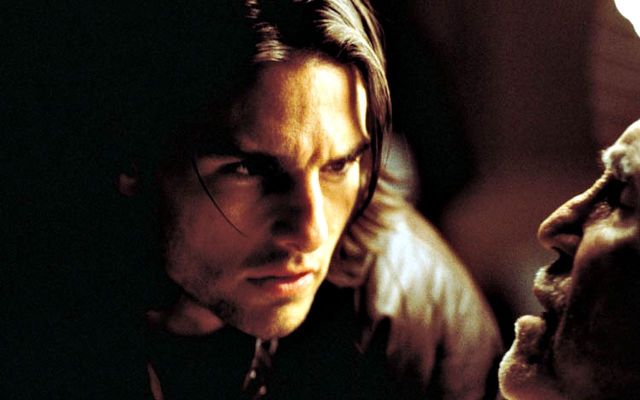
All the actors in Magnolia get their big moment and there are performances of all shapes and sizes. Julianne Moore and Tom Cruise are let loose to tear up every scene they inhabit, spewing “fuck”‘s and “cunt”‘s at anyone who crosses their path. It is a frenzied pair of performances, both unpredictable and cathartic. It’s no coincidence that their characters are together in their final scenes. Maybe together they will find purpose. Cruise especially shines, exploring territory far out of his comfort zone as the sex-guru Frank T. J. Mackey. Watching him sit “quietly judging” April Grace’s interviewer as she digs too deep into his past is one of the most spine-tingling uses of a close up I can recall. Anderson jokingly guessed this film was an exorcism for the actor. Who wouldn’t want to let-loose after spending two years playing the all-too straight laced Dr. Bill Hartford for Stanley Kubrick and Eyes Wide Shut? It remains a highlight of Cruise’s career.

William H. Macy is given tragedy and self-pity, turning in a heartbreaking picture of a man lost in a world he has no idea how to navigate. Philip Baker Hall and Jason Robards (in his final screen-role) are sublime as dying men Jimmy Gator and Earl Partridge. Robards gets one of the film’s greatest moments, delivering a showstopping monologue about regret that eases the film chillingly into it’s last movement. While Earl fades on his deathbed, Baker Hall’s Jimmy, a legendary game-show host, is suddenly faced with his illness and told he only has a matter of weeks to live. Jimmy feels he should right the wrongs in his life, more specifically his relationship with estranged daughter Claudia. Anderson has repeatedly spoken of his distaste for the Jimmy Gator character and in the original script, Jimmy ended up burning alive in a house fire. In the final version, Anderson slights him even further by granting him to conclusion whatsoever. The perfect end for such a cowardly character.

John C. Reilly and Philip Seymour Hoffman are the angels of Magnolia, both sensitive and caring men in occupations dedicated to helping others. They are naive – Hoffman’s character cannot help but let his emotions get the better of him and weep when faced with a difficult situation and Reilly’s Jim Kurring is struck when Claudia curses in front of him – but they mean well and live their lives the right way.

Claudia, Jimmy Gator’s daughter and the object of Jim Kurring’s affections, is played by Melora Walters; a wonderful actress who tragically seems to have disappeared from movies lately. Her performance gives the film it’s heart and soul. She is damaged goods, subject to sexual abuse from her father she has grown up to be an insecure cocaine addict who sleeps with men from seedy bars simply to numb herself from the pain eating away at her. But beneath the troubled exterior lies a beautiful soul. Walters gives Claudia so much vulnerability and life that every second she’s on screen you just want to hold her and tell her everything is going to be okay. It’s easy to see why Jim is so taken by her as she opens the door to her apartment. The moment he locks eyes with her the film is struck by a lightning bolt. Love at first sight? Maybe. Or maybe it’s just the first sign of an equation being completed. Together, these two have the potential to make it. Anderson once described Claudia as “my love” and I’m sure many of us have felt the same way after seeing the movie a few times.

There’s so much going on in this movie. It has so many movements and colour that it at once feels like one, long, rambling scene and a hundred tiny ones. My favourite moment in Magnolia though isn’t an obvious one. It isn’t the opening prologue or the infamous Wise Up sequence, it isn’t even the shower of frogs or Julianne Moore’s breakdown in the pharmacy. No, my favourite sequence in Magnolia begins as Stanley Spector refuses to take the stage in the final round of What Do Kids Know? and Jon Brion shifts into a brand new music cue.

We see Frank’s assistant Dock marching the hotel corridors ready to hand him a crucial phone call. We see Phil on the other end, waiting patiently as the dogs bark at the rain and Earl slowly fades from life. Stanley turns the tables on the adults and confronts Jimmy Gator while the crew and audience can do nothing bit sit perplexed and watch the show slip out of their control. Linda returns home and contemplates killing herself from car fumes while Jim Kurring investigates a Jay-walker and finds himself in the middle of a shootout without his gun. Quiz Kid Donnie Smith rests his head on a toilet seat and makes a bad decision just as a teary eyed Claudia holds a rolled up dollar bill in her hand, wondering wether or not cocaine is a better substitute for honesty in her upcoming date. The scene reaches it’s crescendo as Linda tears the phone from Phil’s grasp just as Frank finally gets on the line and has an outburst at his assistant (“What I want you to do Janet, is I want you to do your fucking job!”) and Stanley makes a hasty exit from the gameshow set as the producers shut it down. The scene ends with Frank quietly storming down the hotel halls having come to a conclusion about his father. But what is it?

What I love about this sequence is the way it connects all of the characters at crucial moments purely through music, editing and camerawork. It’s the closest thing Magnolia has to an action sequence (at least until the frogs start falling) and when Jon Brion’s score swells at specific points my heart almost skips a beat. It’s a beautiful showcase for cinema as opera, of grand filmmaking and the power of montage. I’m getting chills just thinking about it.

Magnolia is also an important movie in Paul Thomas Anderson’s career. While Boogie Nights anchored him as one of the hottest young directors in Hollywood, Magnolia skyrocketed him into a league very few filmmakers get to experience. His visual style became much more his own rather than the Scorsese-infused imitations of Boogie Nights and Hard Eight and his writing became much more abstract and deeper before he completely re-invented himself stylistically with minor/major masterworks Punch-Drunk Love and There Will Be Blood. You can see a filmmaker bored by convention and rules. Just listen to the way he mixes the songs far louder than the dialogue. In the film’s final scene, Jim gives an emapassioned speech to Claudia but for Anderson, Aimee Mann’s singing is more important.Magnolia also marks the last time he worked with many actors he helped discover or launch into new phases of their career. John C. Reilly, Philip Baker Hall and Philip Seymour Hoffman probably owe their entire career from the 2000s to Anderson. More so, I feel that this is the film that saw Paul Thomas Anderson finally become the great filmmaker he was always destined to be.

As with practically all of P. T. Anderson films, every time I watch Magnolia I get sucked in and can’t let go. I love every character as if they were near and dear to me, and in many ways they are. It might sound hokey, but Magnolia moves me in ways no other film is capable of. It both scares and inspires me. A tour de force titan of high drama and epic storytelling on a very human, intimate scale. Who knew you could be so big and so small at exactly the same time? The vision is so clear and brave and the writing is poetic and wonderfully observed that after sitting down with this movie you feel like you’ve learned and lived many of life’s wonderful and painful lessons. It’s a daunting movie to tackle but an endlessly rewarding one. Steven Spielberg once named the starchild at the end of 2001: A Space Odyssey as the most hopeful image ever committed to film but I think Anderson topped it. As Aimee Mann’s “Save Me” reaches it’s peak and Claudia looks into the audience and smiles in Magnolia‘s very last frames, you can’t help but feel that absolutely everything will be fine.

Posted in Articles, Favourite Movies, Movies Watched In 2016, Reviews, Rewatch, Uncategorized | Tagged , , , , , , , , , | Leave a comment

Loving Memory (1970)

s2oxmzyqboumpviupkkdptfyz9v

Twelve years before he made his debut good and proper with The Hunger, Tony Scott directed this little-seen British art film. Beyond a knack for composing striking frames, you’d be hard pushed to guess the two movies came from the same man. Extremely minimal in it’s content, Loving Memory would be better suited as a twenty minute short film because even at fifty one minutes it feels like a bit of a slog. Still, the central premise – which I won’t spoil here – is unsettling enough to gauge interest and Scott’s treatment of the British countryside makes for some gorgeous black and white scenery. Very gothic and cynical in it’s themes and observations, Loving Memory does establish Scott’s penchant for dissecting characters immersed in violence and decay but he would develop a taste for far more exuberant and expressionistic visuals as the years went on.

Loving Memory also makes for a fun double-bill with Ridley Scott’s own pre-Hollywood calling card Boy and Bicycle which stars Tony. Both films feel like they exist in the same universe, not only due to their setting and photography but also the reliance on droning voice-over. Watching both films back to back captures the Scott brothers when they were the most in sync stylistically. It’s quite remarkable the trajectory their individual careers took from here. They both went on to make bigger, better things but for better or worse neither of them quite did this again.

A cool curiosity that might be more fun to read about and discuss than actually watch, but as a first go-around for one of the most accomplished action directors in film history, it sure is fascinating.

Posted in Movies Watched In 2016, Reviews | Tagged , | Leave a comment

Vixen (1968)

vixen_poster_01

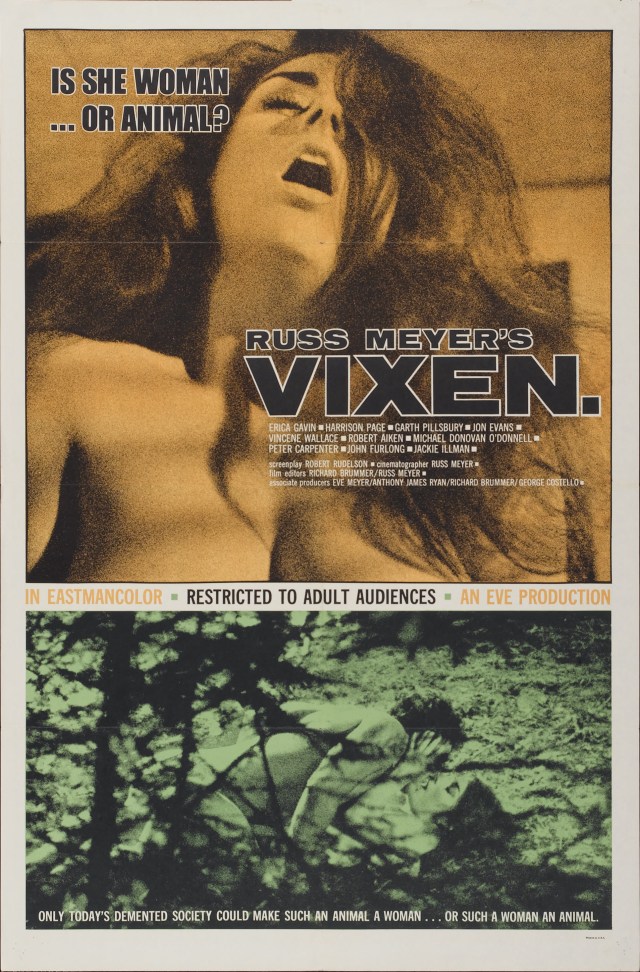
Vixen a.k.a. Russ Meyer’s Nymphomaniac. Everyone remembers Meyer movies for the T and A but the guy really was an impressive filmmaker, especially where editing and rhythm is concerned. His movies dance and boogie with genuine zest and vigour. I’ve seen a few now and his technique always pleases me (apart from Mondo Topless which is a waste of time).

The women don’t hurt either. I definitely share Meyer’s preference for the fuller-female form so it’s not hard for me to fall in love with most of his leading ladies. Vixen is the first one I’ve seen though that features a sole female protagonist rather than a trio or gang. Erica Gavin is a real knock-out (she’s also great in Beyond the Valley of the Dolls) and, as Vixen, joins the pantheon of strong, independent women Meyer likes to anchor his movies on. I’ve always seen his films as celebrations of womanhood rather than leering softcore exploitation. There’s an element of that, sure, but Meyer gives them way more depth and memorable dialogue than a pervert would give his eye-candy. The guy loves his characters, you can feel it throughout all his films. They are far more entertaining and amusing than anyone gives them credit for. Say what you will about Meyer, but the women always had the best parts in his movies and he treated his actresses like royalty.

Vixen is probably the most laser-focused Meyer film I’ve seen yet and the plot is rather slight as a result. For the first half it’s a pretty entertaining (if basic and dated) look at nymphomania with lots of raunch and risque scenes but then in it’s last stretch the film loses most of the titillation in favour of characters breaking down their prejudices by…talking. Huh? Meyer clearly had something to say with this movie and hats off to him for sneaking in a pretty noble message.

Posted in Movies Watched In 2016, Reviews | Tagged , , | Leave a comment

American Ultra (2015)

gallery-1439833993-american-ultra-stewart-eisenberg

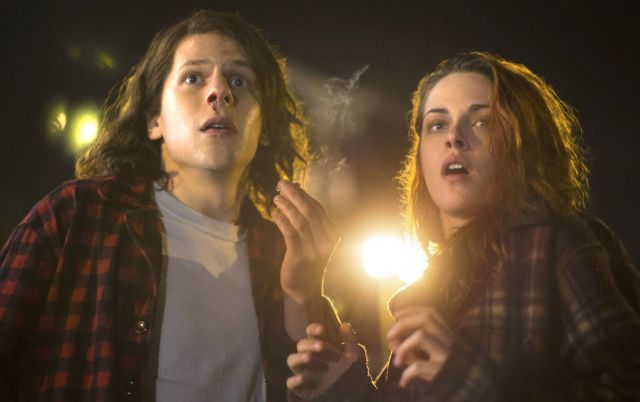
Came for the dopey high-concept and the actors. Works for about two thirds then becomes a tad brain-numbing and formulaic. I’m all for splatty violence but something about it here just didn’t sit right with me. Eisenberg is fine but I wonder when he’s going to blow our minds Social Network-style again. You know who’s a fucking great actress? Kristen Stewart. Even in a movie like this which she probably did for the paycheck, she brings her A-game and takes it super serious. There’s a moment where she breaks down crying and, fuck me, it packs a punch. That woman could convince me of anything. She’s secretly blossoming into one of the best actresses of her generation. She really fits into this aesthetic too. Really, really dig her. Also can we please stop with the “all-in-one-shot” fight scenes? Especially when they are clearly CGI tampered and all in service of video-game violence and “isn’t this cool brah?!” reactions? Does my fucking head in. Even though American Ultra came close, it didn’t make me hate Max Landis. A perfectly average flick that boasts one pleasantly above-average performance. Plus… even at the very least it works as a whacked-out sequel to Adventureland

Posted in Movies Watched In 2016, Reviews | Tagged , , | Leave a comment