Culloden (1964)

p01gjlzy

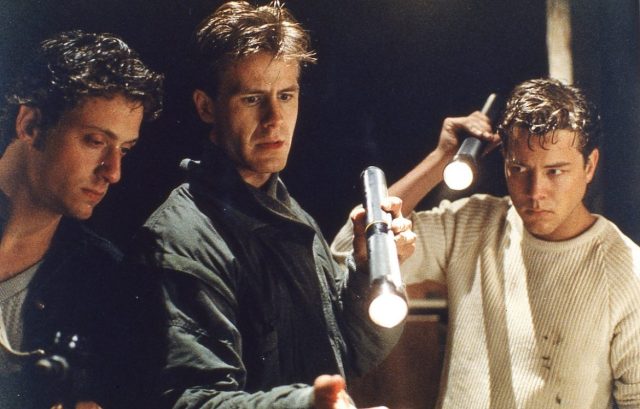
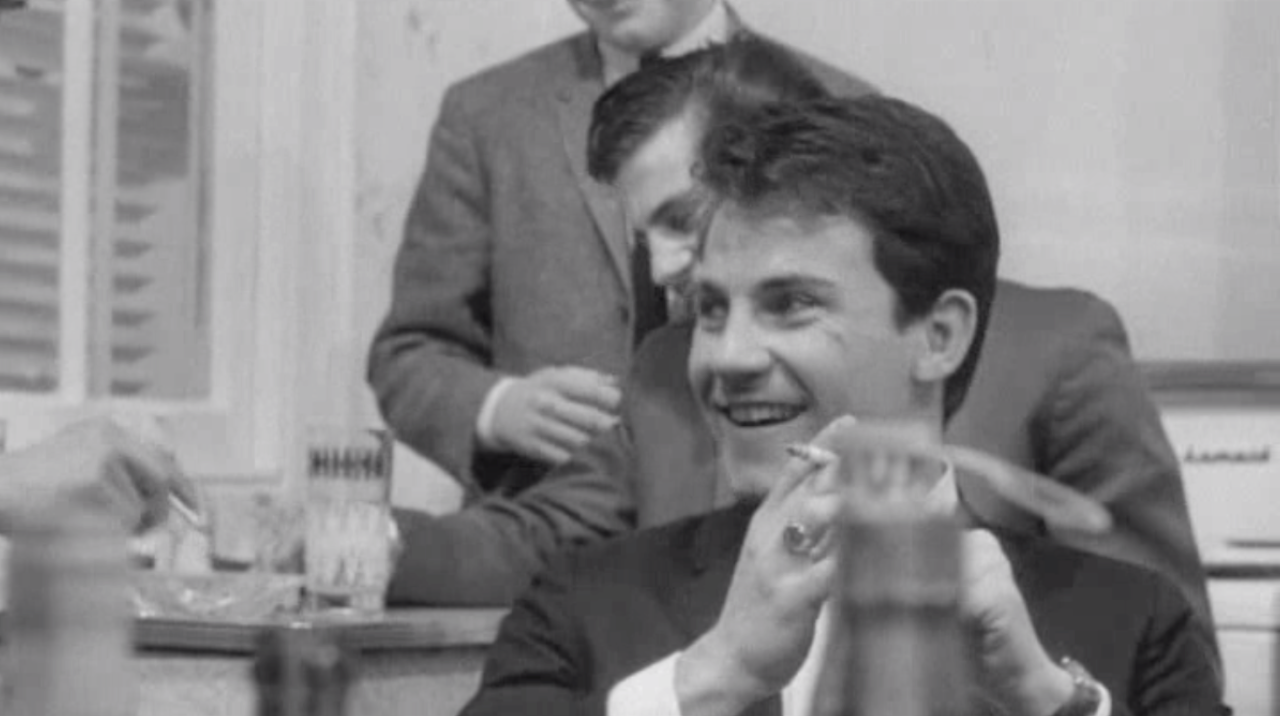
A blistering combination of drama and documentary techniques that Peter Watkins practically pioneered. I’m struck by how groundbreaking Watkins approach feels. What an inspired way to present this topic and make it resonate with and be relevant for modern audiences, not just in 1964, but even for those, like me, catching up today. It is incredibly timeless and age-proof.

Culloden is definitely a bone-shaker and the matter-of-fact assembly makes the darkest moments even more disturbing. It is as docu-real as they come. The violence is harsh, immersive and immediate. The blood, smoke and dirt seem even more vivid when rendered in BBC-ready black and white. I love the collage of faces and aural collective of accents. It all feels so authentic. You’ll forget that Watkins didn’t build a time machine and take a camera crew to the actual battle of Culloden.

Posted in Movies Watched In 2016, Reviews | Tagged , | Leave a comment

Fool for Love (1985)

zoom_1418768688_fool_for_love2x

I recently read Sam Shepard’s play Fool for Love so figured it’s as good as time as any to finally check this one off the old Robert Altman watchlist.

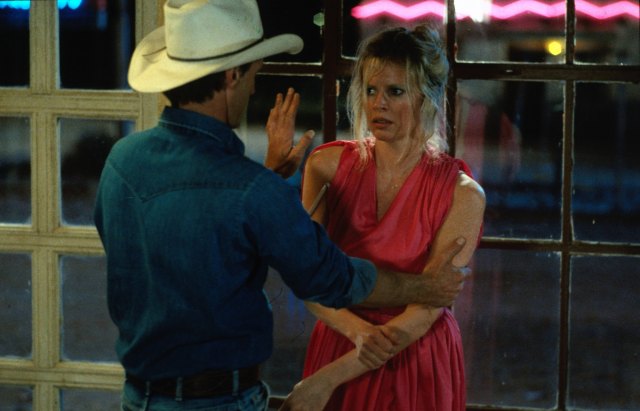
Fool for Love is just one of many stage-to-screen adaptations Altman made in the 80s and it’s a mixed bag. The scope is blown up to make it that much more cinematic. Whereas Shepard’s play never leaves the confines of a grotty motel room, Altman’s version takes things outside the door and the action extends to a trailer, a diner and under the moonlight. The dialogue and general structure is pretty faithful but the film is more literal. It’s difficult to talk about the film without merely comparing it to the printed play. So, as someone who generally dislikes reading plays but has no other way of experiencing them, I better stop right now and just weigh the film up on its own merits.

Shepard and Basinger are both impressive as are Harry Dean Stanton and Randy Quaid. Given the limited cast, it means there’s a lot of time spent simply listening to them talk to one another and extended chatter is something I’m a sucker for. Altman’s constantly roaming zoom lens is in full-use and the camera is always roving, always searching for an inspired detail to focus in on. I love Altman’s style and find it interesting how he utilised it on these stage adaptations, to make something talky become restless and fidgety. It doesn’t always work and I wonder if given more restraint Fool for Love could have worked were it restricted to just four walls. Perhaps. As it is the film feels all over the place and the jumbling around of different, close-proximity locations comes across like a lack of confidence in the material to sustain interest on its own.

Shepard has a very distinct vision of the West and under Altman’s interpretation everything feels slightly askew and oddball. For instance, events from Wild at Heart could be happening a few miles away and it wouldn’t seem out of place. It has that heightened, stylised sense of Western drama and faulty-neon iconography.

I wonder what I would have thought of Fool for Love if I saw it without reading the play first. Would I have liked it more or less? I don’t know. I do think the film is lacking something, it doesn’t have the hot-blooded life and forbidden passion that I felt from reading the words and something seems to have been lost in translation. But then again that just might be a side-effect of having come to the film second. A leaner, meaner, more claustrophobic talking-heads picture might have been the right way to go, but having done that tremendously with Secret Honor I can understand Altman’s hesitation to take that route. It’s a fine film but oddly un-cinematic and flat. It feels like something best experienced by stumbling onto it on an orphan TV station in the early hours of the morning, not a film to deliver after seeking it out.

Definitely not one of Altman’s greatest hits or even a neglected B-side, it seems to have become something of a blank spot in the filmographies of all those involved. But during the time you’re watching it, everyone puts in good work and it at least makes for a solid one-time-and-out viewing experience. Recommended for Altman and Shepard completists.

Posted in Movies Watched In 2016, Reviews | Tagged , , , , , | Leave a comment

Murder on the Orient Express (1974) or: How Albert Finney Can Save Your Movie

murder-on-the-orient-express-1

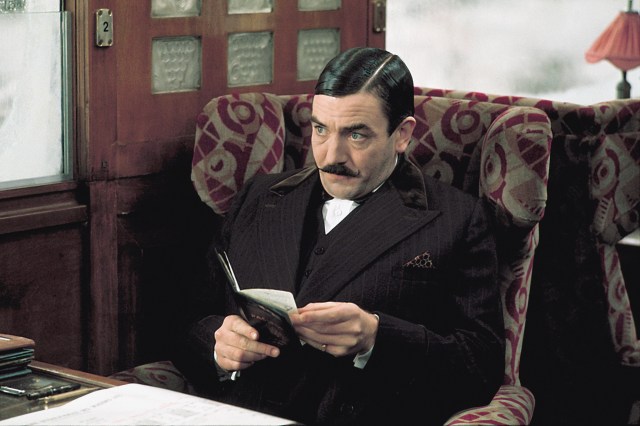
A great case-study in how one great performance can make a movie worthwhile. Murder on the Orient Express is exquisitely constructed. Director Sidney Lumet handles the sprawling cast with ease and constantly fills the frame with lush period-detail. It’s as glitz and glam as a 70s period picture can be, shot on beautiful celluloid, production designed within an inch of its life, scored with utter bombast and cast to the nines. This is probably the most impressive international cast you could hope to assemble in 1974; Sean Connery, Lauren Bacall, Anthony Perkins, Ingrid Bergman, Richard Widmark, Martin Balsam, Michael York, Vanessa Redgrave and Albert Finney. Blimey! Talk about A-list.

Being based on one of Agatha Christie’s most renowned novels, Orient Express also boasts a crackerjack murder mystery. Luckily mastermind detective Hercule Poirot (Finney) is on the scene and quickly gets to work in breaking down the clues and solving the crime. Now, everything I’ve already pin-pointed in the movie is all well and good but it’s all rather generic, like lavish background dressing. Where the film really comes alive is through Finney’s performance. Not known for taking on hard character roles (Alec Guinness was Lumet’s first choice), Finney is nothing short of a revelation as Poirot. Made up to be twenty years older and camouflaged with a bulky posture and bumbling accent, I wonder if I would have even recognised it as Albert Finney were it not for his name it the credits. He totally disappears into the role. He’s hilarious though and convincingly sharp. I love all of the little ticks and details that make Poirot Poirot. Finney imbues so much nuance into is portrayal that the joy of most scenes is simply watching him tackle the character’s body language or dialogue. The last act of Murder on the Orient Express is essentially one long monologue by Poirot as he breaks down his evidence to the collective of suspects and presents his theory as to who did the evil deed. To sustain the audience’s interest for such a length of screen time is no mean feat but Finney makes a meal out of it and the sequence flies by. It’s really something and probably one of the best slices of solo-performance I’ve seen.

Much has been said about Christie lately, what with Tarantino’s Hateful Eightopenly borrowing from her bag of tricks. That film also shares Orient Express‘s snowy setting which confines the suspects to one space, but where Tarantino’s take felt like a modern take on something old-fashioned, Lumet’s approach is unashamedly classical. It’s exactly the right way to do this sort of film, but when watched today it can’t help but feel like an old bottle of perfume. The lavish packaging has faded and the scent has lost much of it’s potency. Seeing all of these top-shelf players build and ensemble together is lots of fun and the murder mystery has a very satisfying and sly pay-off. It’s not enough however to make the entirety of it’s two hour plus running time feel warranted. There’s only so many scenes of characters talking in a train car you can take before it starts to feel a bit repetitive.

Luckily, Finney’s fantastic turn as Poirot gives the film a constant through line of surprise and ennui that climaxes in an epic barrage of inspired exposition that is somehow the most entertaining part of the picture. Even watching it for the first time today, forty two years after it’s release, I consider it a genuinely great performance and one that appears to be quite overlooked. All window-dressing aside, Murder on the Orient Express looks rather plain and average now. Lumet is on solid form, of-course, and most of the actors get their five minutes to show-off but all of them are overshadowed by Finney who’s performance makes it all feel like essential viewing. It’s not, but his performance is.

Posted in Movies Watched In 2016, Reviews | Tagged , , , , , , , , , , | Leave a comment

Mysterious Object at Noon (2000)

148918241_1280x720

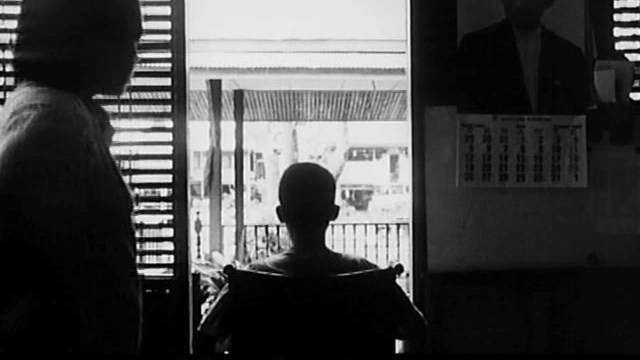
A stunning, form-defying debut from Apichatpong Weerasethakul. His use of the “exquisite corpse” technique to build an ever-evolving storyline is wonderful. The film’s combination of fictional off-shoots and personal testimonials from genuine faces really makes it a unique viewing experience, some of the stories his subjects recall are heartbreaking while others are a delight. I’m always struck by Weerasethakul’s casual reinvention of cinema and structure. It’s not like he’s trying to invent new forms of storytelling, he just happens to manage it every time. Part documentary, part drama, part fairy tale, part poetry, all cinema. I’ve honestly never seen anything like it.

Posted in Movies Watched In 2016, Reviews | Tagged , | Leave a comment

Symptoms (1974)

angela_blue_web

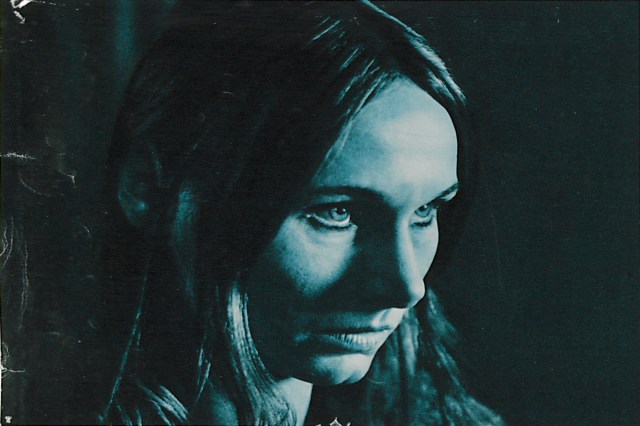
A very atmospheric and textured (mmm that grainy 35mm photography) slice of British gothic filmmaking from 1974. This movie represented the UK at Cannes back in the day before disappearing into almost total obscurity. Symptoms has finally been rediscovered with the BFI dusting off a restored print for home-video release. It’s a nice little curiosity. Angela Pleasence (Donald’s daughter) has a great face for the genre and you aren’t in the slightest bit surprised when her psyche cracks into a load of nutty stabbing and psychosexual overtones. The biggest problem I had with this movie is that it is practically a beat-for-beat remake of Polanski’s Repulsion. The famous mirror-scare is even recycled verbatim. What could have been a very evocative and unique thriller instead feels like a pale imitation. The first watch, therefore, becomes just an experience of going through the motions. Still, it delivers visually and captures a sinister side of rural Britain that is rarely put on display. Not bad. Not great. But well made and performed.

Posted in Movies Watched In 2016, Reviews | Tagged , , | Leave a comment

The Zero Boys (1986)

zeroboys01-1170x749

My second trip into Mastorakis land following Island of Death last year. I’ve thought about that movie way more than I expected to since first seeing it so of-course I’m going to give The Zero Boys a go.

This is a silly movie, but enjoyably so. It has the finger on the pulse of 80s movie cliches and sends them up while simultaneously adhering to them. The Zero Boys of the title are a bunch of twenty-something nitwits (played by thirty-somethings, naturally) who take paint balling way too seriously. After beating out their rival in the opening paint balling match – which is shot like the finale of any Stallone movie with 2% of Stallone’s budget – they jet-off to a cabin in the woods getaway, with their rival’s girlfriend in tow. Said girlfriend is played by Kelli Maroney from Night of the Comet and Chopping Mall so you know, thank god, that she is going to emerge as the one to root for.

Mastorakis pulls off the hybrid of genres by keeping it all very lighthearted. As it begins, The Zero Boys feels like a “guys on an adventure” flick in the Stand by Meor The Goonies tradition, but re-interprets them as if the pre-teenage kids in those movies have grown up to be useless young men. About halfway through the movie, it gets highjacked by a slasher plot as as they discover that the cabin they’re shacked up in actually belongs to a clan of psycho rednecks. You can pretty much guess how things develop from there.

There’s adolescent fascination with artillery and firepower in The Zero Boys that is even funnier considering it was made a year before Predator. I honestly assumed Mastorakis was cashing in on that movie by parodying it here, but it seems that this kind of “lets just fucking blow shit up in the woods” mentality must have been in the air and filmmakers everywhere were just breathing it in like napalm. The idea of facing down axe-wielding rednecks with machine guns is really funny and the fact the film doesn’t end with the rednecks running away in defeat is even funnier. Even with automatic weapons at their disposal, these numbskulls are still destined to be a body count.

I enjoyed this movie a lot more than I expected to. It’s nowhere near as savage, depraved and questionable in it’s intent as Island of Death and is instead a typical slice of 80s filmmaking. The production value is pretty good considering it’s budget, I got a kick out of all the extended camera shots, despite many of them being rather pointless. You can practically hear Mastorakis behind the lens shouting “I can’t believe we’ve got a steadicam!” Suck on that Kubrick and Carpenter. It’s all fun and games though and rarely is the film not entertaining. It works as a dumb slasher movie. It works as a dumb action movie. It just works. Give it a try.

Posted in Arrow Films, Movies Watched In 2016, Reviews | Tagged , , | Leave a comment

Intruder Alert: Hush (2016)

filmstill-93-0-0

Oculus director Mike Flanagan’s latest Blumhouse production Hush arrives with a tantalizing hook: it’s a slasher movie featuring a deaf woman as the protagonist. On a purely conceptual level this is a thrilling idea. I always feel that many filmmakers today miss the endless opportunities of the horror genre by relying too heavily on the spectacle of violence or jump-scare tactics. There are no filmmakers working in the genre right now with the same stylistic gusto as Brian De Palma or Dario Argento in their heyday. It has been a long time since I saw a horror movie that really put me in the shoes of a character, that made me feel threatened first-hand or immersed me in a psychological aesthetic. It has become a rather hollow genre in that sense.

The heroine of Hush is Maddie (Kate Siegel), a novelist who lives alone in a woodland cottage. When we first meet her she is preparing a meal from an online recipe. Flanagan’s camera arches around to Maddie’s ear and the sound drowns away into how she hears it: the boiling water, the crackling gas flame, the humming oven all fade away into muted drone. The point is clear: Maddie is deaf. No dialogue, no cheap exposition, just good old-fashioned visual storytelling. After the obligatory first-act seed planting–meeting Maddie’s neighbor, the mention of a recent break up, a laptop on low-battery–the horror part of the film kicks in and Flanagan indulges in his first bit of slasher subversion. The first victim is dispatched outside Maddie’s kitchen, desperately banging on the window for help but the pleas are useless. They literally fall on deaf ears. The bemused killer (John Gallagher Jr.) even tries to get Maddie’s attention himself and realizing it’s no use, becomes fascinated with this unexpected challenge. The cat and mouse game begins.

Anchoring your horror film on a deaf woman offers up a lot of cinematic potential. The sound design possibilities are endless. It will also force a filmmaker to be more inventive visually, to direct from a subjective point of view in order to let the audience to experience the world as the protagonist does. In Hush’s opening act, things seem promising. Flanagan puts his filmmaking toolbox to great use and establishes an encouraging framework to jump outward from. The killer’s initial tormenting of Maddie works because it’s a new dynamic. Being discreet is no longer a concern for this psychopath, he just has to be invisible. He can enter the house and walk right up to her as long as she’s facing the other way. This is lots of fun. But it doesn’t take long for the film to fall back on familiar beats as soon as Maddie and her tormentor come face to face.

If Hush remains striking at all, it is because of its simplicity. Flanagan and co-writer/star Siegel keep things relatively dialogue free. This film could work as a silent movie, and for long stretches, operates exactly that way. It moves constantly too and has enough interest to work with a paying Friday-night crowd. Siegel’s performance is strong and entirely convincing. Maddie avoids becoming a mere helpless victim; she’s always thinking, always trying to outsmart the killer yet the horror of the situation never leaves her face. As for Gallagher, he doesn’t do anything especially revelatory with the role of the killer, and the film’s bold decision to unmask him early actually feels like a misstep. The character becomes humanized and loses any physical threat if there isn’t a knife in his hands. He lacks presence and mystery, both of which the film could have used in its villain. The home invasion element also fails to pack a bigger punch and comes across like a retread of territory The Strangers rebooted so well. We’ve gotten to the point now, post-You’re Next, post-It Follows, where an incredibly tactile and active heroine has become the standard and this alone is not enough to elevate the material. There comes a point where you stop doubting Maddie’s chances of survival and in a genre that completely depends on unpredictability for success, it becomes just another middle-of-the-road experience.

Flanagan has proven himself with his two previous movies, Absentia and Oculus, to be one of the horror genre’s most promising voices. When he has a new movie coming out, I look forward to it greatly. Yet there’s something workmanlike and plain about Hush which made it rather forgettable. It lacks the storytelling invention which made Oculus so thrilling and the throbbing unease that elevated Absentia from kickstarter fodder into a calling-card. Hush never cuts too deep and feels like Flanagan’s most disposable movie to date. The concept seems so original and thrilling yet the film somehow isn’t. It feels like more of a technical exercise rather than a dramatic one and while the aesthetic acrobats can be exciting, the novelty wears off quite fast and Hush ultimately becomes just another survivalist horror film in which the lead is forced to become a second-rate MacGyver in order to stay alive. I appreciate Flanagan’s attempt at approaching horror from a new dimension, it just never blossoms into the white-knuckle experience I wanted it to be.

This review was originally written for Dim the House Lights.

Posted in Movies Watched In 2016, Reviews | Tagged , , , | Leave a comment

Bride of Re-Animator (1989)

brider

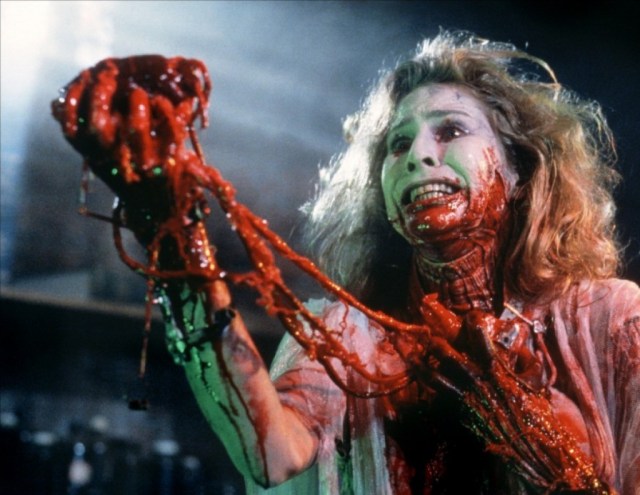
Brian Yuzna’s follow up to Stuart Gordon’s beloved Re-Animator(which Yuzna also produced) is pretty satisfying as far as 80s horror sequels go. As is generally the case, the credo seems to be “more is better”, I feel like the body count in this one is more outlandish yet not quite as shocking. Humour was a big part of the first Re-Animator though so you can’t accuse Yuzna of injecting unwanted slyness. It’s one of the few horror franchises that combined both sensibilities – horror and humour – from the outset.

I feel like brides built from body parts were a big thing in the late 80s/early 90s. It’s difficult to watch this and not think of Frank Henenlotter’s similarly deranged Frankenhooker or visa versa depending on which one you saw first. I like both films a lot though, but Bride of Re-Animator pales in comparison to it’s own prequel mainly due to a lack of spark which made the first Re-Animator such a gonzo vision. A lot of loose plot threads from the first movie are picked up – I always appreciate continuity between sequels – and it’s a pleasure to see the returning cast members again. Only in this universe can a severed head return as a viable villain. All that being said, Barbara Crampton’s presence is sorely missed and while Alotta Fagina from Austin Powers offers up some pleasing eye-candy in her place, she’s nowhere near as memorable.

A lot of the enjoyment of Bride of Re-Animator comes from Jeffrey Combs absolutely killing it (literally) in his encore performance as Dr. Herbert West. Combs just is this part. He treats it like Shakespeare and takes the part more seriously than most actors would dare in this genre. His commitment goes a long way and I firmly believe that West, as a truly unique horror creation, is the reason this franchise has such long shelf life. He’s fucking great and Combs too earns lifelong respect from me for his work on these movies, as well as the others he made with Gordon and Yuzna.

There’s not much to say about this movie. It is what it is and if you get as far as holding the DVD case in your hands you’re bound to know what to expect. It’s exactly what you think it is and exactly what you want it to be. Entertaining, easy and occasionally barmy that delivers up plenty of excessive spectacle in the special FX department. If you love Re-Animator you’ll like Bride of at the very least.

Posted in Arrow Films, Movies Watched In 2016, Reviews | Tagged , , | Leave a comment

Thinking Comes Later: Inherent Vice (2014)

klawans_hullandbones_ba_img

Paul Thomas Anderson is like a god to me. I know I’m not at the only one to feel that way. Anderson is to us what I imagine Scorsese was to cinephiles of the 70s and 80s. He’s one of the greats, plain and simple. One of my favourite things about being born in the 90s is getting to grow up and watch a career like Anderson’s unfold one film at a time. For me his movies are like tattoos. I remember where I was the first time I saw them, the person I was and how they made me feel. I carry his filmography around with me every day, up there in my imagination and I often find myself thinking of moments in his films, performances and details when I least expect it. When I’m asked what I love about movies, one of the first names that pops into my head is Paul Thomas Anderson. Richard Linklater made a movie about childhood by documenting one child’s life over twelve years. Maybe one day someone will make a film about being a cinephile and set each chapter in the year of a new Paul Thomas Anderson movie. That would make sense to me. So anyway, where are we? Inherent Vice. Right. Movie number seven. Lets go.

When I first saw The Master I called it a film made of liquids. It has an aimlessness to it that is intoxicating and dream-like. Looking into The Master is like looking into the ocean itself, it swirls and crashes inward, rarely stopping to make a serious point or dig for a conclusion. It was a surprising film from Anderson, much more subdued and forcefully vague than his previous work. Unbeknownst to us, it also signaled a stylistic rebirth for the Boogie Nights director. Gone are the riffs on Altman, Scorsese and Kubrick – here is Anderson painting with his own brush. Now if The Master was a film of liquids then Inherent Vice is undoubtedly a movie of smoke. A movie of clouds – big, green and hazy.

To echo the thoughts of many: watching Inherent Vice is a lot like being stoned. I’ve seen people claiming the film would be better experienced under the influence but I doubt it. It’s so dense with detail and it’s pleasures are so dependent on subtlety that it would probably a serious fucking bore if you were anything but alert. The film’s great success is conveying a fogginess, it lowers you into a daze even while you’re completely sober. For the majority of Inherent Vice, Joaquin Phoenix – as Doc Sportello – wanders around bemused and curious, his eyebrows constantly uneven. He’s a character who arrives into a scene too late and has to play catch up. That’s how we, the audience, experience Inherent Vice. It’s plot, while not exactly incoherent, is delightfully unruly but as Anderson has emphasised in countless interviews, the plot is secondary to the sensation of having fun while being confused. Sit back and just go with it.

Where Inherent Vice really comes alive is in it’s details. Details of the period, the performances, the music, props, costumes and the background are infinitely awarding. It’s the little things that really sing. There’s a moment when Doc writes a message onto his zig-zag paper before smoking it in the hope that it will send good luck to a loved one that made me laugh out loud. As did the close-ups of the nonsensical clues in his notebook. Josh Brolin’s obsession with frozen bananas never ceases to be amusing and the barrage of wigs and outlandish costumes is never-ending. It’s a film full to the brim of sight gags and left field staging. If Anderson wants two girls to start making out and perform oral sex on one another mid-scene so be it! It all adds to overall sense of circus and absurdity. It’s Anderson at his most freewheelin’ and the most 70s. He might not be flat-out copying Altman and Robert Downey Sr. anymore but he’s certainly channeling their spirit. Much of this can no doubt be attributed to Thomas Pynchon. I’m not familiar with Pynchon’s work but through Anderson’s interpretation I get sense of him. Yet this doesn’t feel like a filmmaker trying to imitate another artist. The two voices blur together to the point where, as a Pynchon novice, I can’t tell where Anderson starts and Pynchon ends. It seems like the perfect marriage of author and filmmaker and Pynchon’s oddball tendencies seem to have loosened Anderson’s.

There’s so many genres at work here – it’s a sex comedy, a private eye movie, a psychedelic odyssey and a slapstick noir all at the same time yet the way it’s presented is so wonderfully unexpected. We all assumed Anderson would blow the dust off his Boogie Nights gloves and deliver something energetic and riotous but he opts instead for the long takes and patience of The Master. It feels right. The approach lets us live in the scenes and take in the textures. Much of the dialogue is mumbled and quiet yet the emphasis on body language between the actors says everything we need to know. It’s colourful yet dirty. Shot on glorious celluloid, this is easily one of the most beautiful films I’ve seen recently and one that avoids drawing attention to itself visually. Many of the film’s most striking compositions fly by without a second of false modesty. The famed “last supper” image everyone latched onto in the trailers for instance, comes and goes in the blink of an eye. I like that about the film. Anderson isn’t interested in showing off any more. He’s more obsessed with creating a whole and coming at scenes from a new direction. We spend so much time in this movie looking at the back’s of characters heads or just watching them exist in a space and it’s fucking great. He’s a filmmaker so besotted with the performances of his actors that he’ll often do nothing but let them breathe and develop in real time. One stand out scene, which goes from conversation to sex-scene over 6 minutes is particularly memorable.

It’s clear now more than ever that There Will Be Blood was the end of phase one in Paul Thomas Anderson’s career. His two movies since then, The Master and now Inherent Vice lack the immediate, obvious pleasures of his first five and are much stranger when first encountered. I felt the same way at the end of Inherent Viceas I did when I first watched The Master – somewhat vacant and frustratingly untouched yet still under a spell. However, within ten minutes of leaving the cinema I found myself recalling moments – acting details or throwaway gags – that had immediately stayed with me. With Inherent Vice I thought about it’s sound, the way Vitamin C by Can kicks in on the title and carries on as Phoenix aimlessly wanders down the street and the way Neil Young seems to haunt the movie’s sun kissed beaches like a shaggy angel. I thought of Joanna Newsom’s soothing narration and the colourful ensemble of strange characters brought to life by the sprawling cast. Many of the actors only appear for one scene yet they all leave a mark. The brilliance of Anderson’s recent work is more submerged but it makes repeat viewings increasingly rewarding. I purposefully put off writing this review until I had seen the film again. It’s a movie that demands at least one revisit. You need to live with it for a while before you form an opinion. The characters call you back and even now I’m itching to visit them a third time.

Inherent Vice is a zany movie but an oddly mediative and touching one. Anderson has always been a romantic at heart and the final moments of Inherent Vice bring to mind the closing images of both Magnolia and Punch-Drunk Love. He may have grown into a more restrained and mature filmmaker, but Paul Thomas Anderson’s heart is as big as ever. This is a loving film, both to a time long gone and to a time that may have never really existed in the first place. Is Thomas Pynchon’s version of 1970 an accurate document or a hazy mirage? Who knows. But Anderson’s adaptation is a satisfying triumph of “feel, don’t think” filmmaking. It is funny, alive and confusing but totally immersive. It is a great movie.

This review was originally written on January 15th, 2015.

Posted in Movies Watched In 2015, Reviews, Rewatch | Tagged , , , , , , , , , , , | Leave a comment

A Man Obsessed: The Offence (1973)

still-of-sean-connery-in-the-offence-1973-large-picture

Sean Connery and Sidney Lumet made five films together and The Offence was their third. It is an ugly, angry picture that has since been overshadowed by bigger, classic films but that isn’t to say it’s bite has become any less severe.

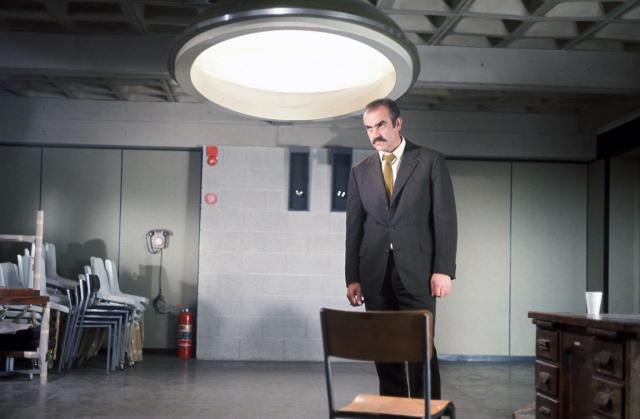
What first appears to be another gritty 70s police procedural soon dissolves into a piercing character study. Connery plays Johnson, a bullish police sergeant leading an investigation into a string of abused girls in a small British town. When a suspect is apprehended, Johnson’s temper gets the better of him and his interrogation methods regress into fury and violence. As Johnson, Connery is bigger and badder than I’ve ever seen him before. He has no interest in turning in a likeable performance and intimidates every scene with a brute force. Lumet was never one to shy away from darker shades and with Connery as a collaborator they turn The Offence into a wild eyed stare into obsession and evil. Out of all the 70s films I’ve seen from Lumet, this one might be the toughest.

Much like Connery’s character the film seems to have a buried secret, something unsaid and forbidden that occasionally comes into focus before losing clarity again. Lumet lingers on strange moments; Johnson trying to console one of the young victims when she is found quivering in the woods, disturbing flash cuts to crime scenes we have no knowledge of. It’s only later that these beats make sense. There is a thrilling sense of dread and despair beneath everything. It’s a subjective movie that treats cinematography as psyche. It begins with long moments of slow motion, with images superimposed over one another as if a character is recalling something we haven’t witnessed yet, before settling into more conventional coverage for the first half.

The final hour is built up of three twenty minute one-on-one dialogue scenes each taking place at different points in the narrative. It’s a questions first, answers later movie. Once the answers come the tempo completely changes. It becomes theatre and it’s here that Lumet really starts to scratch under the surface at something insidious. What previously lied dormant finally rises to the surface with real fury and disturbance. Lumet’s direction is always dynamic ensuring things never become flat and mere talk. When Connery explodes, it really shakes you up. He is genuinely terrifying and Lumet’s demand for complete authenticity – from the performances to the environment – makes Johnson feel all the more threatening. You believe this guy exists and can do real damage.

This is a gripping movie and one that deserves to be acknowledged. The subject matter, as well as the approach by Lumet and Connery is extremely brave and full-force. It’s setting in a misty, damp 70s Britain gives it a savoury taste, setting it apart from other rugged cop thrillers of the period. It get ugly when it needs to but avoids shock in favour of primal emotion which takes centre stage by the end. The non-linear structure makes it an intriguing mystery to unravel and Connery’s furious central performance is never anything less than engrossing. Lumet made a lot of movies in his lifetime, some are classics, some are not but The Offence proves that even underseen, minor works can play in a major key.

Posted in Movies Watched In 2016, Reviews | Tagged , , | Leave a comment