S. Darko (2009)

sd13

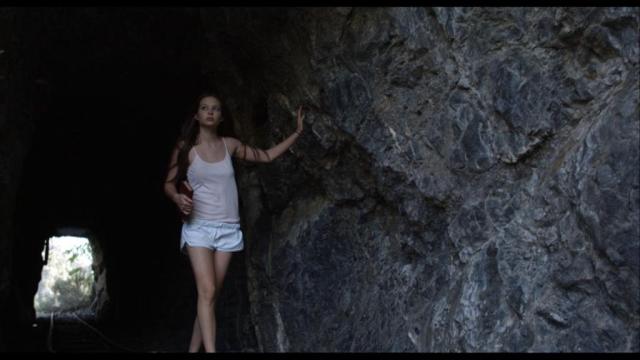
The idea of a Donnie Darko sequel feels like blasphemy. While S. Darko is completely beneath that film in almost every regard – ideas, execution, ambition, intelligence – by using it as a foundation, you end up with a film that is far more imaginative and unusual than its cash-in shackles would have you believe.

This could have easily missed the point and been a cheapie, semi-sci fi tinged slasher movie with a man in rabbit suit. But the filmmakers, director Chris Fisher and screenwriter Nathan Atkins, are clearly fans of Richard Kelly’s original film and try their hardest to create a universe that honours Kelly’s. The images of apocalyptic Americana return, the fractured families, demented psyches and oddball periphery characters are also accounted for. Actress Daveigh Chase returns as Donnie’s sister Samantha to lend a nice touch of continuity and by setting everything in a desert town it has a backdrop and ambience separate from its predecessor. Oh and it’s also got John Hawkes in a supporting role, weirdly.

However, where Kelly was clearly savvy in sci-fi literature and intelligent genre cinema and smart enough to create a mythology from the ground up, you can’t help but feel Donnie Darko is the extent of Fisher and Atkins’ reference points. They re-hash many scenes from that film in an attempt to either homage or connect themselves to it but without Kelly’s knack for tone, location and style, they just seem like poor imitations. The time travel stuff is both messy and basic (even though it does lead to a mid-way rug-pull I didn’t seem coming but it is soon retconned so doesn’t count) and a lot of the character work suffers from sub-par performances that lack all the subtlety which made the original film so grounded and effective. Judged alone, a lot of the things here would show promise and imagination but in Donnie Darko‘s shadow they are less impressive. Basically, S. Darko is an admirable cover version of the Darko mythos or a very elaborate piece of fan fiction. A curious watch but by no means essential.

Posted in Movies Watched In 2016, Reviews | Tagged | Leave a comment

Bully (2001)

maxresdefault

Full of authentic environments and faces, Larry Clark’s Bully is suitably grimy and lived in. Clearly made by the same man who directed Kids, it retains that film’s edginess and aggressive young cast. Clark is obviously obsessed by this younger generation and fetishises the aimlessness, the boredom and the technology they are defined by.

The central story, based on a true incident, is very disturbing and this isn’t lost on the filmmakers. Seeing a group of kids offhandedly decide to murder one of their own and clumsily see it through to the end hits hard. It’s been done before (River’s Edge) and since (Mean Creek) but never quite this black and unrelenting. The performances from a mixture of established young actors and inexperienced newcomers are all pretty great and they all blend in completely to this world. It is an energetic and youthful film but one that is still full of danger and unease. The raw sexuality, drug-use and violence is tough but to soften it would be a mistake.

All that said, there is something lurid and crude about Clark’s eye that makes some scenes feel a bit leering. It all goes tad Terry Richardson at times but that unease actually enhances a lot of the film’s moments. It’s got a great, big budget soundtrack which offsets the rough aesthetic nicely and some of the most effective scenes are when you’re just watching a bunch of 20 somethings exist in the tableu that is 2001. I kept thinking about Sofia Coppola’s The Bling Ring in a lot of scenes. The later film might be based on a lighter crime but the scrutiny is just as on-point and bracing.

Posted in Reviews | Tagged , , , | Leave a comment

The Bunny Game (2010)

1_the-bunny-game_autonomypictures

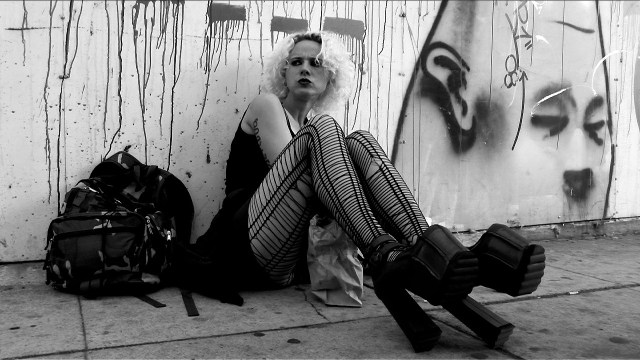
An absolutely sense-numbing, patience-testing attempt at “extreme” cinema. The Bunny Game begins with a prostitute (Rodleen Gestic) performing oral sex (unsimulated?) and follows her over one day of hustling tricks in alleys and motel rooms. She is repeatedly beaten and degraded and it doesn’t take long for all the “provocation” to become tiresome. Then she gets picked up by a sadistic trucker who proceeds to knock her unconscious, tie her up and make her endure an afternoon of twisted role-play, torture, rape and other cliches of shock filmmaking.

Now, I’m all for pushing the audience to the limits if you can anchor it on a story, a concept or an aesthetic that justifies the punishment. I don’t mind excessive violence, nudity and nastiness if it’s for a purpose. The Bunny Game has none of these things. The last 45 minutes devolve into an endless cacophony of frenzied cutting, piercing sound design and blaring imagery. It is filmmaking as blunt instrument. Lacking structure, focus and, seemingly, a point, the film ends up feeling like the B-roll footage of a death metal music video stretched out to an apparently endless 76 minutes. It’s a fucking nightmare.

Now I’m guessing all this craziness is supposed to mirror the confusing, nightmarish and hopeless position the protagonist finds herself in but rather than being subjective or immersive, it just becomes a flurry of LOUD NOISES, SCREAMING FACES!!! It becomes so excessive and irritating and goes on for so long that you. Just. Stop. Caring. I honestly couldn’t wait for it to end.

But hey, it’s in black and white! How arty! Nope. Just lazy. Gets a bonus star for the work of the lead actress who seemingly put herself through hell for nothing. Scratch this off your Shocktober list immediately. If you want to kill 76 minutes, watch the end credits to the extended version of Lord of the Rings instead.

Posted in Reviews | Tagged | Leave a comment

August Underground’s Mordum (2003)

By losing all of the “in-between” moments of randomness and focusing exclusively on 80+ minutes of relentless, disgusting violence and reprehensible characters, August Underground’s Mordum loses everything that made the original film so effective.

The captured moments here feel much more like “plot beats” and “character development”. There always seems to be an argument erupting between Peter and Maggot where I would assume the characters would cease filming for those moments. A lot of it feels more staged and conventional, therefore less effective and convincing. In this one, there’s also a sense of “how far can we go” and all the horridness (which is really, really, really horrid) falls into the trap of coming across like shock value.

I like that the cameraman from the first film’s absence here is left unexplained but the additional characters are quite troublesome. The character of Maggot is one of the most repulsive characters you’ll ever meet to the point where he feels like exactly that: a character. The same goes for Crusty, who’s outrageous, attention seeking behavior suggests an actress simply wanting to stand out for being “fucking craaaazy man”. The fact she legitimately self-harms on camera also makes me uncomfortable. I don’t doubt the actress agreed to it wholeheartedly, maybe it was even her idea, but there’s a feeling that Vogel and co. took advantage of the actresses mind-frame at that time simply to give the film more “edge”.

The countless periphery characters who show up also don’t make much sense. I have no doubt there are underground communities of serial killers in the world, but this bunch of idiots partake in such grand carnage with such little subtlety that their ability to evade capture or suspicion is just not believable. The simplicity of the original is what made it so disturbing and terrifying. Even aesthetically. The lack of reason, the lack of pattern, the lack of chronological sense…aside form the progress of the murders the intervening scenes could have been shot any time for all we know. Here there is a very clear, clean cut narrative unfolding which feels like a big mistake. By trying to build on that foundation rather than developing it, Vogel misses the point.

This might be the most disgusting and fucked up thing I’ve ever seen which gives it some kind of badge on honour (hence the relatively high rating all things considered). Plus I also have a lot of admiration and respect for the actors and actresses who play the victims in these films. They are incredibly convincing and go through some potentially scarring experiences. A ugly, stupid piece of work. But you won’t forget it.

Posted in Movies Watched In 2016, Reviews | Tagged , | Leave a comment

Nixon (1995)

ctc8rywxgaidgl9-jpg-large

A grandstanding achievement from Oliver Stone. Nixon has the sweep and length of an all-American epic but really it’s just an incredibly in-depth character study.

I always respond to Stone’s work when he turns things up to the max and when he clearly has a personal stake in the topic. You can tell Nixon and this era in American history are obsessions for Stone and he makes sure this is his definitive statement on the subject. The film is framed around Nixon listening to his tapes one stormy night and from there jumps around in time to key moments of Nixon’s life, both professionally and emotionally. Some of the revelations are old-hat (it all starts with childhood!) while others are inspired in that classic Oliver Stone-conspiracy nut sort of way. He portrays Nixon as a man haunted by the death of Kennedy until the end of his days and suggests he may have had a hand in his killing, whether directly or in-directly is never clarified.

The central performance by Anthony Hopkins is a tour-de-force. Dialled up to eleven with the assistance of some make-up and wig work, it could easily be too much. But Hopkins brings so much to the eyes, the posture and the inner turmoil of Nixon that every minute of the 220 minute runtime is watchable if just for him being on-screen at all times. He sweats, shouts, cowers and crumbles. It is a rise and fall of a man who always felt second best. At times he is a monster, at others a very vulnerable human being. Hopkins disappears into the role completely. Not only is it the best I’ve ever seen Hopkins, it might be one of the best performances I’ve seen from any actor ever. How’s that for hyperbole? In this case, it’s justified.

There’s so much going on here. Even the supporting roles are near-dominating. Joan Allen, who plays Nixon’s wife Pat, shares many of the film’s best scenes with Hopkins. And those moments, with Nixon in a bedroom, a side-office or corner with his wife – are the moments that dig deepest into this rendition of a very real man. Stone’s Nixon is undoubtedly that and not a clean-cut biopic of the actual figure. The film’s stylisation – augmented by Robert Richardson’s ace photography – is expressionistic with deep shadows dominating large spaces. it looks like a horror movie at times. The elements play a big character in the emotional arc. I can even remember the weather in a lot of the scenes as it alway seems to mirror Nixon’s psyche at the time. The aesthetic all around is full and bold. Light dims to show us Hopkins in silhouette or images of wars and turmoil are projected onto characters. The sound design is equally busy. It’s all very Oliver Stone – so not very subtle and underplayed – but anchored on this subject, with this kind of frenzied passion behind it, the full-blooded approach works.

Nixon has been repeatedly labelled as Stone’s Citizen Kane and while that might raise expectations unfairly high, it’s certainly appropriate in regards to the film’s structure, scale and ambition. And like Kane is as American as any film I’ve seen. Nixon came and went in 1995 and even now is pointed to as the great unsung masterwork in Stone’s career. After seeing it for myself I’m inclined to agree. The running time will be intimidating, but so is the subject. Stone doesn’t try to explain Nixon as much as he tries to interpret and understand him. It is the macro next to Secret Honor‘s micro. Both films showcase definitive performances of a man who had so many different faces. They’re both effective in their own way. But in the same way Secret Honor is clearly an Altman picture, Nixon is an Oliver Stone movie and it’s one of the very best there is. His last true masterwork.

Posted in Reviews, Uncategorized | Tagged , , , | Leave a comment

Scream 2 (1997)

scream-2-1

Like Scream, this is a film I’ve watched to death over the years. But unlike Screamit doesn’t quite hold up as well.

The opening sequence in the cinema is a fucking all-timer. It’s Craven firing on all cylinders and is inventive, surprising and upsetting in equal measure. I’ll never forget that image of Jada Pinkett screaming her final scream in front of a packed theatre of ghostfaces while certain audience members take off their masks to cover their ears. Christ is that shit tough.

I also love how this sequel picks up and continues a bunch of threads from the first film. It feels like a true continuation. Sidney doesn’t just revert back to being helpless. She really kicks a lot of ass here and refuses to succumb to being a mere victim. You feel her plight throughout the movie. There’s a sense that she knows all of this will never stop and in one way or another she’s always going to be alone. The Cotton Weary stuff is also terrific and, from Liev Schreiber’s brief appearance in the original, feels like it was planned all along (it probably was as writer Kevin Williamson had completed outlines for the sequels sold alongside the script for the first film). I’m all for the Dewey/Gale Weathers stuff. I saw these movies a good fifteen years too early for the whole “one true pairing” shit but those guys were always my favourite “will they/won’t they” power couple. I also dig how all the characters have a new look, from Gale right on down to Randy. These guys are growing up and changing. The film doesn’t ignore that. Plus the film even has the balls to off a fan favourite. Randy biting it was always a massive shock and a real ace in the film’s hand and Dewey getting stabbed and surviving again (!) is both cruel and hilarious.

All the horror-sequel musings are on-point as well. Maybe even more focused and sharp than the riffs in the first film. Williamson is really on fire with all that stuff. Craven seems more confident in his abilities as well by staging some excellent set pieces of varying scales. The phone-call/intruder in the house from the first film’s opening is upped with Sarah Michelle Gellar’s segment and the crashed police-car sequence is a textbook example of stripped-back suspense.

Where this film stumbles in comparison to its predecessor is in its finale. The ending is nowhere near as clever or surprising as the original and feels too overblown for its own good. The script for Scream 2 was famously leaked onto the internet during production which forced Williamson and Craven to frantically re-write and re-think much of the film in order to stay ahead of the audience. When all is said and done, the mad rush and scramble is quite apparent. The idea of bringing Billy’s mother into the fold as a secondary killer is good in theory but becomes a bit too ridiculous under scrutiny. It edges things a tad too far into soap-opera territory rather than Scream. Timothy Olyphant and Laurie Metcalf both go to town on their roles though and I always enjoy their work in all its shouty, crazy-eyed glory.

Re-watching Scream 2 directly after re-watching Scream dampened its impact somewhat. That film’s effectiveness comes from the reinvention of so many classic tropes and environments (school hallways, country houses, spotless suburbia) that the sequel, with its campus setting and myriad of grand locations can’t help but feel less iconic and striking. On the whole though, as far as horror sequels go, this has to be one of the strongest. It doesn’t simply re-hash the original film, it pushes the concept further and re-asserts itself in terms of setting, tone, ambition and scale. Its a bigger film, with more rules to break and for the most part matches the first film in the thrills, kills and excitement department. Plus: the characters. It’s worth firing Scream 2 up just to spend another two hours with Sidney, Dewey, Randy and Gale. It’s no Scream but its a damn good Scream 2.

Posted in Movies Watched In 2016, Reviews, Rewatch | Tagged , , , , , , , , , , | Leave a comment

Scream (1996)

scream-4

Scream is one of those movies I’ve probably seen upwards of forty times from being a pre-teen all the way up to today. Its influence on post-modern cinema and 90s horror is practically all encompassing. The film is renowned for its genre-savvy characters, pop-culture dialect and “hip” deconstructions of slasher cliches. It’d be easy for Scream to feel dated and blunted but watching it recently for the film’s upcoming 20th anniversary, I realised it’s just as good as it ever was.

Kevin Williamson’s screenplay still feels razor sharp. The set-pieces are extremely strong with glorious, gruesome payoffs timed perfectly. The character work is impressive too. The film is so much about legacy and ghosts (metaphorically) being passed down the generations. Not only in terms of horror/slasher history in regards to the film itself, but also literally within the characters’ lives. I’d never realised how deep Sidney’s turmoil goes until this re-watch and feel dumb for admitting as much because it’s so thoroughly sign-posted throughout. Sidney – as the apparent classic, virginal final girl – is terrified of intimacy and sexuality due to her mother’s reputation as the town whore. So many scenes ram this point home. There’s clearly whispers and rumours about Sidney’s mother’s infidelity running amok in Woodsboro. But it’s not until Sidney is faced with her psychotic boyfriend claiming his murder rampage is a direct result of it that she seems to accept her mother as the flawed, troubled person she really was. That particular arc is the spine of the entire movie and, I’ll be damned, it’s plotted wonderfully.

The A-list cast of fresh faces paired with a powerhouse horror director skyrocketing himself out of late-career purgatory into genre dominance again is also thrilling. Craven was in his late fifties while directing this movie but his choice in helming such an on-the-pulse screenplay, even as he was desperate to dump his shackles as a horror maestro, is critical to his legacy. You can see Craven had something to prove. It has the vitality of a young-man filmmaker and the insistence on going hard with the violence is a Craven trademark. Maybe a filmmaker with less cred wouldn’t have been able to expose so many innards in a mainstream slasher flick, but thank god Craven managed it. It gives the film the edge it deserves and the required threat so essential to offsetting the satire.

That entire last 45 minutes – the party bloodbath, the endless chase, the unmasking of the killers and Sidney’s defeat of them – is just aces. The film is so entertaining and fast on a scene-by-scene basis that it would have been easy for them to fudge the ending. The “whodunnit” trope is inherent to the genre and many predecessors – gialli especially – are so often let down by their reveal of the killer and their dumb motivations or questionable logic. Scream, on the other hand, totally slam-dunks this aspect.

The two-killer reveal is genius and makes the double-bluff reveal of Billy as a killer even more powerful. By slowing everything down and dedicating a great slab to the unmasked maniacs discussing their plan and showing their true colours, the film’s lunacy soars to new heights. Williamson goes right into the minutia of their plot to the point where we get to see them stab each other and break down into madness while Sidney looks on – a new horror heroine crystallising into existence. Somehow, without the mask, without the slasher format, Williamson keeps Screamticking on for whole other act and it’s brilliant. It practically becomes a new film at this point, but it works amazingly well. As soon as you have Matthew Lillard fumbling with the blood-covered phone, lamenting “my Mum and Dad are gonna be so mad at me”, it becomes both hilarious and absolutely disturbing. Unlike Michael Myers, these psychopaths have faces and voices. They’re just human fucking teenagers! It’s the logical conclusion to all this craziness, all this Gen-X deconstruction. That scene is everything for me. The performances from Ulrich, Lillard, Campbell and intervening Cox and Kennedy are all so good. For me, it’s the reason Scream is a true masterpiece. It’s the reason I’ll be watching this damn movie for another 20 years.

Posted in Reviews, Rewatch, Uncategorized | Tagged , , , , , , , | Leave a comment

August Underground (2001)

August Underground is a gruelling watch but appropriately so. Presented as a string of found footage clips from a pair of serial killers’ Mini DV collection, it certainly looks and feels the part.

First off: the violence, the perspective, the ideology, the attitude – everything about August Underground is as it needs to be to be convincing. You could absolutely stumble upon clips of this movie and believe it to be a legitimate snuff film. Indeed, scenes from it regularly appear on those “real violence” sites and many have mistaken them for the real deal. I suppose that’s a compliment to Vogel’s filmmaking. As someone who has seen a handful of real murder clips in my teenage years, it certainly hits you with the same emotional turmoil those clips put you through. The glee in the violence and cruelty is so bracing. The emphasis on all the nasty details and the hopelessness in the victims’ eyes cuts deep. There’s a divide between “movie violence” and “real violence” and the way Vogel orchestrates all this feels like the real thing rather than a showcase for some special effects. It is ugly, upsetting and beyond comprehension.

There’s a constant thought of “why am I watching this?” and you can’t help but keep your finger over the volume button to avoid detection. I watched the film alone in an empty house but still felt totally guilty and implicit by indulging in watching something so horrible. How would I even explain watching this? “I’m doing it for a podcast!” (I am). You can’t help but think someone would look at you a bit more suspiciously if they knew you had this kind of shit swimming around in your mind’s eye.

Writer/director/actor Fred Vogel points to the “home movie” segment from Henry: Portrait of a Serial Killer as primary inspiration for this project and that’s exactlywhat springs to mind. But where Henry was a by-product of the ‘Nam generation, the killers here – much like the boys at the centre of the Columbine shootings – feel like bored, parentless teens taking their love of the extreme to the absolute zenith. It’s like a really horrible, distressing extension of Jackass and goth cultures. They’re the kind of people that give those things a bad name. They have no compassion and find nothing but pleasure in the pain they inflict on others. Even more troubling: you feel like you’ve seen these guys before. They’re the boys the girls don’t look twice at on the playground so they take it upon themselves to teach them a lesson instead of, you know, having social skills. If they want something they think they can just take it and then destroy it. And, ofcourse, they don’t bat an eyelid in realising they can film the whole thing on a handheld camera. The eye behind a lot of these shots feels like that of a sick mind, not a filmmaker. As that is the film’s intention, I can only see that as a positive.

It’s easy to look at August Underground as a disgusting work of “shock value”. The low rating on here suggest that’s how most react to it but there’s more going on here. You can’t really rate it in the same way you rate other films. It’s coming at it’s subject from a very unique angle, using format and psychology as an aesthetic. All of the murder and depravity is scattered throughout other clips of the killers doing every day, boring shit. They go to the mall, they get tattoos, attend metal gigs and cavort with prostitutes. All that stuff is what makes this so deeply affecting and convincing. Those moments are given the same emphasis as the murders and it just shows you how inconsequential they think their actions are. All of this is just for shits (literally) and giggles for them. It’s fucked up.

The great achievement of August Underground is how it makes you appreciate being alive. As soon as I finished this movie I felt the urge to call everyone I care about to make sure they were okay. This film shows you how vulnerable human life is and how random and unmotivated genuine violence can be. It reminds you there are people like this out in the world and their targets are often just people in the wrong place at the wrong time. Plus, you’ll be thinking about this thing for days and it could quite possibly scar you for life. That’s more than I can say for a whole lot of other so called horror movies.

Posted in Movies Watched In 2016, Reviews | Tagged , | Leave a comment

U Turn (1997)

vlcsnap-2016-09-20-11h38m30s63

It’s a good time to be an Oliver Stone fan. Or at the very least it’s a good time to be thinking about Oliver Stone. His latest film Snowden has just hit cinemas but more interestingly, Matt Zoller Seitz recently published The Oliver Stone Experience; a massive coffee-table book anchored by a career-spanning interview with Stone himself that also features endless paraphernalia from his movies as well as critical essays and various supporting materials. It’s a gorgeous tome that approaches Stone’s body of work with a seriousness and respect that his detractors – of which there are many – might find unnecessary and ridiculous. As someone who has a bit of a “take him or leave him” attitude to Stone, the book inspired me to look at the man’s filmography again and finally fill in a few blank spots. As expected, the journey has been rocky. Occasionally thrilling, often frustrating, always long; watching an Oliver Stone movie – from any era of his career – is full of highs and lows but, to re-iterate the title of Seitz’ book, at least it’s an experience.

In the last few weeks I’ve watched, for the first time: SalvadorTalk RadioBorn on the Fourth of JulyThe DoorsU Turn and Nixon. I’m not going to talk about the best (Nixon). I’m not going to talk about the worst (Talk Radio, probably). As I sit pretty comfortably in the middle of the Oliver Stone is great/Oliver Stone sucks balls debate, I’m going full middle ground. So lets talk about U Turn.

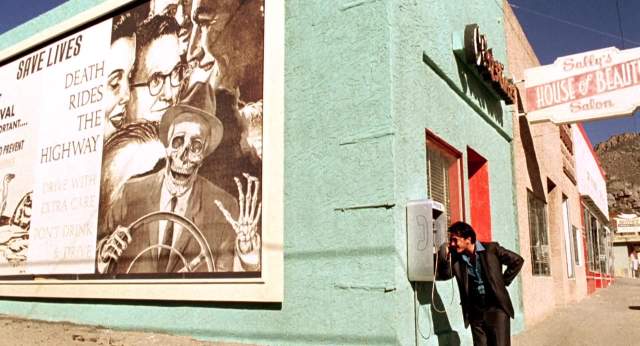
After completing the gargantuan Nixon, Stone turned his attention to a smaller, genre based canvas much like he did with Natural Born Killers following his JFK/Heaven & Earth double whammy, and made a whacked out, fish-out-of-water story unfolding under the scorching Arizona sun. Sean Penn plays a drifter called Bobby whose car breaks down and leaves him stranded in the town of Superior which turns out to be the kind of nightmarish hellhole-as metaphorical purgatory most criminals hope to never step foot in. Left to the mercy of the town’s freakish locals, Bobby is forced to deal with an oafish mechanic (an almost unrecognisable Billy Bob Thornton, 50 pounds overweight), a corrupt Sheriff (Powers Boothe), a blind Indian (Jon Voight, neither blind nor Indian) and most substantially: a sultry temptress, Grace (Jennifer Lopez) and her jealous, oppressive husband Jake (Nick Nolte). There’s a sense that any of these characters could put a bullet in Bobby’s head if the right excuse came along and if that wasn’t enough, there’s a bunch of mobsters after him for an unpaid debt and they’ve already chopped off three of his fingers. If it sounds like there’s a lot going on, it’s because there is.

Utilising the same maximalist, multi-format visual style that defined most of Stone’s 90s work, U Turn almost falls afoul of the same pitfalls that hampered his subsequent films such as Any Given Sunday and Savages as well as earlier works like JFK depending who you’re talking to. Every line of dialogue seems to dictate a cut. The visual language is a helter skelter of perspectives, close-ups and montage. It’s ridiculously busy for such a stripped back story but somehow the overkill feels right here. It’s not so much a fish out of water story as it is a fish out of water decomposing in the desert story. The sun-scorched, grainy photography, alternating between 16mm and 35mm and mixing traditional with wide-angle lenses, is in love with all the nasty details. Cinematographer Robert Richardson, here completing the last in an eleven-film run with Stone, really pushes his lens into the most surreal corners. If somebody sweats, an individual sweat bead is granted a close-up, if somebody has a drink we’re sure to see the string of saliva between the bottle and their lips. Roadkill and naked bodies are presented with the same indulgence. From bodily fluids to dusty concrete, you can really feel all the textures. Part of the fun of U Turn is being immersed in such a heightened, extreme aesthetic. There’s even a bugged out Ennio Morricone score thrown in for good measure. Is this Stone’s take on the Leone western? It’s more like a cartoon, further emphasized by the director’s penchant for goofy sound design stings and the nutty performances.

It’s saying something when Sean Penn, notorious for his grandiose characters, plays the straight man in your movie. He navigates the rest of the cast with a constant perplexed look on behalf of the audience. By the time Joaquin Phoenix shows up as a confrontational rockabilly called Toby N. Tucker, or TNT as the shaved initials in the back of his head will clarify, Penn’s only reaction is to surrender to the absurdity with a blink. Ofcourse his nickname is TNT. Everyone seems to be having a blast playing ugly and dastardly, their cackling faces often distorted by Richardson’s lens. Jennifer Lopez, as the sole female in the core cast, is there to look sexy and seductive in a floaty orange dress but even she emerges as a cunning villainess. It’d be easy to question Stone’s gender politics (as many have with his previous work) but much like Jennifer Jason Leigh in last year’s The Hateful Eight, Lopez is only as sensationalised and contemptible as her male counterparts. I’m not sure how many of these performances I would consider “great” but all of them are extremely entertaining even if some are in bad taste. I mean, Jon Voight as a blind Indian doing the same accent he used in Anaconda the same year? That’s an instance of Stone’s judgement being way off but I can’t deny finding it somewhat hilarious and definitely memorable. It’d be easy to praise Billy Bob Thornton’s commitment to the project due to his weight gain too, but part of me suspects he just enjoyed getting a fat paycheck from over-eating for a few months. (Sidenote: remember all of those chameleon-like character parts Thornton indulged in during the 90s? It’s easy to forget his characters in Sling Blade, One False MoveA Simple Plan and Armageddon are all played by the same actor. Good work Billy Bob!)

As the film goes on it becomes increasingly ridiculous and overwrought. Murder plots unspool within murder plots and revelations of incest aren’t far behind. There’s a bag of money, last minute betrayals and outbursts of violence in both the noir and grindhouse traditions. By the end of U Turn, those left standing are hampered with broken bones, covered in scratches and bathed in sticky blood slowly turning to gloop under the burning sunlight. Stone’s sick and twisted sense of humour permeates throughout the entire story and his predatory direction tries its hardest to incriminate the audience in all the sleaze and scumbaggery. You feel like you’ve just been dragged through the seven circles of hell and all you can do is laugh like a psychopath. It isn’t as unruly or as experimental as something like Natural Born Killers – a film I originally thought this one preceded as it’s one of the few films more overblown than U Turn (also a better one on the whole) – but shares its sense of graphic frenzy. It’s one of the few times in his career where we can see Stone not working in an explicitly political mode and his primary goal seems to be to entertain and exhilarate the audience which he achieves to varying degrees of success. The hyperreal visuals and cutting will work depending on your tolerance – imagine the final cocaine-infused 20 minutes of Goodfellas stretched to two hours – but as a fan of bold strokes and violent aesthetics, I just about got on board with it. This style would reach breaking point in Stone’s truly irritating Any Given Sunday but anchored in this genre framework, the explosive close-ups and relentless cuts can be eye-poppingly expressionistic. Some of the individual shots are lurid and stunning in equal measure. It’s bonkers but I dig it.

After U Turn, everything seemed to go downhill for Stone. Critical support and audience opinion deteriorated to the point where it now takes a coffee table book to potentially begin a reappraisal of the man’s work. Digging into his filmography with a more open mind, I found myself appreciating all of Stone’s overindulgences and crazed obsessiveness. It’s with these eyes I first watched U Turn and, while certainly not an especially great film, it looks and feels exclusively like an Oliver Stone movie. And you know what? I enjoyed the experience.

Read the full article at Reloading the Canon

Posted in Movies Watched In 2016, Reviews | Tagged , , , , , , | Leave a comment

The Bad News Bears (1978)

bad-news-bears

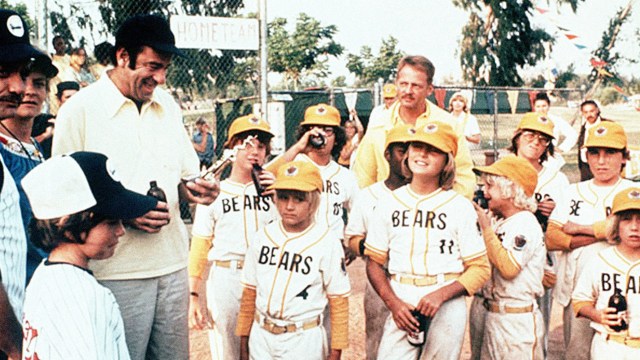
Pleasurably foul-mouthed and un-PC, The Bad News Bears takes the kiddie sports-team formula (or was this the origin of that trope?) and filters it exclusively through a grainy 70s Hollywood lens. The kids drink booze, smoke, swear, act out and the film – expertly directed by Michael Ritchie – doesn’t accost them for it. This is childhood. It’s all the moments you did behind your parents back. It’s childhood without the rough edges smoothed out.

It’s both brazenly raw and entertainingly escapist at the same time. These dead-end kids and their attitudes might be relatable, but the perfect group dynamic – each character ticks his own archetype box – and the crawl up to the big leagues (in the smallest possible sense) is pure Hollywood storytelling. The real sucker punch comes as the Bears lose the final game. But the downer is soon transformed into a triumph as the Bears themselves – these glorious punk shit-heels – don’t give a fuck about that trophy anyway. They look the winners in the eye and tell them to stick the trophy straight up their ass. That’s childhood.

Headlined by Walter Matthau at his most disenchanted and his most shaggy-dog, he slumps into scenes constantly cracking beers open and squinting into optimism. The supporting ensemble of younger stars (including Jackie Earle Hayley and Tatum O’Neal fresh off of her Oscar win for Paper Moon) is terrific and offsets Matthau perfectly. This is one of those films that lives and breathes with its characters and the everlasting charm of it lies in your desire to spend time with them for as long as possible.

The term “Bad News Bears” has now become shorthand for “underdogs” and it’s fitting. While held in high regard by a handful of elite fans (Tarantino lists it as one of his top ten favourite movies, Linklater loves it so much he couldn’t resist helming a remake in 2006) the film hasn’t passed down the generations as much as it perhaps deserves. It’s an excellent piece of work with lots of texture and one of the best ensembles of young actors I’ve seen. Richie keeps a sure hand on the complicated tone and the film’s affection for baseball at ground-level is pretty infectious. It’s a movie that celebrates flaws and imperfections, that cheers on the fuck-ups, the neglected and the write-offs and shows that with just a little belief and encouragement, they too can be winners regardless of whether or not they win the big game.

Posted in Movies Watched In 2016, Reviews | Tagged , , , | Leave a comment