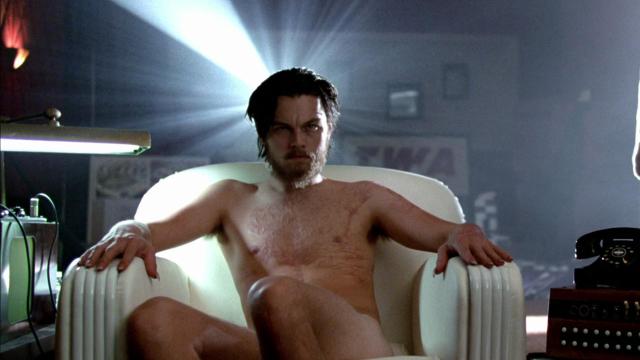
The Aviator (2004)

aviator3

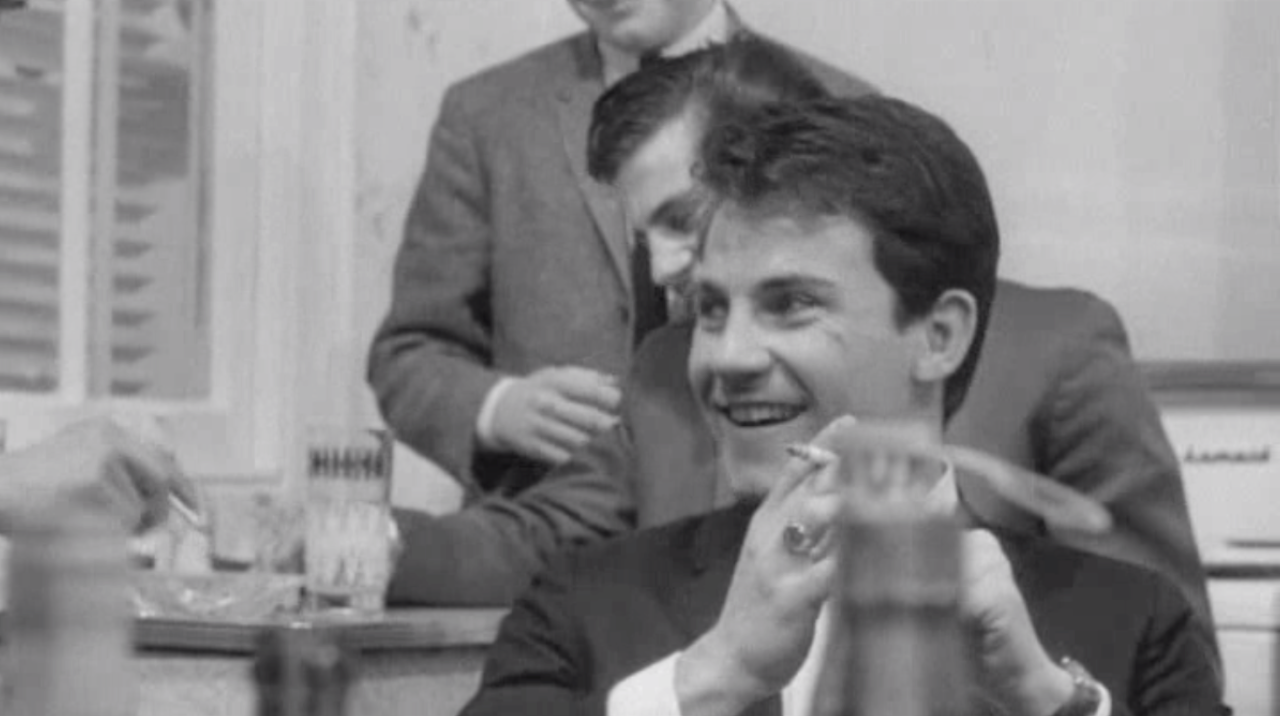
Has the bones of generic biopic but is made even stronger by Scorsese and screenwriter John Logan’s decision not to tell the full Howard Hughes story, but a very specific chunk.

DiCaprio’s performance is gargantuan as is the electrifying filmmaking from Scorsese. The countless flourishes sizzle off the screen – that colour timing, Schoonmaker’s crackerjack cutting, my god – making it an absolute visual delight from beginning to end. It’s soaked with a twenties razzle dazzle that so few period flicks manage to conjure and Hughes’ psychotic breakdowns are foregrounded by pure cinema. Of all the cinematographers Scorsese has worked with, his collaborations with Robert Richardson are my favourite. Richardson’s penchant for hot top-lighting and deep blacks (also heavily present in his work with Oliver Stone and Tarantino) are beautifully offset by Marty’s roaming expressionistic camera and unorthodox montage. Scorsese is king of the jarring edit and he really gets you into Hughes headspace via rug-pull inserts – the early split-second shot of Hughes dusting the soiled napkin under the table, for instance, hits like a bullet.

All this stuff is like cocaine to me and any chance to watch a master like Scorsese operate with such endless resources is a treat from frame one. The aeroplane crash sequence is one of my favourite set-pieces from the 2000s and there are countless other moments, performances and stylistic choices in The Aviator that constantly crop up in my subconscious. This is when the Marty and Leo years really kicked it up a notch. A film that flies close to the sun but keeps its wings fully intact.

Posted in Movies Watched In 2016, Reviews, Rewatch | Tagged , , , , , , | Leave a comment

Assault on Precinct 13 (1976)

assault-on-precinct-13-original

“It’s a siege. It’s a goddamn siege!”

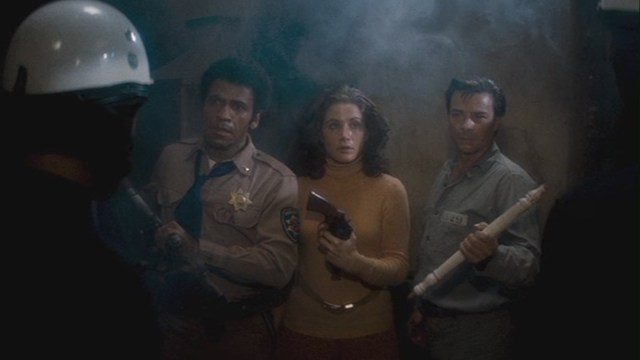
About as close to perfect as low-budget, economic genre filmmaking can get. Carpenter’s spartan, precise camera glides around capturing glorious PanaVision compositions. This is still early Carpenter and you can feel him finding his feet, but the discipline in the cutting and plotting as well as the Hawksian characterisation across the board is so damn pleasing. Just a gorgeous hybrid of traditional, unfussy steady-hand aesthetics with modern (for 1976) grindhouse edge. Then there’s the score, which ticks and throbs me into doom-laden synthesizer heaven every damn viewing. Assault on Precinct 13 is John Carpenter: Ground Zero. Everything we love about this filmmaker is right here in one way or another. I love this goddamn movie.

Posted in Movies Watched In 2016, Reviews, Rewatch | Tagged , , | Leave a comment

Shocker (1989)

shocker-1989-02-g

Shocker was a staple of my VHS collection in the good old days and, as a Craven nut, it’s a strange movie I’ve always been very fond of. This was Craven’s hard swing for some franchise cash after New Line took the Nightmare on Elm Streetmovies in their own direction, and while it’s easy to imagine Horace Pinker headlining his own horror series, it’s equally easy to see why that never came into fruition.

Watching Shocker with older, wiser eyes has lessened its impact somewhat. It’s not as conceptually sound as I remember, in fact it’s just kind of dumb. Craven has always been fond of high concepts and the electricity-fuelled body-hopping that takes up much of the film’s second act doesn’t really make sense (Jason Goes to Hell would try something similar more effectively a few years later). There’s also a random subplot involving Peter Berg’s character being able to experience premonitions of Pinker’s murders in his dreams that is never really explained or elaborated on. Still, all these things allow Craven to flex some of his strongest muscles (dream/nightmare imagery, surreal violence) so it can be forgiven. There’s still the sense though that this film comes from a place of chasing commercial success rather than exorcising some personal or creative demons, which is where all of Craven’s best films seem to originate.

Pinker himself is little more than a Freddy knock-off with his TV repair workshop, orange jumpsuit and electricity-induced death standing in for Krueger’s boiler room, striped sweater and firey demise. Mitch Pileggi has great fun chewing into the role though and he’s a big reason why the film is so re-watchable. The conceit of him being able to swap bodies and travel through electrical appliances isn’t the worst gimmick for a horror villain and Craven mines it for some cheeky satire and visual potential as well as a bonkers final act involving Pileggi and Berg battling it out through endless TV backdrops and stock footage. I also really appreciate that this flick has some real bloody violence going on. Craven was always good at painting the town red and there are crime scenes here involving bathtubs filled with blood and people soaked in dark crimson. Hallelujah!

I still dig Shocker even after years of distance. It’s definitely not prime Craven but is creative and vicious enough to be an enjoyable watch. For all its shortcomings, it remains a fun and entertaining genre flick. Maybe it doesn’t warrant the endless revisits I gave it when I was younger but as far as failed-franchse springboards go, it’s certainly worth your time.

Posted in Movies Watched In 2016, Reviews, Rewatch | Tagged , , , | Leave a comment

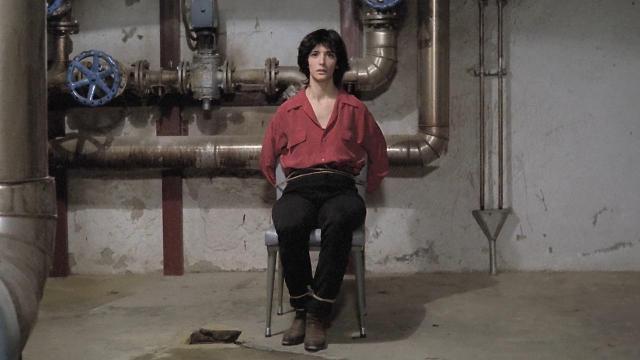
The Eyes of My Mother (2016)

000069-26564-16569_eyesofmymother_still1_kikamagalhaes__byproductionstill_-_h_2016

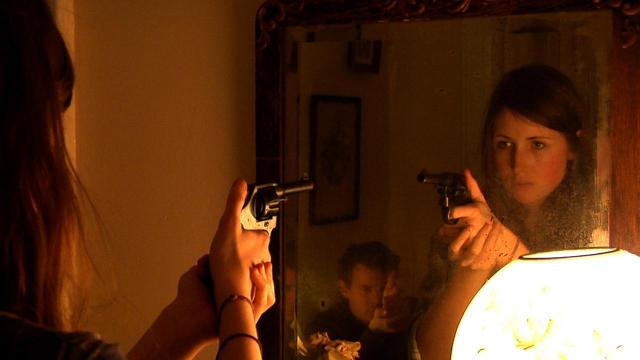
Beautiful to look at and full of grotesque ideas, yet the rigid compositions and emphasis on “distance as atmosphere” make The Eyes of My Mother yet another entry in the “art horror” wave that constantly leaves me unfulfilled.

Basically The Texas Chainsaw Massacre viewed through a Bergman filter (the go-to comparison for anything gloomy and stark shot in black and white), it’s the perfect alternative for those who like their horror to be more cerebral and composed. Personally, I prefer my horror through a visceral lens; immersive atmosphere, an all-seeing camera, POV shots, extreme close ups, painful, kinetic violence etc. I’ve never found it to be a genre that works successfully through static, perfectly composed shots and minimalism. The Shining, for instance, has never done it for me as a horror movie. Of-course there are exceptions to the rule and, as with anything, my response is totally subjective. But as much as I can admire the craft and aesthetics of films like It FollowsThe WitchDear Mommy and now The Eyes of My Mother, I just don’t connect with them nor do I find them especially effective in their attempts to terrify. A locked off camera shot and oppressive sound design just doesn’t do it for me as much as seeing red veins punctuate the white of an eyeball.

That being said, The Eyes of My Mother runs for the perfect duration (76 mins is the new 90 people) so it doesn’t outstay its welcome. Writer/director Nicolas Pesce clearly has a good eye and control over his medium and I can’t deny that’s a very well made little debut. Sadly it just didn’t do enough innovating to leave any permanent scar tissue.

Posted in Movies Watched In 2016, Reviews | Tagged | Leave a comment

Cursed (2005)

cursed-2005-01-g

Kevin Williamson and Wes Craven re-team to pepper some Scream magic onto the werewolf genre…and fail. That being said, there’s a lot I enjoyed in this dumb old movie.

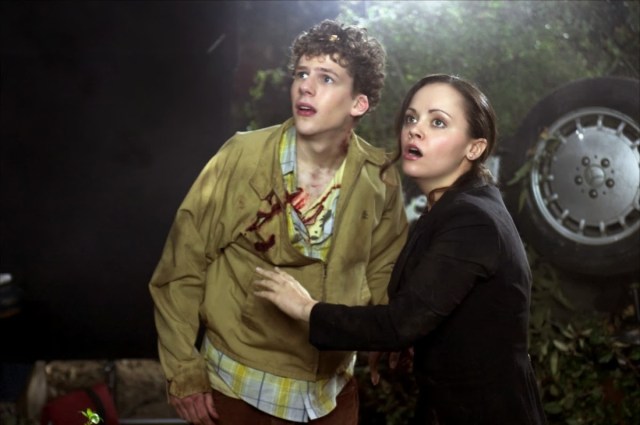
Christina Ricci is perfectly cast. She is so feline and otherworldly that the whole experience of Cursed is worth it just for the scene where she walks around an office seductively sniffing the air until she finds a woman with a nosebleed (yeah, it’s that kind of movie). There are lots of classic Williamson twists and turns, so many in fact that it’s as if he’s parodying himself. But as he lives and breathes self-awareness, the parody feels intentional and not a goof. Everything is more pitched to comedy than carnage; it’s very camp but entertainingly so. Where else are you going to see a werewolf flipping someone the bird? The Hollywood LA setting echoes Scream 3 in its shallow satire – just with added Scott Baio – but it’s fine. Williamson is mining teen-movies more than werewolf flicks and you have so many classic scenarios play out with an intensely knowing eye (two guys have a wrestling match to win over a girl for fuck sake) making it feel like a prototype for a lot of thriller teen shows that are everywhere now.

Also, I know we’re only eleven years out, but I can’t believe how much this film seems to define 2005. The soundtrack cuts, the fashion, the hairstyles, even the cast (remember Shannon Elizabeth?) are so quintessentially of this era that it is literally like jumping in a time machine and cringing the whole way. Cursed had a troubled production history and the scars of meddling studio hands are painfully apparent throughout (jarring cuts, mismatching hair suggesting re-shoots and awkward solutions to plot points abound) and it’s absolutely a studio product. It viciously chases the popular cultural touchstones of the day which, of-course, means the film became almost instantly dated. It still feels like a Kevin Williamson movie though (Craven less so, the film is horribly over-lit, flat and looks like television) and the bones of his original script haunt the film by suggesting something better at almost every turn.

For a werewolf movie, the special effects are frustratingly underwhelming. The film basically takes Rick Baker’s werewolf design from An American Werewolf In London and puts it on two legs but in 2005, without the clever framing and suggestive editing, the thing looks quite laughable. Plus when your key transformation scene is graded with horribly undercooked CGI you know you’ve struck out. Baker’s original make-up effects were completely reshot with effects by KNB which also explains why it’s all so terrible, design-wise.

Considering Cursed is such a mess, it’s remarkable that it still manages to be somewhat entertaining for good reasons and bad. As a fan of Craven it’s nice to finally see this thing but it really isn’t his finest hour. Ricci, Judy Greer, Joshua Jackson and even an uber-young Jesse Eisenberg all put in game performances to distract from the barrage of talent being blunted behind the camera. It’s a clusterfuck, but a fun one.

Posted in Movies Watched In 2016, Reviews | Tagged , , , , , , , | Leave a comment

Silver Bullets (2011)

image-w1280

More focused than other early Swanberg stuff I’ve seen and also, apparently, with purpose. Silver Bullets also gains bonus points for featuring a strong central performance from Kate Lyn Sheil who, only now in 2016, finally seems to be having her moment. Ti West also crops up as…basically himself in a bunch of fictionalised situations set-up by Swanberg, which is fun but, as anyone familiar with the mumblecore movement will know, is only as good as the ideas within. That said, there’s a lovely little seduction scene involving a werewolf mask that feels like it could only arise naturally in a film of this ilk, which is why I’ve got a lot of time for the likes of Swanberg.

The presence of an actual tripod and held compositions is welcome and the ruminations on filmmaking at this level feel mined from a very personal place. Silver Bullets was made during an extremely productive period for Swanberg (he made seven features in one year) but the film doesn’t at all feel like a rushed, half-baked example of “one of many” and satisfies as a stand-alone work. You can feel his growing boredom of naturalism and dogme restrictions and even though the instances of heightened stylisation are a bit abrupt and weird, they are obviously pointing towards an artistic development and creative breakthrough. Scenes don’t just take place in anonymous rooms, there’s actual stuff happening like horror make-up and weird stripteases. I mean, it’s not mind-blowing but having Sheil in the lead and the semi-autobiographical elements go a long way to making this a satisfying 73 minutes spent in Swanbergville. Music’s pretty neat too.

Posted in Movies Watched In 2016, Reviews | Tagged , , , | Leave a comment

I, Daniel Blake (2016)

i_daniel_blake_no_film_school_interview

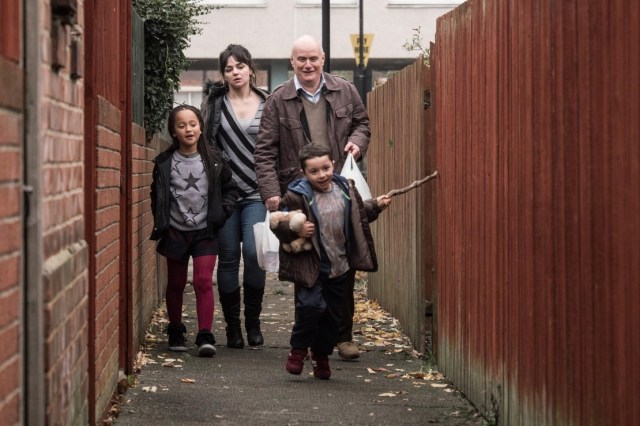
Like a blunt instrument, Ken Loach’s angry, timely I, Daniel Blake forgoes any sense of subtlety or restraint in favour of focused, heavy-handed beats – in both plot and character – that you will see coming from a mile away. Essentially a mouthpiece film used to raise awareness for the poverty problem in Britain, the film unfolds more like a “how to get angry at the British government in 100 minutes” seminar than an actual story coloured with nuance and cinematic ennui. However, in his earnestness and sympathy for the working-class, Loach’s furore is tolerable.

Despite the performances lacking consistency – as with most Loach movies the core cast are all great but the periphery faces are shakier, though what they lack in acting talent they make up for with local authenticity – the film is an engaging watch. At times it can feel manipulative in its endless attempts to pull at the heartstrings, or by constantly painting Blake into a corner (I don’t doubt many have experienced his situation but the constant presence of unhelpful officials and relentless bad luck does feel a little contrived) but clearly this is a film pitched to as wide an audience as possible in order to get the message out. Loach has always preferred to be seen as the working-man’s filmmaker – a voice for the people – rather than the art-house darling his awards cabinet and reputation might have you believe, and he is on characteristic form here, as politically motivated as ever.

Sure enough, this film lacks an elegance in its plot movements and character developments that I usually crave but somehow I can forgive their absence being that working as a stand-alone film and story don’t seem to be Loach’s endgame. Ace DOP Robbie Ryan does as much as he can within Loach’s framework (showy and cinematic are a big no-no) but this isn’t a film as much as it is a conversation starter; a filmic protest designed to get people mad as hell and declare that they aren’t going to take it anymore. Judging from its surprising success here in the UK, with audiences beyond the art-house crowd, and Loach’s extensive presence in the current media not to mention the Palme d’or win, I’d say it’s definitely achieving its goal. Not really my kind of thing (I’ve never been down with Loach) but I can appreciate the message and passionate anger behind it.

Posted in Movies Watched In 2016, Reviews | Tagged , | Leave a comment

Tesis (1996)

image-w1280

Spanish filmmaker Alejandro Amenábar is best known for directing The Others, 2001’s blockbuster ghost story starring Nicole Kidman, and Open Your Eyes, the Spanish film that inspired Cameron Crowe’s Vanilla Sky. He also won an Academy Award for Best Foreign Film in 2004 with The Sea Inside. Amenábar has got a brief and varied filmography, but I’d argue that his best film is the one Western audiences might be the least familiar with: his debut Tesis.

When Sinister was released a few years ago, a lot of critics described it as a found footage movie about the guy who actually finds the footage. Tesis is coming from the same place in that it uses found footage as a catalyst for a story rather than an aesthetic approach. Instead of a true crime writer discovering a crate of sinister Super-8 films, Tesis follows Ángela (Ana Torrent), a university student writing a thesis on snuff films who comes to obtain a VHS copy of the real thing. As she digs deeper into the tape’s origin, she discovers that the victim in the film is an ex-student who mysteriously disappeared from campus and that the people responsible may be much closer to home than she initially suspected.

Amenábar wrote, along with Mateo Gil, and directed Tesis while he himself was a film student and shot it on location at the university campus where he studied. Following years of being told to “write what you know,” making films about cinephiles or struggling filmmakers can be a pitfall for many debut directors because, more often than not, that stuff just doesn’t make for very exciting or original drama. Amenábar manages to make it work by operating within the strict framework of an investigative horror film. These movies, which have their origin in the Italian giallo pictures, are usually populated by nosy news reporters, crime writers or amateur sleuths, so the transition to university student doing research for a thesis is rather seamless. The mundane, relatable setting of a college campus goes a long way to make the film’s darker moments all the more disturbing too. We’re used to seeing the discovery of an underground network of snuff films play out amongst seedy, rain-slicked alleyways or sleazy backrooms (as in Joel Schumacher’s 8mm, for instance) but to have it hidden behind the squeaky-clean facade of academia makes it far more insidious. It also makes sense.

Tesis was made in the mid-90s when laserdisc was a luxury for those who could afford it and DVD a mere blip on the horizon. For over a decade, videotapes were the preferred format for hungry cinephiles and cult aficionados. Plus, thanks to the video nasties boom of the 80s, the hunger for depraved, realistic and disturbing horror movies had become less underground and more mainstream. All over the world, movie nerds were huddled in dorm rooms on college campuses, exchanging copies of Faces of Death and Cannibal Holocaust between one another and trying to convince themselves that what they were watching was depicting real death, torture and execution. As we now know, they weren’t, but Amenábar and Gil pose the question: what if it was real?

Ángela enlists a film-student called Chema (Fele Martinez) to help her solve the mystery of the tape. Chema, with his long hair, bum-fluff beard, reading glasses, and consistent wardrobe of ripped jeans and metal t-shirts, is the quintessential depiction of a film student in cinema. The pair’s amateur detective skills are a lot of fun, and Amenábar and Gil playfully mine the technology of the time for clues in the mystery. It might be pure nostalgia or techno-fetishism speaking here, but the fact that the quality of the digital zoom on a Sony XT 500 camera ends up being a key plot point just makes me all warm and fuzzy inside. That kind of specificity is what makes Tesis work as a plausible mystery. Amenábar has thought this shit out and plots it extremely well.

This is a twisty and gripping film, and for much of the running time you really don’t know where it’s all heading. The genre has taught us to be suspicious of everyone and Amenábar plays that card to his advantage by making Ángela, really, the only reliable character. As fans of The Others will know, he’s also a filmmaker of great restraint and is more interested in crafting suspense rather than shocks. The snuff film that is so central to the movie is first introduced through sound with Amenábar relying on Torrent’s horrified face to fill in the blanks. He’s also good at using space and environment for tension; so much so that the biggest scare in the final act doesn’t come from an act of violence but from recognizing a goddamn garage wall, of all things. Unlike Sinister, there’s no supernatural underpinnings and the grounded, human threat leads to a far more satisfying pay-off than anything not of this world.

As far as debut movies go, Tesis is as assured and confident, without being showy, as anything I’ve seen. The film picked up seven Goya awards (Spain’s equivalent of the Oscars) and transformed its young filmmaker into something of a wunderkind overnight. Horror is an especially tricky genre to make a mark with and though Amenábar keeps coming back to it throughout his career (as recently as last year’s critically panned Regression), he really got it right the first time. If psychological trauma is more your thing over excessive violence, Tesis is a tape well worth tucking into.

Reviewed as part of Dim the House Lights‘s Ten Days of Terror.

Posted in Movies Watched In 2016, Reviews | Tagged , | Leave a comment

Burial Ground (1981)

0112

The zombie genre has a lot of jewels in its crown: the Romero films, Fulci’s Zombiand The BeyondBraindeadShaun of the Dead and (depending on where you stand on the running zombie debate) 28 Days Later and the [REC] movies. But as with any sub-genre overloaded by decades upon decades of derivative content, a lot of great movies inevitably slip through the cracks. In 1980, Andrea Bianchi directed a little Italian zombie flick called Burial Ground (aka The Nights of Terror, The Video Dead, Zombi 3). It barely received a theatrical release in the US, showing on only a handful of screens in 1985 before being dumped on VHS in the UK with so many cuts it was hardly worth watching at all. However, the uncut version slowly gained a devoted cult following and the film’s gonzo reputation grew from there. While it might have ascended the ranks to become a favorite among zombie purists, Burial Ground remains heavily under-seen. If you were to google “Best Zombie Films of All Time” you’d be hard pressed to find it mentioned. In short: this is probably the best zombie movie nobody is talking about.

By the 1980s, the Italians got really good at making zombie movies. Not all of them were classics, of course–most were just cheap cash-ins or xeroxes of seminal entries–but as far special effects, sex and violence were concerned, Italy was the country that really delivered the goods. The thing that makes Burial Ground stand out, even in such cluttered company, is how quickly we get to the carnage and how constant it is. The movie has very little time for set-up. We meet a weird scientist (and apparent part-time ZZ Top member) as he unleashes an evil curse which re-animates the dead. Skip forward to a set of couples arriving at a nearby mansion for a weekend getaway, throw in a few obligatory sex scenes for nudity and BOOM! By minute sixteen, the zombies have shuffled onto the scene, taken a few chunks out of the disposable supporting cast, and the main players have hastily barricaded themselves in the mansion now under siege from the hoard of flesh-eaters outside. The rest of the movie is then freed up to become, essentially, one extended set-piece of zombies either getting the hell blown out of them or strategically killing off our heroes.

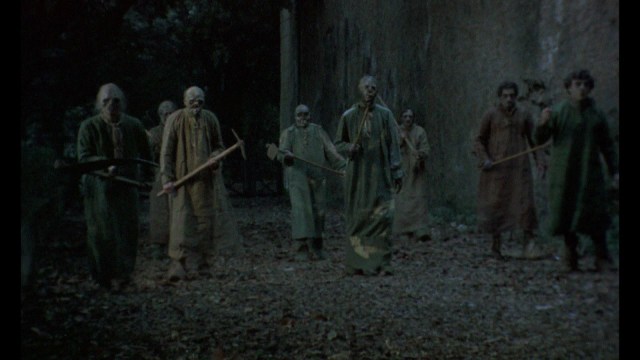
Now, the special effects in Burial Ground leave a lot to desired, but they’re serviceable, if not very consistent. Some zombies appear to have a rubber mask of worms while others are just extras with a bit of grease-paint on their forehead. What they lack in appearance, however, they make up for in character. What’s cool about the zombies here is that Bianchi has them actively band together to force their way into the mansion. These zombies arm themselves with axes, use a massive log to break down doors and, in one of the film’s signature scenes, manage to wield a giant scythe in order to behead an unlucky maid looking over a balcony three floors up. It’s all utterly ridiculous but pretty fantastic in the almost comic-book level of imagination behind it. I also love how each set-piece is designed to top the previous one. There’s even a shot-by-shot redo of the famous “splinter in the eye” kill from Fulci’s Zombi but with a shard of glass replacing Fulci’s wooden stake because, well, why not? They always say imitation is the sincerest form of flattery, though I suspect in this instance it was merely an attempt at trying to cash the same check twice.

So we’ve established that Burial Ground works as a relentless siege picture with zombies and as a competent special effects showcase, but the film’s most talked-about ingredient is actually an actor named Peter Bark. Bark was in his mid-twenties when he shot Burial Ground, but his small stature and boyish looks meant that he was cast as Michael, the ten-year-old son of Evelyn, one of the film’s protagonists. “Why not just cast someone closer to the character’s age?,” you might ask. Well, amidst all the zombie shenanigans, the film does find time to include one seriously bonkers subplot involving Michael developing sexual feelings for his mother. The timing of this development is hilarious. Immediately after escaping a violent attack, Evelyn takes her son to one side and comforts him. Naturally, he takes this as permission to kiss her seductively while shoving his hand in between her legs and fondling her exposed breast. The fact it goes that far is uncomfortable enough, but it’s worth it for the button on the scene in which Evelyn slaps Michael across the face and he races away blubbering “But I’m your son!” Yeah, no shit, sunshine. Also, considering the pressing zombie invasion in the other room, one must ask: is this really the fucking time or place?

A lot of cult favorites often earn their stripes due to some inherent WTF-ness, and Burial Ground’s incestuous subplot certainly checks that box. While it may first appear like a misjudged plot contrivance to shoehorn in some tits and ass amidst all the meat-munching, Bianchi actually uses it to set up the film’s final scene and boy oh boy, is it a doozy (Now I’m not going to hesitate in spoiling the ending because, frankly, I think it will entice readers to see the movie beyond any twist-sensitive endorsements, but if you do want to see how the Michael and Evelyn affair concludes unspoiled then maybe skip straight to the next paragraph). So after Michael runs away in a tantrum he ends up getting devoured by a bunch of dead-heads. Evelyn and the remaining characters then escape to another part of the mansion and somehow manage to filter through the hoard of zombies but find themselves at a dead-end. A zombified Michael then shuffles into the scene and Evelyn, feeling guilty for rebuffing him earlier and apparently unaware that he’s now a zombie, runs over to her son and offers him her breast for compensation. Michael, like a hungry baby, wraps his lips around her nipple but then proceeds to completely bite it off. So Michael eats his mum’s tit. Evelyn screams. Everyone screams. The zombies close in and, with nowhere left to go, the film just ends right there mid-action. Wait, what?

Upon first watching Burial Ground, I left the film with a perplexed sense of being wholly entertained. It never sags for a minute and achieves a perfect blend of B-movie dumbness and genre satisfaction. There’s a sixty-minute barrage of genuinely engaging zombie action and twenty minutes of either mandatory exposition or fucking out-there sexual deviance. Plus, man-child Peter Bark’s bizarre performance is the ace-in-the-hole and makes the film’s human element just as memorable as its flesh-eaters. You could never argue that Burial Ground is up there with Romero’s Dawn of the Dead but as a second-tier zombie romp it certainly groans loudly with the best of them.

Reviewed as part of Dim the House Lights‘s Ten Days of Terror.

Posted in Movies Watched In 2016, Reviews, Uncategorized | Tagged | Leave a comment

Nekromantik (1987)

nekromantik_friigifilmid

If you really want to disturb your neighbors this Halloween, have I got a tip for you: get hold of a copy of Nekromantik, play it on the biggest TV screen in your house and open all your curtains and blinds so anyone who walks past your living room can get a good old eyeful. This movie will have you driven out of the neighborhood in no time. Jörg Buttgereit’s 1987 shockfest has become notorious for its subversive and highly controversial content. Depending on who you’re talking to, it’s either one of the unsung classics of the video nasties era or one of the worst films ever shit into existence. I’m here to convince you that, at the very least, it’s worth 75 minutes of your time.

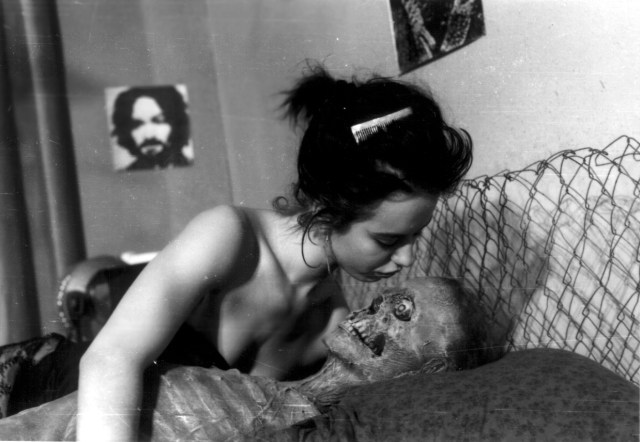
Rob Schmadtke (Daktari Lorenz) works for “Joe’s Cleaning Agency,” a company that specializes in disposing of dead bodies. This line of work is highly convenient for Rob, being that he and his girlfriend Betty (Beatrice Manowski) get their kicks from fucking corpses in their spare time. As you might have guessed, Nekromantikis a depraved little movie that is as slimy and sleazy as the corpses in Betty’s bed. But that means it’s got something. It’s got atmosphere and it’s got texture. Believe it or not, Buttgereit is something of a world-builder. There’s nice background detail peppered throughout. Look out for the photo of Charles Manson in Rob and Betty’s apartment and the pentagram logo stitched into the Joe’s Cleaning Company overalls. This film exists in its own little bubble which makes for a unique viewing experience beyond all the necrophilia.

Now, full disclosure, there are scenes in this film some will find incredibly disturbing. Corpse-fucking aside, there is also real footage of a rabbit being slaughtered, so if that stuff doesn’t agree with you, stay well away. Nekromantik, by design, is a nasty picture and all the grotesque sights amount to a handful of memorably icky images. You’ll remember the bedsheets stained with dead-body gloop, the flies buzzing around Rob’s apartment, and the slime that rubs off of the body whenever Betty decides to get freaky with it. One of the film’s most infamous moments features Betty using a piece of metal piping as a substitute for the dead body’s decomposed penis, but she’s still a practitioner of safe sex–she slips a condom over the pipe before mounting it. You don’t forget shit like that in a hurry. You’ll feel the need to disinfect your living room after watching Nekromantikbecause the smell of rotting flesh practically oozes from the screen and onto your clothes. It’s not that the special effects are convincing–they’re not–but there’s something inherently repulsive about the film that really makes it effective as a visceral piece of work.

Buttgereit–who made a string of cheap horror movies in the West Germany throughout the 80s but none that had the international impact of Nekromantik–shot the film on Super 8 with a shoestring budget, and I was actually gobsmacked to discover it was made in the late eighties and not the early seventies. The film looks much older and more forbidden than it really is, which adds to its identity. I think this, combined with the taboo nature of the central ideas, suggests a film that is far more unappealing in reputation than reality. To watch Nekromantik and write it off as a sick and disposable cheapie about necrophilia is to miss half of the point because, surprise surprise, the film is also very funny. Poor Rob hardly catches a break throughout the entire film and Betty is constantly finding ways to emasculate him. When he is fired from his job for having stinky work overalls, of all things–grave robbing can do that to you–Betty packs up and leaves his sorry ass, taking the corpse with her! To Betty, even a rotting cadaver is more of a man than her useless boyfriend.

The film is quite experimental at times too and frequently blurs the line between dreams and reality. It’s not the most original trope, but it enhances the idea that Nektromantik is a peek into the sickest corners of the human psyche. It’s an exploration of the repressed and depraved, fertile ground for making a horror movie. Also take into consideration that Buttgereit himself wasn’t exactly a blockbuster name in the genre but still committed himself to making a film so intensely yucky. It’s not like he could finish the film and show his mother and family friends. This is the kind of thing uptight parents disown their kids for! To make a low-budget horror movie is one thing, but to make Nektomantik is something else entirely. It takes serious balls to bring a film like this into the world, and the horror genre thrives off of filmmakers with that kind of conviction. My hat goes off to Buttgereit and co-writer Franz Rodenkirchen for tapping into the darkest depths of their imagination and not holding back for a second.

Thankfully, Nekromantik makes up for its grueling content by clocking in at a nicely digestible 75 minutes. If even that sounds like a lot of time to spend in this world, I promise it’s worth the endurance as the film concludes with one of the wildest and most excessive final scenes I’ve ever seen. I’m not going to spoil it by going into specifics but let’s just say it gets my vote for the greatest “climax” in horror film history. If you think by minute 70 that Buttgereit has pushed things as far as he’s willing to go, hang tight and let him prove you wrong. Oh, and don’t forget to keep those curtains closed if you’re wanting to keep your place in society.

Reviewed as part of Dim the House Lights‘s Ten Days of Terror.
Posted in Movies Watched In 2016, Reviews, Rewatch | Tagged , | Leave a comment